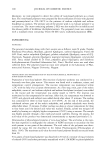
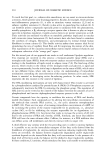
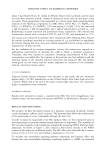
216 JOURNAL OF COSMETIC SCIENCE lOO 80 60 40 20 O- ' Control SLC 1% Figure 3. Binding activity of SLC on c%-adrenergic receptors. ***p 0.001 vs control value. Control SLC 0.1% SLC 1% SLC 5% Figure 4. Antagonistic activity of SLC on c•2-adrenergic receptors. ***p 0.001 vs control value. confer to SLC a potent slimming effect. In order to check this point, we thus conducted some invivo experiments on eighteen normal, healthy, human volunteers. As shown in Figure 5, 3% SLC-containing formulation is able to reduce the thigh circumferences of human volunteers by more than 10 min. More than 20% of the human volunteers participating in the test had their thigh circumferences reduced by more than 10 ram, whereas, in the same time, their other, non-treated, thigh did not show any circumference reduction. This last study shows the potent slimming effect of SLC and furthermore emphasizes the relevance of our "slimming approach." CONCLUSION In conclusion, we provide here the experimental demonstration of the validity of a global approach concerning lipolysis. This study is not only based on in vitro and ex vivo demonstrations of effective product efficacy, but it also shows the real relevance of SLC

LIPOLYTIC EFFECT OF SLIMMING LIPOSOMES 217 ß Untreated thigh , IIF. LC 3% • o -•3 0 0 0 to -5 -5 to -10 -10 • Change in c•rcumference Increase No change Decrease (ram) Figure 5. Effect of SLC in reducing the circumference of the thighs of eighteen normal, healthy volunteers. Insert: Mean of decrease in thigh circumference in control conditions versus thighs treated by SLC 3% (mm). ***p 0.001 vs control value. in physiopathological fields. Moreover, this work provides the first unambiguous dem- onstration for the o•2-adrenergic antagonism of such a combination of encapsulated active compounds. Further experiments are running in our laboratories to check which SLC components are responsible for this unexpected effect. ACKNOWLEDGMENTS Special thanks to Claire Pardo for very powerful technical assistance. REFERENCES (1) (2) (3) (4) (5) (6) (7) (8) (9) (10) O1) (12) P. Tetenyi, Les principes actifs du marron d'inde, Plant Med. Phytither., 11, 158-164 (1977). J. Lavollay and J. Sevestre, The nature of vitamin P activity of esculoside on capillary resistance, Cornpt. Rend. Soc. Biol., 218, 979 (1944). J. Lavollay, Vitamin P action of esculoside and esculetol on capillary resistance, Cornpt. Rend. Soc. Bid., 139, 270 (1945). N. Yanishlieva and E. Marinova, Antioxidative effectiveness of some natural antioxidants in sunflower oil, Z. Lebensm. Unters Forsch., 203, 220-223 (1996). M. Arpaia, R. Ferrone, M. Amitrano, C. Nappo, G. Leonardo, and R. del Guercio, Effects of Centella asiatica extract on mucopolysaccharide metabolism in subjects with varicose veins, Int. J. Clin. Phar- macol. Res., 10, 229-233 (1990). R. Tenni, G. Zanaboni, M. De Agostihl, A. Rossi, C. Bendotti, and G. Cetta, Effect of the triterpenoid fraction of Centella asiatica on macromolecules of the connective matrix in human skin fibroblast cultures. Ital. J. Biochem., 37, 6%77 (1988). P. Belfrage, G. Fredrikson, P. Stralfors, and H. Tornqvist, Adipose tissue lipases, in Lipases, B. BorgstriSm and H. Brockman, Eds. (Elsevier, Amsterdam, 1984). D. Langin, C. Holm, and M. Lafontan, Adipocyte hormone-sensitive lipase: A major regulator of lipid metabolism, Proc. Nutr. Soc., 55, 93-109 (1996). M. Anthonsen, E. Degerman, and C. Holm, Partial purification and identification of hormone- sensitive lipase from chicken adipose tissue, Biochem. Biophys. Res. Commun., 236, 94-99 (1997). I. Pastan, Cyclic AMP, Sci. Amer., 227, 97-105 (1972). E. Degerman, P. Belfrage, and V. Manganiello, Structure, localization, and regulation of cGMP- inhibited phosphodiesterase (PDE3), J. Biol. Chem., 272, 6823-6826 (1997). J. Smith and D. Mills, Inhibition of adenosine 3',5 '-cyclic monophosphate phosphodiesterase, Biochem. J., 120, 20P (1970).
Purchased for the exclusive use of nofirst nolast (unknown)
From: SCC Media Library & Resource Center (library.scconline.org)