234 JOURNAL OF COSMETIC SCIENCE for a well-formulated glycerol composition in normalization of barrier function that is essential in healing of dry skin and possibly wound healing. RECENT STUDIES Substantiation for glycerol's role in normalizing barrier function is supported by recent research (13) conducted by Fluhr et al. Two studies were performed to evaluate the influence of glycerol on the recovery of damaged corneum barrier function. Measure- ments of transepidermal water loss (TEWL) and capacitance were conducted in a three- day followup after tape stripping (study 1) and in a seven-day followup after barrier damage due to repeated washing with sodium lauryl sulfate (study 2). In study 1, a faster barrier repair as measured by reduced TEWL was shown at the glycerol-treated sites. Significant differences between glycerol open vs untreated and glycerol occluded vs untreated were observed at day 3. In study 2, a faster barrier repair was seen in glycerol-treated sites, with significant differences between untreated and base-treated sites seven days after the end of treat- ment. Stratum corneum hydration showed highest values in glycerol-treated sites after three days of treatment. Glycerol is claimed to create a stimulus for barrier repair and to improve stratum corneum hydration. Since the glycerol-induced recovery of barrier function and stratum corneum hydration were observed even seven days after the end of treatment, the researchers regard glycerol as a barrier stabilizing and moisturizing agent. A paper published in 1998 (14) by researchers at Shiseido and at the UCSF Department of Dermatology entitled "Low humidity stimulates epidermal DNA synthesis and am- plifies the hyperproliferative response to barrier disruption: Implications for seasonal exacerbations of inflammatory dermatoses" provides important therapeutic insights. The results confirm the experiences of many individuals with skin conditions such as atopic dermatosis and psoriasis that these conditions tend to worsen during the winter season, when humidity is much lower. Their studies on murine skin demonstrated that seasonal changes caused by low relative humidity can be prevented either by occlusion with materials such as petrolatum, or application of a 10% glycerin solution in water. Results show that increasing stratum corneum moisture content, whether by occlusion or by humectant treatment, prevents or reverses the development of epidermal hyperplasia. INFLUENCE OF FORMULATION VARIABLES ON THE EFFICACY OF GLYCEROL Future research certainly will provide additional understanding of glycerol's numerous benefits as a functional skin care active. I will now summarize available information related to formulation of glycerol in skin care products with the aim of optimizing performance and of enhancing cosmetic aesthetics. Several publications offer insights on the influence of formulation variables on the efficacy of glycerol (12,13,15,17) however, much information in this domain falls within the category of industrial expertise and know-how. A cosmetic chemist is faced with a significant formulation challenge when formulating with glycerol at levels beyond 10% because of its high viscosity and the tackiness that

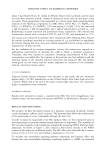
FUNCTIONAL PROPERTIES OF GLYCERIN 235 it can impart to formulations. Approaches to mitigate this negative frequently involve the use of specialty hydrophobic powders such as aluminum starch octenylsuccinate (15). I personally know of a specific example whereby an efficacious, prototype formulation containing 25% glycerol was made commercially viable when this starch derivative was introduced in the early 1970s. The inclusion of about 5% of the above-mentioned hydrophobic starch significantly improved application properties and sensory character- istics of the skin cream. I have also learned from a respected cosmetic industry consultant that the inclusion of branched chain esters in emulsion systems also serves to improve the application properties of formulations with high glycerin levels. In the publication by Shapiro (12), he states that the performance of high-glycerin formulas was in part due to their unique formulations--"that is, emulsification systems which create an HLB balance that facilitates highly efficient delivery of glycerin into the stratum corneum." A recent patent issued to Epstein (16) for an oil-in-water skin care composition em- ploying an emulsifier such as dimethyl distearyl ammonium halide with a substantially nonionizable humectant, such as glycerin, and a weakly acidic material, such as glycolic or lactic acid, was claimed to provide superior moisturization properties. A therapeutic- type commercial skin-moisturizing lotion (17) utilizing dimethyl distearyl ammonium chloride in a vehicle with high glycerin content exhibits, in my judgment, good sensory and application properties. The formulation, shown in Table V, for a prototype cationic lotion containing 8% glycerin is claimed by the raw material supplier (18) to have exceptional application properties, from rub-in to dry-down. This type emulsion vehicle may be suitable to hold even higher levels of glycerin, while maintaining acceptable application properties and cosmetic esthetics. A study by Fluhr eta/. (19) has demonstrated that glycerol is capable of enhancing the skin hydrating properties of water-in-oil emulsions. In addition, they have found that a combination of 5% glycerin and 5% urea in either w/o or o/w emulsions has hydrating Table V Formulation for a Prototype Cationic Lotion Containing 8% Glycerin Part A Behentrimonium methosulfate (and) cetearyl alcohol 1.17 Emulsifying wax NF 1.00 Stearyl alcohol NF 0.33 PPG-2 myristyl ether propionate 1.00 Pentaerythrityl tetracaprylate/caprate 0.67 Mineral oil 1.00 Petrolatum 2.00 Dimethicone 350 cs 0.50 Part B Deionized water 82.33 Glycerin 8.00 Part C Hydrolyzed whole wheat protein 1.00 Propylene glycol (and) diazolidinyl urea (and) methylparaben (and) propylparaben 1.00 100.00%
Purchased for the exclusive use of nofirst nolast (unknown)
From: SCC Media Library & Resource Center (library.scconline.org)