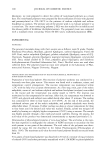
232 JOURNAL OF COSMETIC SCIENCE Table IV Improvement in Human Dry Skin Condition by Various Concentrations of Glycerol Grade reduction a Treatment (skin improvement) 5% Glycerol 0.86 10% Glycerol 1.44 20% Glycerol 1.74 40% Glycerol 1.80 • Combined results (after two weeks of treatment) of three studies, no one study involving all treatments. Water was the control in all studies. Starting grade averages were 2.02 to 2.71. pig skin to determine their effectiveness. Liquids such as propylene glycol and 1,3- propanediol (tested as 10% and 50% aqueous solutions) did not provide a skin- conditioning benefit. Aqueous solutions (10% and 50%) of crystalline polyols such as erythritol, xylitol, and sorbitol provided only a marginal benefit. In the discussion section of the Bissett article, the researchers made the following comments: "The exact nature of glycerol's mechanism of action is not clear. Glycerol is a nonvolatile, hygroscopic liquid. These properties presumably allow it to retain water in the skin. The water-glycerol mixture then hydrates and plasticizes the skin to prevent dehydration and the resultant physical damage in a stressful environment. Immediately after application, glycerol also provides a masking of the scales on the skin surface. However, the benefit diminishes with time and is lost with washing. The long-term benefits of glycerol reported here are in the absence of this 'cosmetic cover-up.' Whether glycerol in the viable epidermis can also affect the generation of new stratum corneum is not known. Alteration of the course of tissue synthesis might result in a stratum corneum more resistant to dehydration." This is a significant publication because the researchers thoroughly documented the skin conditioning properties of glycerin and presented insights concerning its potential mechanisms of action. Much of their insights are substantiated in later studies that are summarized in this review. LATER STUDIES With the use of sophisticated bioengineering equipment, Batt et al. (7) studied the changes in the physical properties of the stratum comeurn following treatment with glycerol. Preparations containing the humectant were applied topically to the skin of young adults, and the physical effects on the stratum comeurn were examined using instrumental techniques. The effects measured were reductions in transepidermal water loss and electrical impedance, smoothing of the skin surface profile, and an increase in the coefficient of friction. These effects were found to accompany an improvement in the expertly assessed condition of the skin. Found to last for periods in excess of eight hours, these effects were similar to those observed transiently after the topical application of water. These researchers summarized their views in their 1988 article as follows: "The data

FUNCTIONAL PROPERTIES OF GLYCERIN 233 reported are consistent with the hypothesis that the beneficial effects of glycerol on skin condition are due to its physical effects on the status of water in the outer layers of the stratum corneum. This may be the result of glycerol interactions with the stratum corneum lipid structures or proteins, altering their water-binding and/or hydrophilic properties." This hypothesis correctly anticipates research findings revealing the influ- ence of glycerol on the lipid bilayer to be published within the next few years. A paper published by Froebe (8) in 1990 reports the prevention of stratum corneum phase transitions in vitro by glycerol and describes this phenomenon as an alternate mechanism for skin moisturization. Since intercellular lipids have an integral role in the barrier function of the stratum corneum, it had been proposed by Friberg and Osborne (9) that maintaining the lipids in a liquid state is required for optimal barrier function in preventing water loss. This research demonstrated that the addition of glycerol to a mixture of stratum corneum lipids in vitro inhibits the transition from liquid to solid crystals even when the water content is reduced by low ambient humidity (6% RH). Glycerol does not act as a humectant at 6% RH, either when tested alone or when incorporated into the model lipids. Therefore, the researchers concluded that in a dry atmosphere glycerol acts as a skin moisturizer by inhibiting the lipid phase transition from liquid to solid crystal, rather than by acting as a humectant. They claimed that this represents an alternate, more likely molecular mechanism of action for glycerol. Further support for the above study and its conclusions are provided in an article by Friberg (10) entitled "Micelies, microemulsions, liquid crystals, and the structure of stratum corneum lipids." A phase diagram is included that shows the liquid crystal layered structure to be changed to a crystal structure when the water content is reduced below a certain level. This change is theorized to have a drastic effect, in vivo, on the appearance and smoothness of the skin. An article by Rawlings (11) provides further support for glycerol's multidimensional activities. Ft-om these studies, it is proposed that the properties of glycerol as a humec- tant, occlusive, and as a lipid phase-modulating molecule, are likely to contribute to the improvements in stratum corneum desquamatory enzyme activities and desquamation itself. The researchers believe that one of the major beneficial actions of glycerol- containing moisturizers in vivo is to aid in the enzymatic digestion of superficial des- mosomes in subjects with skin xerosis, thus improving the desquamatory process. In a paper presented by Shapiro (12) at the First International Symposium on Cosmetic Efficacy, results of a five-day double-blind clinical study to determine the ultrastructural changes in skin following use of high-glycerin (25% and 40%) therapeutic moisturizers are presented. Test materials were applied to the volar forearms twice a day. Electron microscopic examination of stained punch biopsies of the test sites and untreated control site revealed that both high-glycerin products penetrated the entire thickness of the stratum corneum and provided expanded appearance, with no identifiable structural changes evident in deeper epidermal or derreal layers. Pure glycerin appeared to pen- etrate minimally and have little or no effect on the appearance of the stratum corneum. The researchers stated that "bulking" of the stratum corneum with a glycerin reservoir, without disruption of the liquid crystal/lamellar structure, is believed to enhance the resilience of skin exposed to harsh climatic conditions and helps explain the sustained skin healing observed following use of these products. These studies also suggest a role
Purchased for the exclusive use of nofirst nolast (unknown)
From: SCC Media Library & Resource Center (library.scconline.org)