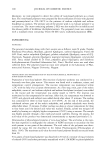
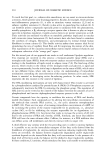
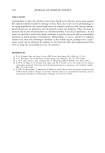
202 JOURNAL OF COSMETIC SCIENCE Table II Physicochemical Properties of Polymer 2 Weight Polymer Acid Sap per ml* Refractive index* number value value HLB Viscosity* (1% solution) (1% solution) Polymer 2 0.093 108.42 9.92 45000 1.2549 1.3335 * Readings taken at 37øC. Table III Formulation of Cream Bases Ingredients R2 RT Cetyl alcohol 5 % 5 % Stearyl alcohol 5 % 5 % Propylene glycol 5 % 5 % Isopropyl myristate 8% 8% Glycerin 5 % 5 % Polymer 2 2.5% -- Tween 60 -- 2.5% Diclofenac diethylammonium 1.16 1.16 Distilled water Up to 100 ml Up to 100 ml melted material the aqueous phase containing diclofenac diethylammonium and surfac- tant was added with continuous stirring at 70øC. The mixing was continued for five minutes with the help of a stirrer. The creams were then distributed to glass bottles and stored at various temperatures for stability studies. The evaluation data of the creams is presented in Table IV. SPREADABILITY The spreadability of the creams was evaluated by spreading a sufficient quantity of the cream on the hand. PREPARATION OF THE SKIN MEMBRANE Full-thickness abdominal skin was obtained from freshly sacrificed albino rats (Wistar strain male weight 200-250 g). It was washed thoroughly with distilled water to Table IV Evaluation Data of Prepared Creams Percent drug Formulation content Viscosity pH Homogeneity R2 97.5 6400 6.4 * RT 96 5600 6.3 * RM 98 6200 6.2 * * Indicates good homogeneity.

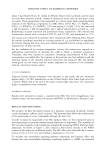
ROSIN-BASED POLYMER AS CREAM BASE 203 remove any subcutaneous matter and fatty tissues. It was then immersed in phosphate- buffered saline (pH 7.4) at 37øC for 30 minutes for equilibration before use in release studies. EVALUATION OF DRUG RELEASE A Keshary Chien diffusion cell was used for this part of the study (14). Phosphate- buffered saline (10 ml), used as a receptor medium, was placed in the lower part of the diffusion cell. It was placed on a magnetic stirrer with a small magnetic needle placed inside for uniform distribution of the diffusant. The temperature of the cell was main- tained at 37øC + 5øC, by a thermostatically controlled water bath. Isolated rat skin was carefully placed over a 1-cm 2 orifice of the receptor chamber, and precisely weighed formulations were applied to the epidermal side of the mounted skin. Samples (1 ml) were removed from the receptor compartment at regular intervals of one hour, and an equal volume of fresh phosphate-buffered saline was added. Samples were assayed by the colorimetric method of analysis after subsequent dilution. The study was performed for eight hours, and percent release was calculated. STABILITY STUDIES The prepared creams were stored at three different temperatures: room temperature, 40øC, and 55øC, for 50 days using a controlled-temperature oven (Thermonic Labs. Pvt. Ltd.). The parameters of stability assessment were drug content, pH, particle size, conductivity, relative dielectric constant, and viscosity. Dr/ag content, The drug content of the creams were determined by dissolving one gram of the cream in water and estimating the drug by using a U¾ spectrophotometer (Shi- matzu-1602) at 254 nanometers, for diclofenac diethylammonium. The standard graph was prepared by dissolving 50 mg of diclofenac diethylammonium in water. Five mil- liliters of this solution was then diluted to 100 ml, and absorbance of this solution was measured at 254 nanometers. The standard graph was plotted using various dilutions, and the drug content in the creams was calculated from the absorbance of the solutions of prepared creams. Determination ofpH, The pH of 1 g% of the suspension of cream was determined using a pH meter (Hanna Instruments). Particle size determination. The particle size of the prepared creams was determined using a Leitz-Larolux-S-microscope. Three hundred globules were counted using an eyepiece micrometer attached to a 10X eyepiece and with a high power objective of 45X. The eyepiece micrometer was calibrated using a stage micrometer. The average size of a globule in terms of eyepiece micrometer was multiplied by a magnification factor to obtain actual globule size in microns. Conductivity and relative dielectric constant measurement. The conductivity was determined using a digital conductometer (Elico Pvt. Ltd. model CM-180). The relative dielectric constant was determined using a Universal dielectrometer (Type: OH-301, no. 457). The measurement of the relative dielectric constant was carried out by reading the capacitance of a condenser containing the solution of the polymer between the plates. A probe capacitance cell, which could be attached to the dielectrometer through a coaxial
Purchased for the exclusive use of nofirst nolast (unknown)
From: SCC Media Library & Resource Center (library.scconline.org)