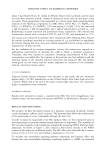
238 JOURNAL OF COSMETIC SCIENCE now report on a novel technique to measure antioxidant activity directly in a complete cosmetic product. MATERIALS AND METHODS SAMPLE PREPARATION A typical cosmetic formulation containing a blend of emulsifiers was prepared as either a control with no antioxidants or as a complete formula with a mixture of antioxidants. The following antioxidants were used in the formulation: 2.0% tocopheryl acetate (Hoffman-LaRoche, Parsippany, NJ), 0.1% butylated hydroxy toluene (Rhone-Poulenc, Cranbury, NJ), 1.0% magnesium ascorbyl phosphate (Barnet, Englewood, NJ), 0.1% ubiquinone 50 and 0.5% N-acetyl-L-cysteine (Seizer, Carlsbad, CA), 0.1% rosemary (Robertet, Oakland, CA), and 0.1% tocopherol cysteamine (Mercier, S. Plainfield, NJ). ASSAY The Randox Assay for Total Antioxidant Status kit (Randox, Antrim, UK) was adapted for use in cosmetic products by diluting the formulations to be tested to 1% in isopropyl alcohol. At 1% in isopropyl alcohol, the samples are sufficiently clarified and the antioxidants solubilized to allow the reaction to proceed without interference. Briefly, 2,2'-azino-di-(3-ethylbenzthiazoline sulphonate) (ATBS) is reacted with a peroxidase and H20 2 to convert ATBS into a radical cation. In this state, ATBS forms a chromogen that can be measured spectrophotometrically at 600 nm. In the presence of antioxidants, this color formation is inhibited. Typically, 50-100 pl of the 1% sample is diluted in water up to 250 pl. Then, 1.5 ml of chromogen solution is added, followed by the addition of 0.3 ml of substrate solution. The absorbance (A) of the samples is then measured immediately in a Beckman DU-7500 spectrophotometer using the kinetics/ time program. CALCULATIONS Percent inhibition was calculated as (dAvehicle-dAproduct/dA,•ehicle) x 100 and used to quantitate an IC5o value. Also, a range of 15 to 85 nanomoles of an antioxidant standard (6-hydroxy-2,5,7,8-tetramethylchroman-2-carboxylic acid) was used to determine the relative activity of a product. RESULTS One hundred microliters (1 mg) of a 1% cosmetic sample dilution was assayed, and a typical three-minute kinetic plot of the data is shown in Figure 1. The sample without antioxidants had a dA/min of 0.126 whereas the sample containing antioxidants had a dA/min of 0.011. Thus, there was an 86.8% decrease from the control sample. From similar kinetic plots, the average value that would inhibit the reaction by 50% was then determined to be 0.7 mg of the sample. Since the sample was a 1% dilution of the

TEST FOR ANTIOXIDANT ACTIVITY 239 Zoom ZoomOut Trace fluLoscale flnnotate Print 8.58088 [Abs] 8.88888 8.8888 ........................... : ........................... : .......................... : ........................... • .......................... : : sec 188.88 Figure 1. Kinetic plot of the increase in absorbance at 600 nm over time. (-I•-): Vehicle formulation was 0.126 dA/min. (-(2)-): Antioxidant formulation was 0.011 dA/min. product, 0.7 mg is multiplied by 100 in order to determine that 0.07 gm of the cosmetic product is equivalent to 50% inhibition in this assay. In this way, relative measurements of effectiveness can be calculated and used for comparison to other products. Based on regression analysis from the standard curve and end-point assay analysis, the relative antioxidant activity concentration that was determined for this product was 52.7 nmoles/mg (+ SD 1.7) of material. In contrast the placebo contained only 11.4 nmoles/ mg (+ SD 1.2), although when compared to a blank, there appeared to be some background antioxidant activity by the formulation itself. These data are summarized in Figure 2. 40 20 lO blank vehicle vehicle + antioxidants Figure 2. Increase in the amount of nmoles/mg of antioxidant activity in cosmetic formulations as deter- mined by standard curve and end-point assay measurements.
Purchased for the exclusive use of nofirst nolast (unknown)
From: SCC Media Library & Resource Center (library.scconline.org)