JOURNAL OF COSMETIC SCIENCE 372 prostaglandins, and cytokines. In the long term, UV radiation may cause erythematogenic and melanogenic harm, as well as immunosuppression and carcinogenesis (2–4), all of which have serious implications for human health. Protection against sun exposure is recommended at all ages, but should be especially encouraged for children and young people, given that a child’s skin is considerably more sensitive to UV radiation than an adult’s. Given that skin possesses a memory effect, exposure to sun radiation during early life leads to cumulative and irreversible damage, which may later be manifested in adulthood (5). Moreover, increasing numbers of children are suffering from sun-related diseases such as photodermatosis (6), and when compared to adult skin, a child’s skin presents histo- logical and physiological differences that make it particularly sensitive to solar radiation (7). In addition, the dramatic increase in the incidence of skin cancer, especially malig- nant melanoma, highlights the need for new and improved prevention methods. In com- parison with an adult’s skin, an infant’s skin is especially delicate, fi ne, and highly permeable. For this reason, a good dermatological sun-protection product must fulfi ll several critical requirements in terms of quality and non-aggressiveness (8). At an early stage of life, skin as a living tissue has not yet fully developed its own natural protection against actinic aggression (9). Exogenous photoprotection is therefore highly recom- mended (10). Given the importance of protection, both educational programs in preven- tion and new formulations for child skin care should be studied (11). Sunscreens are photoprotective cosmetic products that can be designed to cover the der- matological needs of a determined segment of a population with specifi c requirements (12). In addition to the requirements of effectiveness, safety, and versatility (14), the type of sun protection required depends on individual skin characteristics and the purpose for which the product is to be used (13). Characteristics such as softness, waterproofi ng, non-stickiness, ease of application, and a sun protection factor (SPF) of between 15 and 40 are especially desirable in formulations for children. On the other hand, compliance in use in adults is more dependent on the aesthetics of the product. Products with a lower SPF endowed with a lesser degree of waterproofi ng are more generally accepted, because they have less of an unpleasant, doughy, sticky feeling. For this reason, different levels of SPF are incorporated into a broad range of cosmetics for daily use. Skin damage from ultraviolet radiation in early childhood must be avoided through im- provements in photoprotective therapy, and research in this fi eld should aim to produce new sunscreens and/or make already existing ones more effective. The objective of this work was to develop a topical sunscreen formulation for towelette application, as an alter- native to the commercial semi-solid formulations available on the market, and to carry out a stability study of the emulsion used. As a pharmaceutical format, the use of towels as a solid support for sunscreen formulae presents a number of advantages, which include: ease of application, increased stability, a reduction of side effects caused by solar fi lter penetration, and an increase in effi ciency and safety. In addition, the towelette product is more easily conserved due to its single- dose format, does not produce a sticky feeling or generate residues, is easily transported, and is convenient to use. Two tests were carried out to compare the performance of the towelette as a new form of topical application: one on the sunscreen formulation supported within an emulsion, and another on the impregnated towel formulation. Both were characterized for organoleptic

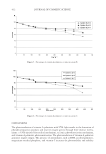
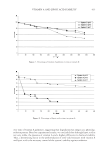
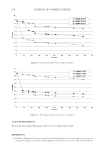
STABILITY OF PEDIATRIC SUNSCREEN EMULSION 373 characteristics, dry matter, pH, microbiological contamination, density, and rheological properties. In parallel, a stability study was carried out on both formats at temperatures ranging from 4° to 40°C under light-protected conditions, in order to assess what effect the use of the towelette as a support vehicle may have on the stability of the emulsion. Stability was determined through centrifugation. Over a 30-day assay period, samples were taken on day 0, and at 1-, 15- and 30-day in- tervals. Determinations for samples from both vehicles were performed in triplicate. MATERIAL AND METHODS MATERIALS As emulsion components, Neo Heliopan AV® (ethylhexyl methoxycinnamate), Neo Heliopan MBC® (4-methylbenzylidene camphor), Neo Heliopan Hydro® (phenylbenz- imidazole sulfonic acid), and Neo Heliopan 357® (butyl methoxydibenzoyl methane) were obtained from Symrise Ibérica (Barcelona, Spain). Tioveil AQ-N® (aqua, tita- nium dioxide, alumina, silica, sodium polyacrylate, and methylparaben sodium) and triethanolamine (triethanolamine 99%), were obtained from Comercial Química Massó (Barcelona). Arlamol HD® (isohexadecane), was received from Uniquema (Barcelona), and Tefose 2000 (Peg-6 stearate, ceteth-20, steareth-20) was from Gateffose (Madrid, Spain). Other components were Alliant OPT® (acrylates/C12-22 alkylmethacrylate co- polymer) from Inquiaroma (Barcelona), and vitamin E acetate (tocopheryl acetate), methylparaben, ethylparaben, propylparaben, butylparaben, and chorphenesin from Impex Química (Madrid). Mineral oil fl uid (paraffi num liquidum) was obtained from Quimidroga (Madrid), and alcohol benzoate C12–C15 (benzoatyl alcohol), cetostearyl alcohol 25.OE (ceteareth-25), and Dub Diol® (methylpropanediol) were obtained from Campi & Jove (Madrid). Dow Corning 200® (dimethicone), from Safi c Alcan (Barce- lona), propolis hydroglycolic extract (propolis cera), from Biogründl (Madrid), Perfume Green Coco® (perfume), from GmbH & Co (Paris, France), and deionized distilled wa- ter (aqua), from Interapothek (Murcia, Spain), were additional emulsion components. We believe that an optimal sunscreen formulation depends not only on the total active fi lter content intended to prevent or mitigate harm from solar radiation, but also on other complimentary components. For this reason, hydroglycolic extract of propolis was in- cluded, due to its anti-infl ammatory and immunoregulatory activity (15). This active ingredient is also believed to have a protective effect on skin (16). A non-woven material was chosen as the physical support for the formulation (17), com- posed of directly ordered or randomly arranged sheets or membranes, forming fi bers con- nected through friction, and/or cohesion and/or accession, thus excluding paper or textiles, welded or joined through thread tying. The fi bers may be either natural or synthetic (18). A viscose non-woven product with a thickness of 50 g/m2 (LIDROTM, supplied by Jacob Holm Industries, Soultz, France) was chosen for its composition and weight (mesh size), and in particular for its smoothness and biodegradability. Unlike synthetic fi bers, such as polyester and polypropylene, this material decomposes rapidly (19). A sheet of micronized black polyethylene complex, composed of PET (polyethylene terephthalate), 12μ/coext, and PE (polyethylene), BCO/black 50 g, from Amcor (Madrid) was chosen as packaging material.
Purchased for the exclusive use of nofirst nolast (unknown)
From: SCC Media Library & Resource Center (library.scconline.org)