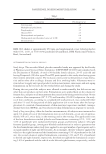
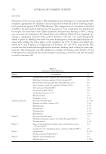
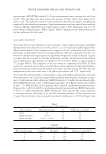
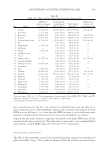
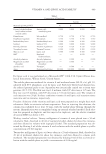
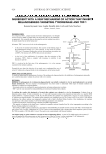
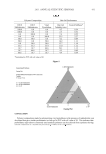
JOURNAL OF COSMETIC SCIENCE 374 METHODS Preparation of the sunscreen emulsion. The formulation was developed as a waterproof O/W emulsion, appropriate for children’s skin and produced with the aim of achieving high- level protection against UVA-UVB radiation. The composition of each phase is detailed in Table I. At each stage of preparation, the quantity of every component was determined by weight. Oil and water were added separately after previous heating to 80°C, taking care to ensure all components had fused after each addition. Phase N was prepared, ob- taining a transparent solution with a pH of between 7.00 and 7.50, and subsequently added to phase A. Shaking was used to ensure homogeneity, with the fi nal emulsion ob- tained after adding the water phase to the oil phase. At 40°C, T phase was added, fol- lowed by C and P phases at temperatures of between 30° and 35°C respectively. The system was then stabilized through further moderate shaking until cooling to room tem- perature. The formulation was then shaken for a further 20 minutes, after which 5.25 ml of emulsion was introduced into each envelope containing a towel (T) and 100 ml sealed in sterile containers (E). Table I Description of the Emulsion Phases Components % Oil phase (O) 4-Methylbenzylidene camphor (Neo Heliopan MBC®) 4% Ethylhexyl methoxycinnamate (Neo Heliopan AV®) 9% Butyl methoxydibenzoyl methane (Neo Heliopan 357®) 2% Peg-6 stearate, ceteth-20, steareth-20 (Tefose 2000®) 8% Isohexadecane (Arlamol HD®) 14% Cetostearyl alcohol 25O.E 2% Alcohol benzoate C12-C-15 3% Mineral oil fl uid 1% Vitamin E acetate 0.1% Aqueous phase (A) Deionized distilled water q s 100 Dimethicone (Dow Corning 200®) 1.5% Methylparaben 0.7% Ethylparaben 0.7% Propylparaben 0.7% Butylparaben 0.05% Phase N Deionized distilled water 2% Phenylbenzimidazole sulfonic acid (Neo Heliopan Hydro®) 4% Triethanolamine 2.4% Phase T Aqua, titanium dioxide, alumina, silica, sodium polyacrylate (Tioveil aq-N®) 6% Acrylates/C12-22 alkylmethacrylate copolymer (Alliant OPT®) 2% Phase C Chorphenesin 0.15% Methyl propanediol (Dub Diol®) 1% Phase P Propolis extract hydroglycolic 5% Perfume green coco 0.26%

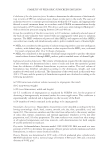
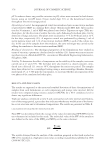
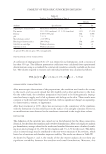
STABILITY OF PEDIATRIC SUNSCREEN EMULSION 375 Calculation of the solar protection factor. In order to determine the effectiveness of the formula- tion in terms of SPF, ten volunteers were chosen to take part in the study. The source of radiation was set to a constant spectral emission within the UV region, and appropriately fi ltered to avoid cutaneous harm, in accordance with COLIPA recommendations for the spectral quality of UV radiation (20). The device used was a solar malingerer Multiport®, with an emission spectrum ranging between 290 and 400 nm. Given the variability of the skin’s reactivity to UV radiation, randomly selected areas of the back of each volunteer were treated with one impregnated towel prior to radiation exposure. The MED evaluation of protected skin (MEDp) and unprotected skin (MEDn) was carried out visually and simultaneously under a perfect standard source of diurnal light: MED • p was considered as the quantity of radiant energy required to cause non-ambiguous redness, with defi ned edges, equivalent to that required for the MEDn area, evaluated by visual comparison after 16 or 24 hours of exposure. MED • n was considered as the quantity of radiant energy required to produce the minor visual redness obtained through MEDp under a perfect standard source of diurnal light. Impregnated towelette preparation. The volume of formulation required for the impregnation of the towelettes was determined after a series of trials and from the experience gained from the validation of different formulations in previous studies. The total volume of formulation was therefore calculated according to the dimensions, weight, and total number of towels used in this trial. The dimensions of the towels used in this study were 200 × 175 mm, and the quantity of formulation required was calculated according to the following parameters: (a) VOL (sunscreen emulsion volume necessary to impregnate the towel) (b) G (non-woven weight) (c) D (towel dimensions, width and length) (d) C.I. (coeffi cient of impregnation as stipulated by COLIPA (21), for the purpose of obtaining a homogeneously moistened surface for correct application. This coeffi cient is experimentally calculated and is dependent on the viscosity of the fl uid) (e) N (number of towels contained in the package to be impregnated) Organoleptic characteristics. Organoleptic characteristics were classifi ed according to the fol- lowing terminology: thick, hard, creamy, smooth, soft, dry, thin, spreadable, cool, and warm (22). The sunscreen emulsion and the towel were subjected to the sensory analyses of color, odor, texture, consistency, and external appearance (exudate), at 0 h, just after preparation, and 24 h after preparation. The same analyses were carried out after storage at all selected temperatures and time intervals, with determinations for both samples (T and E) performed in triplicate. Dry matter. A thermobalance, Sartorius model 150C-000230V1 MA, was used at a tem- perature of 105°C to determine the quantity of water present in both emulsion and towel formulations, in order to assess chemical stability. Density. Density was determined at 20°C with a 100-ml graduated glass cylinder and a METAS hydrometer with a nominal range of between 0.900 and 1.000 and a minimal division of 0.002 g/m3.
Purchased for the exclusive use of nofirst nolast (unknown)
From: SCC Media Library & Resource Center (library.scconline.org)