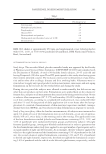
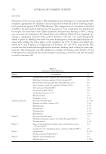
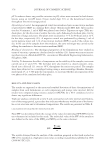
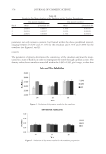
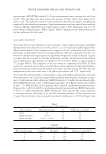
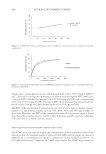
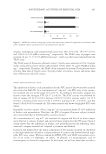
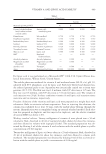
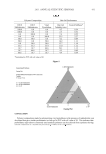
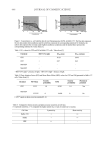
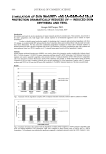
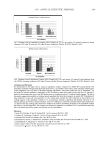
JOURNAL OF COSMETIC SCIENCE 362 Panthenol, the biologically active alcohol analogue of pantothenic acid is a pro-vitamin of the B-complex group that is a normal constituent of skin and hair. When applied topically, panthenol is converted to pantothenic acid, a component of coenzyme A and holo-fatty acid synthase that is essential to normal epithelial function (10). Dermatologists have long been aware of the value of panthenol in the preservation of skin health. Clinical observations have reported that topically applied panthenol is an aid in superfi cial wound healing in burns, fi ssures, corneal lesions, and allergic dermatitis, and it is well tolerated, with minimal risks of skin irritancy (10,11). Indeed, it has been shown that panthenol has protective effects against skin irritation (12). In one irritation model, pretreatment with dexpanthenol cream resulted in signifi cantly less damage to the stratum corneum barrier when compared with no pretreatment (13). However, its exact mechanism of action is not yet fully understood. Moisturizers infl uence the skin barrier function of healthy skin, but the base formulation composition and the concentration of active substances may infl uence the hydration effect of the cosmetic product. The chemistry and function of dry skin and moisturizers is a challenging subject for the practicing dermatologist, as well as for those who develop these agents in the pharmaceutical/cosmetic industry (5). Consequently, more studies are needed to evaluate by objective noninvasive techniques the hydration effect of panthenol- containing cosmetic formulations on human skin. New biochemical approaches and noninvasive instruments will increase our understand- ing of skin barrier disorders and facilitate optimized treatments. Among these methods are noninvasive validated skin biophysical techniques, which are widely used, as they al- low evaluation of cosmetic products under actual conditions of use (1,14,15). They have been used to determine viscoelastic and moisturizing properties, and human skin barrier function, which is an important aspect of skin biology (16). However, alongside the de- velopment of anti-aging cosmetic products, it has become necessary to standardize the new methodologies employing noninvasive techniques, to evaluate benefi ts attributed to a given product (17–19). Despite the fact that panthenol is often used in topical formulations in order to improve or maintain good skin conditions and the rate of wound healing, its optimal concentra- tion and the correct choice of vehicle in terms of sensorial and stability properties have not been suffi ciently studied. This study constitutes a clinical objective evaluation of the hydration and protection effects of cosmetic formulations containing panthenol in differ- ent concentrations by noninvasive biophysical methods. The results contribute to the elucidation of the effects of panthenol on skin barrier function and may also be helpful in maintaining homeostasis in healthy skin that is frequently compromised by continuous UV radiation and pollution. MATERIAL AND METHODS FORMULATIONS STUDIED Experimental formulations, (Table I), containing 2.0% (w/w) of sclerotium gum (Ami- gel®, Alban Muller International, Vincennes, France) and 2.0% (w/w) of methylphenyl polysiloxane (Net FS®, Nikko Chemicals, Tokyo, Japan) were prepared in a Heidolph

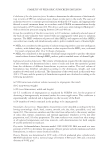
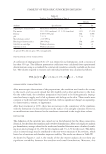
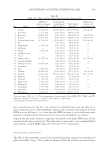
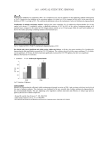
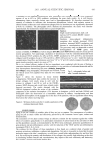
PANTHENOL IN SKIN MOISTURIZATION 363 RZR 2021 shaker at approximately 650 rpm, and supplemented or not (vehicle/placebo) with 0.5%, 1.0%, or 5.0% (w/w) panthenol (D-panthenol, DSM Nutricional Products, Basel, Switzerland). DETERMINATION OF CLINICAL EFFICACY Study design. The one-sided blind, placebo-controlled study was approved by the Faculty of Pharmaceutical Sciences Ethics Committee (CEP/FCFRP 40/2005) and complied with the Declaration of Helsinki. A total of 40 healthy female subjects, 20–35 years old and having Fitzpatrick (20) skin types II and III, participated in this study after having given their written informed consent. The exclusion criteria were (a) the presence of any derma- titis and/or other skin or allergic diseases and (b) a smoking habit. Volunteers were in- structed not to apply any topical products such as moisturizers, sunscreens, and anti-aging formulations on the test sites for two weeks before and during the study. During the test period the subjects were allowed to wash normally, but did not use any other skin care products on their arms. Formulations were applied daily on the volunteers’ forearm skin, and prior to all measurements they stayed in the testing room for at least 30 min in order to allow temperature (20° ± 2°C) and humidity (45-60%) adaptation. An analy- sis of skin conditions, according to a standardized study protocol, was conducted before and after 15- and 30-day periods of daily application (six to ten hours after the last ap- plication). It consisted of measurements of skin moisture (capacitance method), transepi- dermal water loss (TEWL), and viscoelasticity (skin deformation in response to suction). Study of long-term effi cacy. After the baseline measurements, all subjects were instructed to apply 0.2 grams of two of the formulations (one on each forearm—in an area of approxi- mately 100 cm2), twice daily, in the morning and in the evening. The applications sites of the four formulations studied (placebo and formulations containing 0.5%, 1.0%, and 5.0% of panthenol) were randomized between groups and between subjects’ left-right forearms (parallel-group, investigator-blinded randomization) in order to guarantee that the four formulations under study were applied to an equal number of participants and to an equal number of right and left forearms. As an example, the fi rst volunteer applied the vehicle to the right forearm and the formulation containing 0.5% of panthenol to the left one the second volunteer applied formulations containing 1.0% and 5.0% of panthenol to the left and right forearms, respectively the third one applied the formulation contain- ing 5.0% of panthenol and the vehicle to the left and right forearms, respectively and the Table I Formulation Composition Components Percentage (w/w) Sclerotium gum 2.0 Methylphenyl polysiloxane 2.0 Propyleneglycol 2.5 Glycerin 86% 2.5 Phenoxyethanol and parabens 0.8 Hydrogenated and ethoxylated castor oil 40 OE 2.0 Deionized water 100.0
Purchased for the exclusive use of nofirst nolast (unknown)
From: SCC Media Library & Resource Center (library.scconline.org)