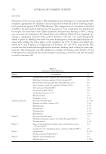
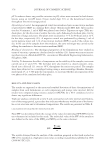
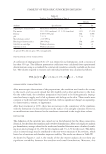
JOURNAL OF COSMETIC SCIENCE 364 fourth volunteer applied formulations containing 0.5% and 1.0% of panthenol to the left and right forearms, respectively, and so on. Another group of 20 volunteers (control group) did not receive any formulation and were exposed to the same conditions as the 40 experimental volunteers. Immediate effects—SLES wash test. The volar forearms of 20 new volunteers were divided into three areas (six areas for each person) after the baseline measurements each area was submitted to a 1% SLES (sodium laureth sulphate - 3EO), (∼ 3.7%, Genapol ZRO Liq, Clariant) wash test once a day for fi ve days. The standardized wash test was performed on the forearm as follows: a foam roller was soaked in 1.0% SLES (test solution) and moved up and down ten times on the volar forearm within one minute. Then, another foam roller was soaked with test solution and the whole procedure was repeated altogether fi ve times. Finally, the forearm was rinsed with clear tap water and dried carefully with a paper towel (21). For each washing procedure 50 ml of test solution was used. In two groups tap water was used instead of SLES. At the end of the fi fth day, new measurements were car- ried out. After this, 0.1 grams of the four different formulations under study (containing 0.5%, 1.0%, and 5.0% of panthenol and the vehicle) were applied to the areas previously established (in an area of approximately 40 cm2) and new measurements were carried out after two hours to evaluate their infl uence on TEWL. A control site was submitted to the SLES wash test but did not receive the application of any formulation. The four formula- tions studied and the control sites were randomized over the areas in the volar forearm. INSTRUMENTATION Corneometer® measurements. The stratum corneum moisture content was determined with a noninvasive, skin capacitance meter (Corneometer® CM 825, Courage + Khazaka, Co- logne, Germany), which makes use of the relatively high dielectric constant of water (22). This device determines the water content of the superfi cial epidermal layers down to a depth of about 0.1 mm and expresses the values obtained in arbitrary units. The averaged values of twenty measurements were used for subsequent calculations. (2). Tewameter® measurements. Transepidermal water loss was determined by an evaporimeter (Tewameter® CM 210, Courage + Khazaka, Cologne, Germany). TEWL values were reg- istered for two minutes following a 30-second period of equilibration of the probe on the skin (2, 21). The Tewameter® is based on Fick’s diffusion law, indicating the quantity being trans- ported per a defi ned area and period of time. By using the data obtained from thermo- and hydro-sensors, and after processing the information by an inbuilt microprocessor, a numerical value of the TEWL is obtained, commonly shown in g/m2/h (14,23). Cutometer® measurements. Viscoelastic properties of the skin were determined using a noninvasive, in vivo suction skin-elasticity meter (Cutometer® SEM 575, Courage + Khazaka, Cologne, Germany). The instrument consists of a microprocessor-regulated pneumatic system that applies suction via a 2-mm circular opening in the handheld probe. Evalua- tion of skin viscoelasticity is based on the measurement of skin deformation in response to suction. Each measurement consisted of fi ve consecutive cycles of a two-second suction application period followed by a two-second relaxation period. The suction load was 450 mbars. The ratio of viscoelastic to elastic distension, Uv/Ue (related to viscoelastic prop- erties) was analyzed (19).

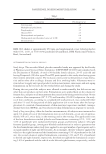
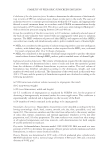
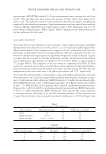
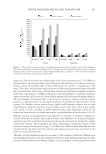
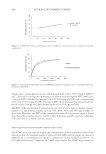
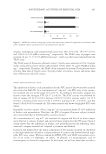
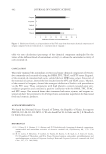
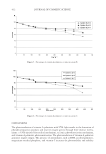
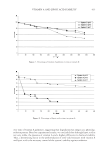
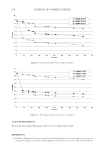
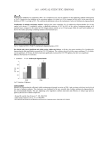
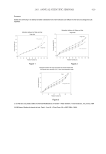
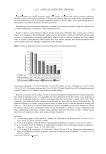
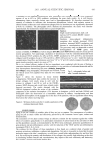
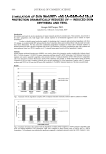
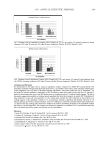
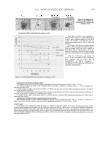
PANTHENOL IN SKIN MOISTURIZATION 365 STATISTICAL ANALYSIS Parametric tests were selected for statistical analysis of the experimental data points, since they showed a Gaussian distribution. The ANOVA test was used for comparison of mul- tiple measured data points using the statistical software, MINITAB. Differences were accepted as statistically signifi cant at p 0.05. RESULTS AND DISCUSSION DETERMINATION OF CLINICAL EFFICACY Long-term study. Biophysical measurements before and after daily applications for 15- and 30-day periods are reported in Figures 1 and 2. All the formulations studied produced a signifi cant increase in stratum corneum moisture (p 0.001) 15 and 30 days after daily application, when compared with the baseline values and with the control group (Figure 1). The effect was more evident with the use of formulations supplemented with panthenol. After long-period treatments, all formulations produced a signifi cant increase in stratum corneum moisture, including the ones without panthenol. Other raw materials in this cosmetic formulation (i.e., sclerotium gum and hydrogenated and ethoxylated castor oil) could also act on the epidermis, causing improved skin hydration (24). No signifi cant alterations were observed in skin viscoelastic properties in the long-term studies ( p 0.05) when compared with baseline values. The viscoelastic-to-elastic ratio (Uv/Ue) is a parameter obtained by cutometer analysis, which can be used not only to evaluate skin elasticity properties but also hydration of the Figure 1. Water content of the stratum corneum before (baseline values) and 15 and 30 days after daily application of the formulations: vehicle (V), V+0.5%, V+1.0%, and V+5.0% of panthenol and control site (ANOVA test, n = 20 subjects, mean ± SEM). ∗Signifi cantly different from the base values and control site ( p 0.001).
Purchased for the exclusive use of nofirst nolast (unknown)
From: SCC Media Library & Resource Center (library.scconline.org)