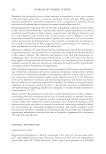
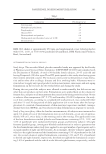
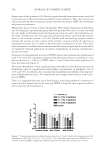
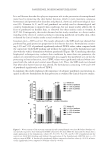
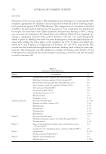
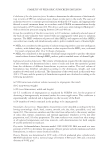
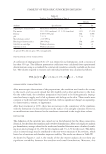
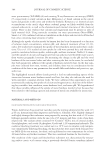
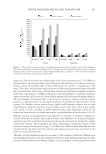
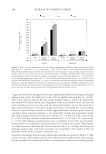
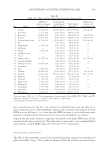
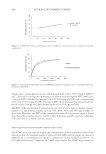
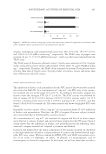
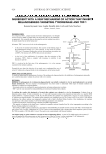
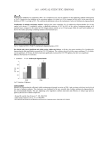
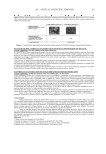
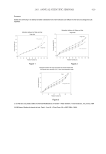
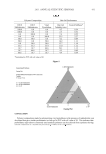
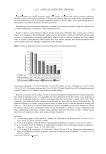
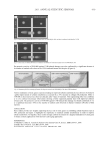
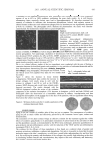
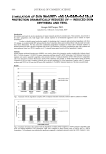
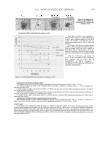
JOURNAL OF COSMETIC SCIENCE 388 (9 gpg) and very hard (16 gpg) water was not signifi cantly different for virgin and highly damaged hair, and it was different by only 16% for slightly damaged hair (p = 0.005). This clearly indicates that the hair has a fi nite binding capacity, which is determined by the number of available anionic sites. Regardless of the water hardness level, the hair will reach saturation and not associate with any remaining hardness ions in the water. Even upon repeated exposure to soft water (2 gpg), both levels of damaged hair extracted large amounts of water hardness metals, and thus approached their saturation point. Based on a multiple linear regression analysis, it was found that calcium and magnesium uptake was very strongly correlated with hair condition (r2 = 0.98 and 0.99, respectively, p 0.001) and less correlated with water hardness (r2 = 0.59 and 0.72, respectively, p 0.001). This fi nding is signifi cant because it establishes the fact that water hardness metal uptake is not confi ned to individuals who live in hard water regions. The popular- ity of hair treatments that alter the chemical nature of hair, e.g., coloring, bleaching, and relaxing, suggests that even more consumers are susceptible to this uptake if they are exposed to water with any degree of hardness ions. A positive relationship between water pH and metal uptake was observed (Figure 3). This can be related to the binding capacity of the hair because as pH increases, more groups become available for metal interaction due to the progressive ionization of carboxyl groups Figure 2. Effect of water hardness levels on calcium and magnesium uptake by virgin and bleached (dam- aged) hair. n=3. Asterisks (*, **, ***) represent p 0.05, p 0.01, and p 0.001, respectively, obtained by Tukey-Kramer HSD analysis. Uptake was calculated by subtracting the average baseline calcium and mag- nesium content of hair from that of hair treated with water of different hardness levels. Water hardness metal uptake was more driven by the condition or binding capacity of the hair substrate (r2 = 0.98 and 0.99 for calcium and magnesium, respectively, p 0.001) than by the hardness of the water (r2 = 0.59 and 0.72 for calcium and magnesium, respectively, p 0.001). It should be noted that the negative values of magnesium uptake by virgin hair indicate that the hair lost magnesium in an attempt to establish equilibrium between the few binding sites and the low amount of magnesium in the water samples. As the magnesium content in water increased, the hair absorbed more of the ion and approached the baseline levels.

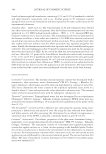
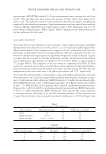
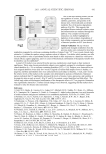
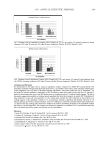
WATER HARDNESS METALS AND HUMAN HAIR 389 and amino groups participating in electrostatic interactions with carboxyl groups (4,22). Similar pH-dependent increases in the uptake of cationic moieties by keratin (14,23) and other charged macromolecules (24) have been reported. It is realized that the test pH range exceeds the observed pKa values of key ionizable protein groups that are capable of bind- ing metals, e.g., sulfonate groups of cysteic acid (pKa = 1.3), terminal carboxyl groups (pKa = 3.5-4.3), and carboxyl groups of aspartic and glutamic acids (pKa = 3.9 and 4.3, respectively) (25). However, since keratin is a polyelectrolyte, the effective pKa values of the amino acid residues are often different from the intrinsic pKa values of the isolated amino acid monomers due to electrostatic interactions, hydrogen bonding, solvation effects, conformational changes, and the presence of appreciable levels of counterions (26,27). All of these factors can infl uence the ionization of protein groups and their ability to bind cations. Creighton (25) reported that the difference in electrostatic environments can cause the pKa values of one type of amino acid residue to differ by 3– 4 pH units within a single protein. It is, therefore, plausible that the pH dependence of metal uptake was infl uenced by this. Based on these fi ndings, we can conclude that the hair of consumers who use alkaline water will contain higher levels of water hardness metals than hair from those who use neutral or less alkaline water. This effect will be compounded if the consumer has chemically treated hair. CONCLUSIONS Interesting insights about the interaction between water hardness metals and hair have resulted from this work. Our fi ndings suggest that the uptake of water hardness metals is driven primarily by the condition of the hair. Hair that contains more anionic moieties, Figure 3. Effect of water pH on the uptake of calcium and magnesium by hair. Uptake was calculated by subtract- ing the average calcium and magnesium content of hair that was soaked in pure buffer from that of hair treated with buffer solutions containing hardness ions. Water pH infl uenced calcium and magnesium uptake. Asterisks (*, **) represent p 0.05 and p 0.001, respectively, obtained by Tukey-Kramer HSD analysis.
Purchased for the exclusive use of nofirst nolast (unknown)
From: SCC Media Library & Resource Center (library.scconline.org)