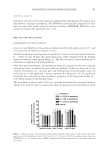
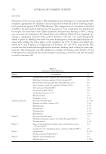
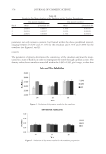
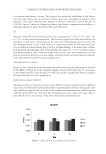
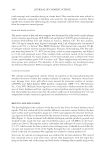
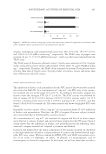
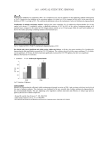
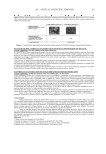
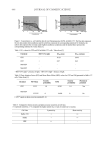
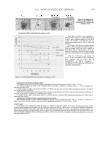
JOURNAL OF COSMETIC SCIENCE 386 (with stirring) and overnight drying in a fume hood. Hair swatches that were soaked in buffer solutions containing no hardness ions served as the appropriate controls. Metal uptake was calculated by subtracting the average elemental content of the control groups from the respective treated groups. HAIR AND WATER ANALYSIS The metal content of hair and water samples was determined by inductively coupled plasma atomic emission spectroscopy (ICP-AES) with an Optima 5300 DV optical emission spec- trometer (PerkinElmer Life and Analytical Sciences, Shelton, CT). For hair analyses, 200–250 mg of samples were digested overnight with 2 ml of high-purity concentrated nitric acid (70% v/v, Aristar® Plus BDH Chemicals). This mixture also contained 150 μ1 of 100 ppm yttrium internal standard (Inorganic Ventures, Christianburg, VA). The sam- ples were then heated to 75°–80°C for one hour, cooled to room temperature, and diluted to 15 ml with deionized water. Three samples from each hair swatch of the treatment groups were analyzed. For water analyses, 10-ml water samples were acidifi ed with 50 μl of trace metal analysis grade 50% v/v nitric acid. Three samples from each water treat- ment group were analyzed. The alkalinity of the water samples was determined using the Palintest Photometer 8000 and reagent tablets (Palintest Ltd., Erlanger, KY). STATISTICAL ANALYSIS The calcium and magnesium content of hair are reported as the mean plus/minus the standard deviation of three hair samples analyzed in triplicate. Treatment (water hard- ness, damage level, water pH) effects were assessed by univariate analysis of variance (ANOVA) and Tukey-Kramer HSD pairwise comparisons ( JMP 7.0.2 SAS Institute Inc., Cary, NC). Multiple linear regression was conducted to further examine the infl u- ence of water hardness and hair condition on water hardness metal uptake by hair, and this relationship was characterized by the partial coeffi cient of determination (r2) of each independent variable. Statistical signifi cance was established at p 0.05 for all analyses. RESULTS AND DISCUSSION The data highlighted the condition of the hair as the key driver for water hardness metal uptake. This was evidenced by the notable differences in metal content between the hair types within each water hardness group (p 0.001) and supports the idea that the bind- ing capacity of the hair is determined by the amount of anionic groups present within the fi ber (Figure 1). Upon treatment with alkaline hydrogen peroxide products, peptide and disulfi de bonds inside the hair and 18-methyleicosanoic acid (18-MEA) on the hair’s surface are cleaved. This exposes anionic carboxylate and sulfonate (of cysteic acid) groups (15–17), which render the hair an ideal cation exchange resin. It should be noted that the calcium and magnesium levels of the highly damaged hair are comparable to the levels found in the hair of consumers who regularly use oxidative colorant products (5). Selectivity for calcium over magnesium was exhibited by the hair substrates. The treated hair contained seven to nine times more calcium than magnesium, with the virgin hair lying at the lower end of this range and both levels of damaged hair equally lying at the

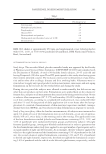
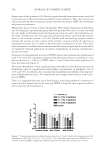
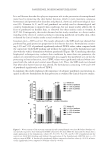
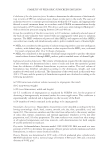
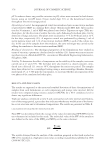
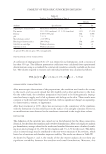
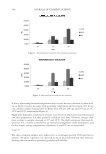
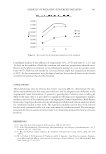
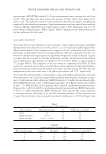
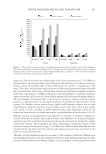
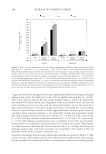
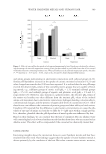
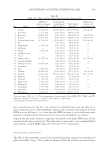
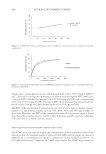
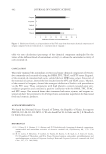
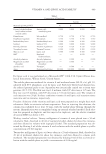
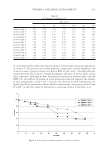
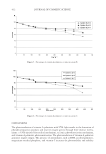
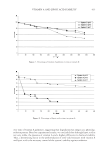
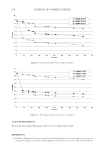
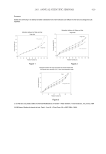
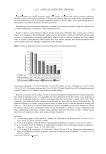
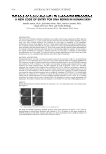
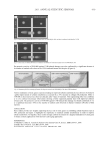
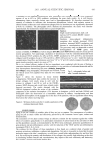
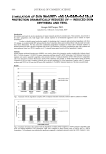
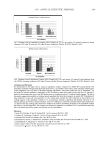
WATER HARDNESS METALS AND HUMAN HAIR 387 upper end. This observation was independent of the water treatment since 3:1 Ca/Mg was maintained for all water hardness levels. However, the selectivity for calcium over mag- nesium cannot be ascribed solely to the predominance of calcium vs magnesium in the water. This effect has been previously observed in laboratory experiments where bleached hair contained four times more calcium than magnesium following multiple treatments with water containing 1:1 Ca/Mg. In addition to the predominance of calcium vs magne- sium in the water, the sizes of the cations likely infl uenced their keratin-binding affi nities. The site-binding interactions that occur between cations in solution and the anionic groups of a polyelectrolyte are governed in part by the hydration characteristics of the cations (18). Smaller cations possess large, tightly held hydration spheres due to high charge density, while the opposite is true of larger cations (19). Since calcium has a larger ionic radius (1.18 Å), and thus a smaller hydrated radius than magnesium (0.82 Å), the former has been reported to adsorb more easily to polyeletrolytes than the latter (19–21). Baseline calcium and magnesium levels appeared to decrease as oxidative damage in- creased. However, we believe this trend was due to the diffusion of calcium and magne- sium ions out of the swollen hair and into the deionized water used for rinsing the oxidant crème from the hair. This hypothesis has been confi rmed by rinsing the oxidant crème from hair using local tap water (8 gpg 1:1 Ca/Mg ratio). When freshly bleached hair was rinsed with the tap water, the fi nal calcium and magnesium levels were equivalent to the levels in virgin/untreated hair. The effect of water hardness levels was secondary to the condition of the hair differences in metal uptake between the test water hardness levels were quite small in virgin hair, but they increased with oxidative hair damage (Figure 2). Interestingly, calcium uptake from hard Figure 1. Effect of hair condition on the calcium and magnesium content of virgin and bleached (damaged) hair treated with water of different hardness levels. Calcium content was highly dependent on the condition (binding capacity) of the hair substrate. Tukey-Kramer HSD analysis yielded p 0.001 for all hair condition comparisons within the tested water hardness levels.
Purchased for the exclusive use of nofirst nolast (unknown)
From: SCC Media Library & Resource Center (library.scconline.org)