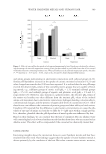
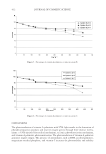
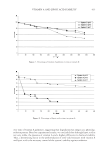
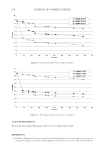
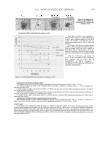
JOURNAL OF COSMETIC SCIENCE 368 CONCLUSION This clinical study showed that panthenol-based formulations increased skin moisture and had a signifi cant effect on skin barrier function by decreasing TEWL values. In addi- tion, concentrations of pro-vitamin also infl uenced the improvement of skin barrier func- tion. One percent panthenol added to the basic formulation tested was suffi cient to show effi cacy in this parameter. It seems that the moisturizing effects of panthenol can be attributed mainly to the protection of skin barrier function, and thus it may be used in cosmetic products to maintain physiological skin conditions and to prevent dry skin alterations, since loss of water may adversely impact skin appearance and lead to skin disorders. ACKNOWLEDGMENTS The authors gratefully acknowledge the fi nancial support of Coordenação de Aperfeiçoa- mento de Pessoal de Nível Superior (CAPES), Conselho Nacional de Desenvolvimento Científi co e Tecnológico (CNPq), and Fundação de Amparo à Pesquisa do Estado de São Paulo (FAPESP). REFERENCES (1) R. W. Short, J. L. Chan, J. M. Choi, B. M. Egbert, W. E. Rehmus, and A. B. Kimball, Effects of mois- turization on epidermal homeostasis and differentiation, Clin. Exp. Dermatol., 32, 88–90 (2007). (2) S. E. Dal’Belo, L. R. Gaspar, and P. M. B. G. Maia Campos, Moisturizing effect of cosmetic formulations containing Aloe vera extract in different concentrations assessed by skin bioengineering techniques, Skin Res. Technol., 12, 241–246 (2006). (3) G. R. Leonardi, L. R. Gaspar, and P. M. B. G. Maia Campos, Application of a non-invasive method to study the moisturizing effect of formulations containing the moisturizing effect of formulations con- taining vitamins A or E or ceramide on human skin, J. Cosmet. Sci., 53, 263–268 (2002). (4) Z. D. Draelos, Moisturizing cream ameliorates dryness and desquamation in participants not receiving topical psoriasis treatment, Cutis, 82, 211–216 (2008). (5) M. Lodén, Role of topical emollients and moisturizers in the treatment of dry skin barrier disorders, Am. J. Clin. Dermatol., 4, 771–788 (2003). (6) P. M. B. G. Maia Campos, G. M. S. Gonçalves, and L. R. Gaspar, In vitro antioxidant activity and in vivo effi cacy of topical formulations containing vitamin C and its derivatives studied by non-invasive methods, Skin Res. Technol., 14, 376–380 (2008). (7) S. R. Pinnell, Cutaneous photodamage, oxidative stress, and topical antioxidant protection, J. Am. Acad. Dermatol., 48, 1–22 (2003). (8) P. M. B. G. Maia Campos, G. Ricci, M. Semprini, and R. A. Lopes, Histopathological, morphometric, and stereological studies of dermocosmetic skin formulations containing vitamin A and/or glycolic acid, J. Cosmet. Sci., 50, 159–170 (1999). (9) B. Idson, Vitamins and skin, Cosmet. Toiletr., 108, 79–94 (1993). (10) W. Gehring and M. Gloor, Effect of topically applied dexpanthenol on epidermal barrier function and stratum corneum hydration, Arzneimittelf, 50, 659–663 (2002). (11) F. Ebner, A. Heller, F. Rippke, and I. Tausch, Topical use of dexpanthenol in skin disorders, Am. J. Clin. Dermatol., 3, 427–433 (2002). (12) K. Biro, D. Thac, I. F. Ochsendorf, R. Kaufmann, and W. H. Boehncke, Effi cacy of dexpanthenol in skin protection against irritation: A double-blind, placebo-controlled study, Contact. Derm., 49, 80–84 (2003). (13) I. Buraczewska, B. Berne, M. Lindberg, H. Törmä, and M. Lodén, Changes in skin barrier function fol- lowing long-term treatment with moisturizers: A randomized controlled trial, Br. J. Dermatol., 156, 492–498 (2007).

PANTHENOL IN SKIN MOISTURIZATION 369 (14) R. Darlenski, S. Sassning, N. Tsankov, and J. W. Fluhr, Non-invasive in vivo methods for investigation of the skin barrier physical properties, Eur. J. Pharm. Biopharm., 72, 295–303 (2009). (15) C. Robert, A. M. Robert, and L. Robert, Effect of a fucose-rich polysaccharide preparation on the age- dependent evaluation of the skin surface micro-relief, Pathol. Biol., 51, 586–590 (2003). (16) E. Xhaufl aire-Uhoda, V. Vroome, G. Cauwenbergh, and G. E. Pierard, Dynamics of skin barrier repair following topical applications of miconazole nitrate, Skin Pharmacol. Physiol., 19, 290–294 (2006). (17) S. A. Wissing and R. H. Muller, The infl uence of solid lipid nanoparticles on skin hydration and vis- coelasticity—In vivo study, Eur. J. Pharm. Biopharm., 56, 67–72 (2003). (18) L. J. Schlangen, D. Brokken, and P. M. Van Kemenade, Correlations between small aperture skin suc- tion parameters: Statistical analysis and mechanical model, Skin Res. Technol., 9, 122–130 (2003). (19) H. Dobrev, Use of cutometer to assess epidermal hydration, Skin Res. Technol., 6, 239–244 (2000). (20) M. A. Pathak and T. B. Fitzpatrick, “Preventive Treatment of Sunburn, Dermatoheliosis and Skin Can- cer with Sun-Protective Agents,” in Dermatology in General Medicine, T. B. Fitzpatrick, A. Z. Eilsen, K. Wolff, I. M. Freedberg, and K. F. Austen, Eds. (McGraw-Hill, New York, 1993) pp. 1689–1716. (21) H. Löffl er, G. D. Kampf, D. Schmermund, and H. I. Maibach, How irritant is alcohol? Br. J. Dermatol., 157, 74–81 (2007). (22) E. Yilmaz and H. H. Borchert, Effect of lipid-containing, positively charged nanoemulsions on skin hydration, elasticity and erythema: An in vivo study, Int. J. Pharm., 307, 232–238 (2006). (23) R. E. Imhof, M. E. P. De Jesus, P. Xiao, L. I. Ciortea, and E. P. Berg, Closed-chamber transepidermal water loss measurement: Microclimate, calibration and performance, Int. J. Cosmet. Sci., 31, 97–118 (2009). (24) G. M. Silva and P. M. B. G. Maia Campos, Histopathological, morphometric and stereological studies of ascorbic acid and magnesium ascorbyl phosphate in a skincare formulation, Int. J. Cosmet. Sci., 22, 169–179 (2000). (25) T. C. Flynn, J. Petros, R. E. Clark, and G. E. Viehman, Dry skin and moisturizers, Clin. Dermatol., 19, 387–392 (2001). (26) S. Mac-Mary, P. Creidi, D. Marsaut, C. Courderot-Masuyer, V. Cochet, T. Gharbi, D. Guidicelli-Arranz, F. Tondu, and P. Humbert, Assessment of effects of an additional dietary natural mineral water uptake on skin hydration in healthy subjects by dynamic barrier function measurements and clinic scoring, Skin Res. Technol., 12, 199–205 (2006). (27) M. P. Lupo, Antioxidants and vitamins in cosmetics, Clin. Dermatol., 19, 467–473 (2001). (28) K. L. Keller and N. A. Fenske, Uses of vitamins A, C and E and related compounds in dermatology: A review, J. Am. Acad. Dermatol., 39, 611–25 (1998).
Purchased for the exclusive use of nofirst nolast (unknown)
From: SCC Media Library & Resource Center (library.scconline.org)