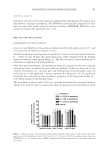
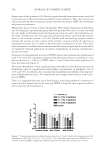
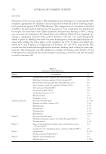
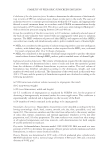
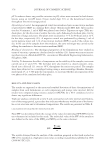
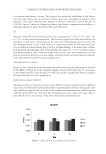
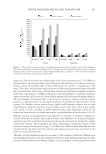
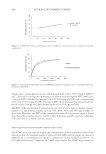
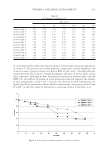
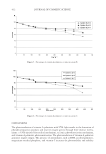
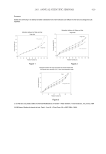
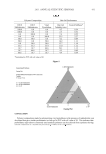
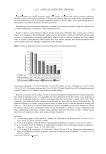
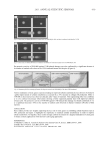
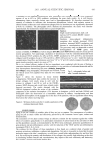
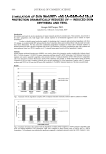
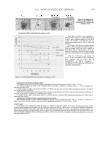
JOURNAL OF COSMETIC SCIENCE 366 deeper layers of the epidermis (19). Results suggest that the formulations under study did not present any of the above-mentioned effects on the epidermis. They seem to have not only a moisturizing effect on stratum corneum but they also reduce TEWL due to fi lmogen and protective properties. Moisturizers may act by an occlusive mechanism. They impair evaporation of skin mois- ture by forming an epicutaneous greasy fi lm that prevents water loss, as is the case with the oils, lipids, and hydrogenated and ethoxylated castor oil used in the formulation un- der study. A humectant activity by glycerin and urea may attract water from the environ- ment to the stratum corneum (2,25,26). Studies with moisturizing products should evaluate the increase in water content of the stratum corneum and also the decrease in transepidermal water loss, in order to determine their mechanism of action. Thus, mul- tiple assessments to evaluate barrier function and the raising of questions about the effects of cumulative repeated application of cosmetic formulations on stratum corneum func- tion are necessary. Evaluation of transepidermal water loss (TEWL) showed that formulations supplemented with 1.0% and 5.0% of panthenol improved the skin barrier function, resulting in a sig- nifi cant decrease (p 0.001) in TEWL values 15 and 30 days after daily application of these formulations (Figure 2). This result showed that to have signifi cant long-term effects on skin barrier function, the formulation must be supplemented with higher concentrations of panthenol, such as 1.0% and 5.0%. In addition, the concentration of panthenol also infl uenced the improve- ment of skin hydration since 1.0% of panthenol was enough to show effi cacy in the reduc- tion of TEWL. Thus, it is suggested that daily use of formulations containing panthenol is important to protect the skin barrier function by reducing TEWL, to keep the skin in good condition, and to maintain skin homeostasis. Figure 2. Transepidermal water loss before (baseline values) and 15 and 30 weeks after the application of the formulations: vehicle (V), V+0.5%, V+1.0%, and V+5.0% of panthenol and control site (ANOVA test, n = 20 subjects, mean ± SEM). ∗Signifi cantly different from the base values and control site ( p 0.001).

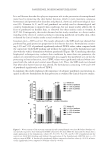
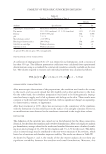
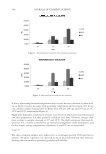
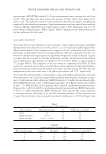
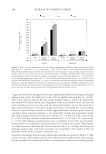
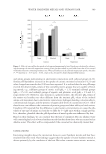
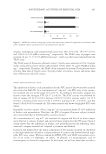
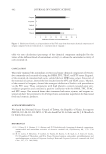
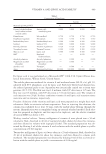
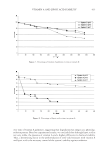
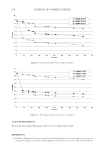
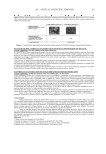
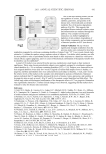
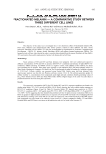
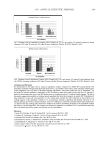
PANTHENOL IN SKIN MOISTURIZATION 367 It is well known that the skin plays an important role in the prevention of transepidermal water loss by protecting the skin barrier function, which in turn maintains cutaneous homeostasis and prevents skin disorders and physical, chemical, and bacteriological inju- ries (26). Vitamins A, C, and E and panthenol are widely used in dermatological and cosmetic formulations to improve skin conditions, but not many studies address the ef- fects of panthenol on healthy skin, as observed for other entities such as vitamin A (8,27,28). Consequently, the results obtained in this study contribute to a better under- standing of the effects of cosmetic products containing panthenol on healthy skin, when evaluated by clinical studies under actual conditions of use. Immediate effects—SLES wash test. The results obtained in the SLES wash test showed that panthenol has good protection properties for skin barrier function. Formulations contain- ing 1.0% and 5.0% of panthenol signifi cantly reduced TEWL values, when compared with the control site (with SLES washing and without the application of the formulations) and also with the vehicle (formulation without panthenol) (Figure 3B). Considering that skin biophysical techniques may evaluate skin conditions by more than one parameter, the analysis of corneometer and tewameter results may suggest that panthenol acts on skin by protecting its barrier function, since TEWL values were signifi cantly reduced when com- pared with the vehicle and control areas (Figure 3A). Thus, the SLES wash test showed that when skin barrier function was altered, the formulations containing 1.0% and 5.0% of panthenol signifi cantly reduced TEWL. In summary, this study emphasizes the importance of adequate panthenol concentrations re- quired in effective formulations for skin protection as evaluated by clinical objective studies. Figure 3. Water content of the stratum corneum (A) and transepidermal water loss (B) before (baseline val- ues) and after repetitive skin washing with SLES solution for fi ve days (SLES fi ve days) and two hours after a single application of the formulations: vehicle (V), V+0.5%, V+1.0%, and V+5.0% of panthenol and the control site (with SLES washing and without the application of the formulations) (ANOVA test, n = 20 subjects, mean ± SEM). Ë Statistically signifi cantly higher compared to baseline values (p 0.001) • Statis- tically signifi cantly lower compared to baseline values (p 0.001).
Purchased for the exclusive use of nofirst nolast (unknown)
From: SCC Media Library & Resource Center (library.scconline.org)