THE GERANIUM FAMILY IN PERFUMERY instructive to observe how frequently not only in the Latin and Greek substantives but in the homely country names as found in most Em opean languages, the matrix is preserved and perpetuated in a brief description centred upon a fancied resemblance of some part of a plant to an animal. Thus we find such examples as adder's-tongue, colt's-foot, dogwood, fox- glove, hound's-tongue, snake-root, wolf's-bane and many others, while quite a number of avian references are also to be discovered. In this direction we have already seen mention of larkspurs and the ibis association with hibiscus, to which may now be added a botanically interesting trinity, because it is from the Greek, geranos = a crane, that this family derives its generic name, a further contribution being made by the sub-orders, the Erodiums, erodios = a heron, and the Pelargoniurns, palargos = a stork. In miniature, the ripe seeds of these plants bear a superficial resemblance to a crane's head with its long bill. This fancied appearance was noted by Dioscorides (an army surgeon to Roman troops circa A.I). $$), who commented upon this class of what we now term "explosive" fruits, i.e., so great a tension is built up in the ripening capsules on a hot sunny day that they are suddenly ruptured and catapult the seeds to a considerable distance from the. parent planl•wa proclivity which is observed to a remarkable degree in another genus of this family, namely, the Impatiens or Balsams. TI-IE WILD GERANIUMS Attention is first directed to the prototype Geranium Robertianurn, the familiar crimson- or purple-flowered herb Robert of the country roadsides and woodlands. There are several alternative suggestions to account for the chgice of name, probably the most likely being its derivation from Robert, Duke of Normandy, for whom was written the celebrated medieval medical treatise--Regimen Sanitatis Salernitanurn. As I am beginning to find usual, the country names afford an interesting insight into the potentials of the family, for, in this case, the plant is aptly termed "red shanks" because of its very long, thin red stalks and, in autumn, a particularly bright crimson foliage hence some of its other sobriquets, e.g., dragoh's blood and blood-wort. In this direction, it is recorded by the old herbalists that Nature seems to have set a blood-red seal upon several. of her herbs to indicate their virtue of being able to stop bleedings, this and the tutsan {Hypericurn androsaernurn) have long been regarded as the two best remedies afforded by the fields for the rapid control of internal and external h•emorrhages. This russet tinge and trend is still more notable in G. sanguineurn and, as previously mentioned, it is not unduly surprising to find a name such as alum root bestowed upon the purple-flowered G. rnaculaturn, when it is known that the rhizomes contain upwards of 30 per cent of tannic acid, thus prorid-

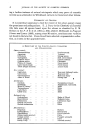
4 JOURNAL OF THE SOCIETY OF COSMETIC CHEMISTS ing a further instance of natural astringents which may prove of cosmetic interest as an alternative to Witchhazel extracts for facial and other lotions. DIVERSITY OF ODOURS It is somewhat surprising to find the extent of the odour gamut among the geraniums and pelargoniums. E.J. Parry in the Chemistry of Essential Oils lists some 40 species based upon the odours as classified by E. M. Holmes in the P. & E. 0. R. (1913, p. 372), while D. McDonald, in Fragrant Flowers and Leaves (1895), among some 30 entries, mentions some varieties not found in the later list. From these I have selected a representative collec- tion, as is seen in the appended table. A BRIEF LIST OF THE SCENTED-LEAVED GERANIUMS AND PELARGONIUMS Citrus scented: Abrotanifolium Asperium .. Ci'triodora .. Variegatum .. Crispurn major Crispurn minor Prince of Orange Lady Scarborough Triste (Night-scented Rose scented: Capitaturn .. Graveolens Odoratissimum' ' Attar of Roses Herbal type: Clorinda .. Endsleigh Moore's Victor«' Tormentosum .. Lady Mary .. Little Gem .. Balsatalc type: Cedronellum .... Quercifolium .... Glutinosum .. Radula vitifolid• .. Radula balsameum .. Miscellaneous: Fulgidum .... Exstipulatum .... Glaucifolium . Atrum (night-s• nted)' Unique aurore .... White Unique .... Pretty Polly .... Southernwood Verbena Strong lemon Soft, sweet lemon Lemon-verbena Citronella Sweet lemon Sweet lemon Lemon-balm .. Rose and diphenyl oxide, .. Rose and rue .. Rose and tansy ß. Strong rose ! Eucalyptus (cineol) Peppermint, Citronella Ditto Ditto Ditto Ditto .... Balm of Gilead .... Balsamic-balm .... Labdanum type .... Ditto .... Ditto Butyric Pennyroyal Clove-hyacinth Ditto Pungent aromatic Ditto Almond scented
Purchased for the exclusive use of nofirst nolast (unknown)
From: SCC Media Library & Resource Center (library.scconline.org)