THE GERANIUM FAMILY IN PERFUMERY 7 THE GERANIUM OILS It will be noted, when the Labiate family is considered, that the essential oil is usually found throughout the green parts, but in some genera {for example, the Mints and Basils) it is concentrated in the inflorescence just before the flowers open. A similar mobilisation of the essential oil takes place in the Pelargoniums, but with this difference, inasmuch as the essential oil acquires a more flowery character as the 'buds open, by the transformation of the prevailing citral-type odour into a geraniol or rose-like fragrance. Hence the plant is gathered for distillation a little before the opening of the flowers and, although the petals yield no odorous product, in order to waste no time in detaching the flowers they are put into the stills with the leaves. Reference to the literature from 1802 to date provides a considerable amount of information and some conflicting opinions, but to epitomise, it may be stated that the original South African parent plants have provided North-west Africa, Southern Europe and East Africa, and especially Bourbon (Reunion), with plantation stock specially selected from hybrids among P. capitarum, P. odoratissimum, P. roseurn, P. graveolens and so on. Specimens of the above-named, as grown in England, differ in many respects, but collectively, the foliage when fresh yields upon distillation the familiar brownish green geranium oil of commerce, which possesses a characteristic deep, sweet rose-like odour. Furthermore, it becomes very evident upon examination of the analytical data given in the literature regarding the geranium oils, that this reflects the many differences in odour value according to the plant species, soil and climatic conditions prevailing in the locality of the plantations, variations which are immediately obvious upon odour comparisons between authentic samples from different sources. It is therefore expedient to select for consideration here a well-defined type as a standard, for example, Oil Geranium Bourbon. This, incidentally, introduces into these essays • the first mention of probably the most impor- tant and at the same time the 'most widely used of our natural perfume materials, namely, the sweet, rose-smelling oils of geranium, the isolated alcohol, geraniol and its esters. According to Piesse, writing in 1855, several varieties of geraniums bear- ing scent-yielding leaves were introduced into Europe from South Africa as far back as lB00, but it was not until 1847 that P. capitaturn, the purple- flowered, round-headed geranium began to be systematically cultivated in the south of France for the purpose of extracting its scent-yielding principle, known then in commerce as otto of rose-leaf geranium. It would appear that geraniol was first isolated from Palmarosa oil by Jacobsen in 1871 by adopting the unique property of calcium chloride to

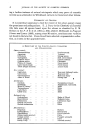
8 JOURNAL OF THE SOCIETY OF COSMETIC CHEMISTS form crystalline magmas with certain alcohols, while Tiemann, in 1898, oxidised geraniol to citral and subsequently reduced this aldehyde and regenerated the alcohol. 0DOUR-PATTERNS It is here instructive to recall Pie. sse's remark regardi•ng this rose-leaf geranium, for h e says ß "... the leaves of this plant yield by distillation a very agreeable rose-smelling otto, so much resembling the real Otto of Rose, that it is used very extensively for the adulteration of that valuable scent .... ' ' I have used elsewhere the term "fragrance-pattern" and illustrated it by a diad or triad of well-defined floral types selected from the groups of fragrances arranged in tabular for m a•cording to my interpretation of their order of relative importance i•n perfumery compounding. This has been based upon a systematic analysis of several hundreds of the more charac- teristic type-formulae as presented in the various perfumery recipe books from 1855 onwards, and almost automatically verified by the cumulative indices in my laboratory notebooks. From this statistical data definite evidence emerges of what has often, but somewhat casually, been mentioned in the litei'ature, namely, that there is scarcely a perfume base in which the elements of rose, j asmin or neroli do not appear in some form or other. In my Tabulation of Blossom Fragrances, initial consideration is afforded to two groups each containing f/re basic odours, proportional admixture of which results in the evolution, first of the simple exotics and then the more complex floral odours, but whatever the angle of approach may be, it will invariably be found that attention gravitates towards the rose content. I therefore feel that in so far as the essentials of perfumery compounding are concerned, the prime odours should be regarded as having odour-patterns, reserving the termfragrance-patterns to define with some precision the osmical end-points of prime odour combination. This approach opens a very interesting vista, because, for example, in the case of the rose, not only does the noun name and place the flower, but analysis of the essential oil derived from it reveals the type and quantity present of the dominant and recessive osmophores, from which, usually with a large measure of success, reconstitution of the otto of rose aroma is possible. THE GERANIUM FRAGRANCE Consideration of the geranium oils affords another opportunity of dealing with an important item in the commerce of perfumery raw materials and at the same time to appreciate the value of the data now available in the litera- ture of the essential oils concerning their chemical and physical properties,
Purchased for the exclusive use of nofirst nolast (unknown)
From: SCC Media Library & Resource Center (library.scconline.org)