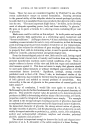
TOWARD A UNITED NATIONS OF COSMETIC CHEMISTS 7. To the greatest extent possible, to harmonise and standardise tech- niques as well as the use of raw materials. 8. To protect by all necessary means the quality of beauty products and their scientific character. 9. In a general way, to carry on all activities authorised by law, and coming directly or indirectly within the framework of the ai:ove paragraphs. Now I am certain that after having heard the rationale for the existence of this federation as proposed by the French, you can all find some faults with a good number of the ideas expressed. Will this federation further the aims of the British and American Societies on an international level ? Will the professional status of the British and American cosmetic chemist increase as a result of this move, or will he be adversely affected ? These are the basic questions which come to mind and which I think should be considered before any official action is undertaken. Let us look at our present position on the world scene to-day. Actually the British and we are the strongest and most scientifically advanced societies of cosmetic chemists in the world. Cosmetic chemists the world over have been looking to us for guidance in this direction. We have helped establish similar functioning societies in Denmark, Switzerland and Germany though newly formed, they are enthusiastic and energetic about modelling their operations along the same lines as the British and U.S. Societies. Perhaps this approach of guiding the cosmetic chemists of the world to pattern their societies after ours is our rightful and most fruitful role in this international picture. On the other hand, to-day, when all scientists are thinking more and more in international terms, it appears that an international federation could serve as the medium through which the efforts of research workers, scholars, technologists and professional people of all countries associated with various scientific disciplines could make vital contributions to the future achievements of cosmetic chemists. With this in mind I would like to suggest the following thoughts that may lead to a plan of action for this international grouping: 1. The name of the group should read as follows: (a) International Federation of Societies of Cosmetic Chemists, or (b) International Federation of Societies of Cosmetic Scientists. 2. The central office of this federation shall not be in Paris as suggested by the French but shall be in such city as may be designated by the General Assembly from year to year. 3. The Federation shall be composed of national groups entitled Societies of Cosmetic Chemists and not Societies of Cosmetology.

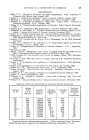
68 JOURNAL OF THE SOCIETY OF COSMETIC CHEMISTS 4. Membership of these national societies shall include only scientifically trained people who, by education and/or' experience, qualify as cosmetic chemists or scientists. • 5. The prevailing language of the federation shall be English and not French as now'suggested. 6. A constitution shall be drawn up by a committee on international affairs which I have already appointed. In this direction all members are urged to make suggestions. This committee is headed up by M. G. deNavarre, supported by R. A. Kramer, J. H. Baker and myself. In order further to crystallise our thinking, the possible functions of this federation might be the following: 1. To co-ordinate, by correspondence, interchange of information, and in other ways, the work and efforts of the autonomous national societies. 2. To encourage and to sponsor, by research grants, subsidies, and in other ways, fundamental research work by universities and by inde- pendent workers in any 'and all fields that may add to the knowledge of cosmetic science. 3. To cement relationships by reporting on activities in the various autonomous national societies. 4. To publish and phblicise literature of an international scope, including bulletins, abstracts and reviews. To help research workers obtain from foreign lands information, literature, patents, and other aids as may be requested and as may be possible. 5. To exchange information on any standardised procedures that may be adopted with regard to analyses of raw materials or finished products, efSciency of products, etc., and to participate in any effort to adopt such procedures internationally. 6. To publicise within the national societies and in the technical and other press of the various countries the activities of the Societies in foreign lands. 7. To hold seminars and meetings on an international scale to invite speakers from foreign lands whenever feasible to give publicity to meetings well in advance so that foreign visitors may attend. 8. To sponsor awards of an international character for outstanding achievements in research, publication, or other types, on behalf of the cosmetic sciences. 9. To protect the professional standards of cosmetic chemists, except as may be restricted by the framework of the autonomous national societies, the laws of the lands in which they are located, and the interests of institutions or companies with which the members are or have been af51iated.
Purchased for the exclusive use of nofirst nolast (unknown)
From: SCC Media Library & Resource Center (library.scconline.org)