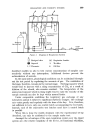
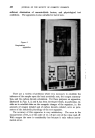
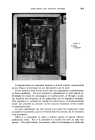
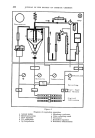
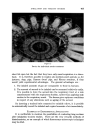
RABBIT SKIN STUDIES IN EVALUATING COSMETIC SAFETY 381 with changes in the hematogram and urine constituents. Several examples may be given to indicate the usefulness of this type of experiment. (1) A tin compound which was to be used as a bacteriostatic agent, and which apparently was absorbed by the animal causing neurological changes. The animal was unable to move about due to paralysis of the hindquarters. There was also an increase in sensitivity to pressure, at the site of application. (2) A compound of a heavy metal which was to have a cosmetic effect upon the skin. Enough of the material was, however, absorbed through the skin to accumulate in the kidney, and cause functional damage. Chemical analysis of this organ showed appreciable levels of the metal to be present. Single applications of a new cosmetic in small or large amounts may result in no irritation or systemic toxicity. A repeated exposure to small amounts of the compound may result in a cumulative effect. Since cosmetic preparations are used daily for long periods of time a procedure is followed which involves daily application of the substance under study. 90 daily applications are made to the clipped backs of groups of rabbits, and they are observed for changes in body weight, behaviour pattern, hematological values, and urine constituents. When the animals are sacrificed, a complete histological examination is made of the major organ systems. At least three levels of the material, in terms of body weight, are employed and a blank control group is always included. The levels applied are in direct relation to eventual human use, calculated on a weight basis, and range from three to ten times the amount that would normally be applied. The applications are made daily, and are rubbed into the clipped back of each animal with a glass rod. Approximately 10% of the animals' skin area is covered, and the animals are maintained in multiple animal holders for 4 hours after each treatment. After this period, the remaining material is wiped off, and the animals are returned to their individual cages. This procedure has shown that continuous exposure, with applications always to the same area, can be used to detect substances that are non-irritating on single contact, but do produce a definite change in the skin after multiple applications. If experience indicates that the animals may lick off enough of the material to cause toxicity by ingestion, they are fitted with a harness which does not allow them to lick their backs but does allow them to carry on all their normal functions (1). In a study of the effects of a series of potential lipstick colours upon the skin, it was observed that a particular colour produced death to a number of animals. At first, absorption through the skin was suspected but after the use of the harness none of the animals died. The animals were licking off enough from their backs to cause oral toxicity. An attempt has been made to indicate the usefulness of animal data in evaluating the safety of cosmetic preparations. In 4 examples described,

382 JOURNAL OF TI-IE SOCIETY OF COSMETIC CHEMISTS primary irritation in each of 3 rabbits was confirmed by human patch tests on 25 humans. 'We believe that the use of laboratory animals, under controlled conditions, is a valuable tool for screening new cosmetic pre- parations. Since all cosmetic manufacturers are desirous of producing safe preparations it would be wise to employ the methods described above. The knowledge obtained would aid them greatly in predicting any harmful effects, and indicating the ability of their product to be absorbed by the skin. They may reject a product which shows a reaction in the animal, but would not have done so in the human. This possibility, however, is statistically slight and is worth the risk. (Received: 30th September 1963.) I•EFEI•ENCE {1) E. A. Newmann Laboratory Animal Care 15 207 (1963). I)ISCUSSION MR. A. W. PoNt): When you were discussing the correlation between rabbit skin studies and human studies, you were talking in terms of the reactions obtained between 9 and 15 subjects out of 25. This is the sort of level that the cosmetic industry frankly is not very interested in, except perhaps when investigating a new raw material in its very initial stages. We are, however, worried about the reaction of 1 in 10,000 to a product of which many millions will be sold because if we are going to have 100 com- plaints of dermatitis for every million units sold every reputable company will be terribly worried. The difficulty is how to test for a sensitivity which is going to occur at a level of 1 in 10,000. It appears to be the normal thing that one starts to increase the severity of the tests in terms of the concentra- tion of the material used, and the frequency with which it is applied until some sort of reaction is obtained and one's consultant then says that this is a sensitizer. Nobody, however, appears to be able to answer the question concerning the likely risks in actual use, where the conditions vary tre- mendously from the quantitative tests. It therefore appears that all that we can do at the moment in the way of dermal testing is to sort out the real offenders for the other products there seems to be no alternative to market- ing. To me this seems highly unsatisfactory. TI• L•CTURER: You are correct. Animal testing is necessary for new products, new formulations or new components in old formulations. Using animals it is impossible in the laboratory, to develop a test sensitive enough to detect sensitivity in terms of a possible human exposure of 1 in 10,000. There is no formula which can be used to carry over to the human population results obtained in aniinals. This must be done by marketing,
Purchased for the exclusive use of nofirst nolast (unknown)
From: SCC Media Library & Resource Center (library.scconline.org)