394 JOURNAL OF THE SOCIETY OF COSMETIC CHEMISTS constitution than everyone else. This is a very real problem which we also have in the drug industry. We cannot detect these abnormal reactors in ordinary clinical thais, and they only become apparent in widespread use. In the cosmetic industry you become aware of them from the number of complaints which are received. In the drug industry the need is felt for an early warning system so that the doctor who observes them can draw our notice to them, and then we can determine their incidence. In sensi- tivity testing in animals we cannot predict with any degree of certainty what will happen in humans.

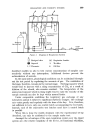
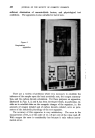
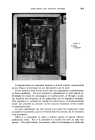
J. Soc. Cosmetic Chemists 15 395-409 (1964) ¸ 1064 Society of Cosmetic Chemists of Great Britain INHALATION AND TOXICITY STUDIES H. J. KINKEL, Dr. rer. nat.* Presented at the Symposium on "Toxicology of Cosmetic Materials", at Leamington, Warwicks., on 20th November 1963. Devices constructed for conducting inhalation and toxicity studies are •lescribed. The results of two investigations dealing with the inhalation of •igarette smoke particles, and the basic constituents of hair sprays are given. SCOPE In general it is noteworthy that toxicological problems claim much more attention nowadays than previously, and are likely to continue doing .•o. It is particularly important to state that the extension and intensifica- tion of toxicological investigations yielded significant findings, and contri- buted substantially to our pertinent knowledge. The variety of animal species Employed for expertmerits has beer• steadily increased. The choice of species depends or• the purpose of the test a cornpoured, for ir•starme, LaducLag paralysis of the cer•tral r•ervous system will usually be tested with a species which permits psychological alteratior•s to be recorded easily, e.g. dogs and mor•keys. The mammalian orgardsm is devised as a system barred agaLast •nviror•mer•tal impacts. Contacts between both systems are only possible through a few orifices. Apart from the gastro-iatestLaal tract, the respira- 'tory tract is the most importat&t er•trarme, for it facilitates the gas exchar•ge between the exterior medium arid the Latereal body liquids. Inhalatior• as such is characterized by the fact that both volatile and 11or•-volatile substances make rapid cor•tact with the large surface area ,of the alveolar mucous membrar•e thus rapid resorption occurs. The size of the inhaled particles determLaes the speed of their resorption. Particles with an average diameter of 0.5 microns are capable of reachLag the fittest alveoli, whereas larger particles ter•d to be trapped before reachLag this area. It was demor•strated by a comparative ir•vestigatior• that the mucous rnembrarm of the respiratory tract absorbs only slightly less thar• that of the Latestir•e. Colloids with a molecular weight of 70,000, equivaler•t to albumen, are capable of per•etrati!•g the mucous membrar•e of the respiratory tract. Bacteria which are r•ot destroyed or carried away by the secretions * Battelle-Institut, e.V., Frankfurt/Main, Germany. 395
Purchased for the exclusive use of nofirst nolast (unknown)
From: SCC Media Library & Resource Center (library.scconline.org)