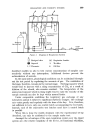
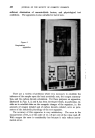
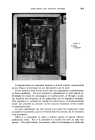
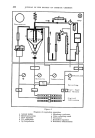
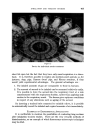
404 JOURNAL OF THE SOCIETY OF COSMETIC CHEMISTS Example 1 Freeze-sliced tissue sections of rat lungs, treated with cigarette smol•e were investigated with the following results: (a) Lungs of animals treated with smoke have yellow fluorescing particles when examined as fluorescence-microscopic preparations. These. fluorescing particles occur especially in close proximity to the larger bronchi or are phagocytized by cells (alveolar phagocytes). (b) There is a correlation between the number and the size of fluorescing• particles, and the amount of cigarettes smoked. The slides (to be shown) clearly demonstrate that the extent to which the brownish-yellow fluorescing particles occur depends on the number of cigarettes smoked, and the spots are visible in the vicinity of both the large: and the small bronchi. It should be noted that the slides depict sections. prepared according to our original, rather incomplete, technique. A more advanced technique has been developed since. Even so, the slides demon-. strate that the smoking apparatus functions properly, and they indicate that: the self-cleaning mechanism appears to play an important part. Example 2 Recently a number of authors have concerned themselves with the. compatibility of hair spray preparations. Some of them have stated that: the inhalation of hair spray preparations could lead to a deposition in the- respiratory tract of the basic constituents and thus give rise to diseases• like thesaurismosis or thesaurosis. The constituents most frequently em- ployed are polyvinyl pyrrolidone (PVP) or its co-polymer polyvinyl acetate. (PVA) shellac dimethylhydantoinforma!dehyde resin modified poly- acrylic acid resin or lanolin. The non-volatile component of these pre- parations ranges from 1.36 to 1.72 per cent (determined by heating for 2 hours at 105øC), with lanolin to 4.37 per cent, and the particle size is said to range from 1 to 30 microns. The toxicological results, and their interpretations are, however, not unanimous. The number of diseased cases is relatively small. The experiments with animals where it has not been possible to induce thesaurosis beyond doubt, have been carried out chiefly with only one species, and frequently an insufficient number of animals. Moreover the dosage applied in these experiments was usually relatively' high and the experimental period relatively short. As a result, the experi- mental set-up was not equivalent to actual usage. Subacute applications are even less related to conditions of usage. Colour slides of fluorescence-microscopic lung preparations show PVP deposits noted after exposing rats to hair spray preparations. (Received: 16th September

INHALATION AND TOXICITY STUDIES 405 REFERENCES •(1) H. I. Trurnit U.S. Army Chemical Corps Medical Division Report No. 181 (1949). •(2) J. Ferin and B. Ulehlova Arch. Gewerbepathol. Gewerbehyg. 16 630 (1959). '(3) E. J. King, A. B. Maguire and G. Nagelschmidt Brit. J. Ind. Med. 13 9 (1956). •(4) H. Antweiler in: Silikose-Forschung, Sonder-Band 2 509 (1958). •(5) W. Messerklinger Arch. Ohren-Nasen-u. Kehlkopfheilk. 173 1 (1958). •(6) W. Klosterkhtter, in H.Ntickel Fortschritte der biologisch•n Aerosol[orschung 1957- 1961 (Friedrich-Karl Schattauer Verlag, Stuttgart). Introduction by the lecturer Cigarette smoke particles were demonstrated to display yellow fluores- .cence without fluorochromes whereas these must be added when determining PVP, for example. Fluorescence occurs in either case with blue, as well as -with ultraviolet light. The method of preparing colour pictures of fluores- ,cence-microscopic slides, and pertinent details, has been described by 'Schiimmelfeder (7). In my opinion fluorescence-microscopy is a suitable method for demons- trating hair spray particles in different organs as, for instance, lung, lymph -nodes of the lung, liver, spleen, trachea and others. With this versatile :method no thesaurosis could be detected even under extremely vigorous ,experimental conditions of duration and intensity of exposure to the :materials. A number of colour slides were shown to demonstrate a correlation between •the number of cigarettes smoked, and the amount of particles found. Other slides shown were selected as a contribution to the controversial problem ,as to whether the constituents of hair sprays are incorporated into the lung, i.e. into the organism, or whether they are trapped before reaching the lung .because of their particle size. DISCUSSION DR. L. COLBERG: This is a subiect in which I have been very much .concerned in the past. You may recall that when I presented a paper before the Society earlier this year, I showed pictures of histological sections .of lung displaying the presence of fluorescent particles of labelled chymo- trypsin that had been administered to cats by inhalation (8). I demonstra- ted very much the same phenomena as have been presented, but the point -that I made then, I think, is still valid now, namely, that demonstration of -the presence of material is one thing but quantitative assessment of how much is there is quite another matter. I do not think that by any kind of :standardization of section thickness or any other procedure, one can arrive at a reliable estimate of the quantity of material present by the fluorescent {7) Schiimmelfeder Proc. Symposium on Cyto- and Histoch,mistry in Hematology, Freiburg 88 (1962). {8) L. Golberg, L. E. Martin, P. Sheard and C. Harrison Brit. J. Pharmacol. 15 304 (1960).
Purchased for the exclusive use of nofirst nolast (unknown)
From: SCC Media Library & Resource Center (library.scconline.org)