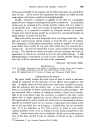
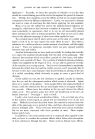
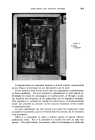
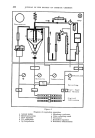
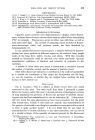
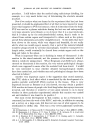
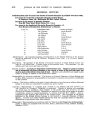
396 JOURNAL OF THE SOCIETY OF COSMETIC CHEMISTS can be resorbed fairly quickly for instance, virulent pneumococci introducec[ onto the nasa/mucosa of the mouse may be isolated ten minutes later from the cardiac blood. Passage into the capillaries occurs very easily, and is governed by the steep gradient of diffusion, which depends mainly on the velocity of the blood flow. Breathing significantly influences the respiratory system, its function• and anatomy. Hence, the different parts of the lung can be described according to their morphology and function. Table 1 lists the most im- portant data concerning the respiratory tract. Table 1. Schematic data of the human respiratory tract (1) Int. Cross Time Lung area Number Diam. Length sectional Velocity of flow (cm) (cm) area (cm/s)* (sec) -- (A) Trachea .... 1 1.30 11.0 1.3 150 0-07 (B) Central Bronchus 2 0.75 6.5 1.1 180 0.04 Bronchi: (C) First order .. 12 0-40 3-0 1.5 130 0.02 (D) Second order .. 100 0.20 1.5 3.1 65 0-02 (E) Third order .. 770 0.15 0.5 14.0 14 0.04 (F) Terminal bronchi 5.4 = 104 0.06 0.3 150.0 1.3 0.22: (G) Bronchioli respiratorii .. 1.1 =10 • 0.5 0.15 220.0 0.9 0.17 (H) Ductuli alveolarii. 2-6 = 10 ? 0.02 0.028 200.0 0.025 0.82 (J) Sacculi alveolarii .. 5.2-- 10 ? 0.03 0.03 147.00'* 0.0 1.2 *At a ventilation rate of 200 cm¾sec. **Total surface area of spherical Sacculi alveolarii. Inhalation is influenced by a number of factors, e.g. the type of sample material, solubility, distribution in the respiratory tract, toxicity, time of exposure, and disposition of the test animal, especially its particular in- dividual pattern as determined also by species, age, and numerous other factors. If the sample is rapidly absorbed, and distributed in the organism, it will affect the lung for a short period only. If the material is not readily soluble, or even insoluble, excretion, if any, will be very slow. The problems of changes due to sedimentation in the lung, and later consequences thereof, have not yet been elucidated sufficiently. There are certain self-cleaning mechanisms which defend the organism against absorption of particularly unphysiologica! contaminants of the inhaled air. This mechanism against factors usually present in the atmos- phere is most effective, because specific defence mechanisms have gradually been developed during phy!ogenesis.

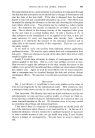
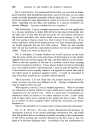
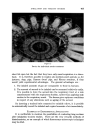
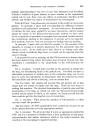
INHALATION AND TOXICITY STUDIES Ferin et al (2) report data on the self-cleaning efficiency of the lungs of a miner. Given a respiratory volume of 16 1/min, the air inhaled during a '7• h shift amounts to 7.2 m a. At a contamination of 75 mg dust/m a of air, the miner inhales 540 mg dust/day which amounts to 162 g/year, and to approx. 5.7 kg over a period of 35 years of working down the mine. King it al (3), however, reported the presence of an average of "only" 35 g of dust in the lung of a miner after 35 years of work. Although some details of the self-cleaning mechanism are known, very much has remained as yet unknown. Antweiler (4) found that the speed of transportation in the cilia-epithelium-lined trachea was 1.8 cm/min irre- spective of the weight, size, and shape of the dust particles. Phagocytosis is another mechanism of self-cleaning. Insoluble particles remaining in the alveoli will either be led into the interstitium of the lung, or will be phagocytized. The dust cells (alveolar phagocytes) can be eliminated from the organism by means of expectoration, or, alternatively might reach the gastro-intestinal tract. The whole of the mucous membrane of the respiratory tract is a border layer of the body, with the function to acclimatize the organism and the air to each other by raising the temperature of the inhaled air, humidifying it, and eliminating particulate matter. The cilia of the ciliated epithelium move at a rate of 160 to 250 strokes/min at the optimum temperature of ß 30øC, with one unit of the stroke lasting •- to •o of a second. Frequency and amplitude of the cilia strokes may vary, while rhythm and shape will essentially remain constant. It is the amplitude which is responsible for the transport efficiency. The ciliated epithelium displays an efficiency of 7 g/cm'/min. Stimulation of the sympathicus or parasympathicus induces a function ,.cycle (secretion, elimination, and replenishment) in the epithelium which, in return, regains its first phase within 60 to 80 min. Messerklinger (5) reported that treatments for several weeks, with ganglia-blocking agents do not lead to epithelial alterations of any histological significance. The epithelium itself, however, appears to be more resistant to some intoxications this ,observation could be interpreted to indicate that pathologic tonus alterations in the vegetative system may play an important part in the development .of abnormal variations of the epithelium. In case of chronic inhalation in low doses, rather slow elimination •)ccurs preferably via the lymphatic drainage system. Klosterk6tter (6) re- ported that electron-microscopic measurements of dust particles isolated from the lung 24 h after treatment, indicated that the diameter of 60 per cent is up to 0.56 microns, whereas with 95 per cent it is up to 1.0 micron. In evaluat- ing the inhalation of toxic dusts, the speed of self-cleaning of the lung must be taken into account, as more than 50 per cent of the particles reach the
Purchased for the exclusive use of nofirst nolast (unknown)
From: SCC Media Library & Resource Center (library.scconline.org)