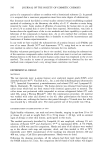
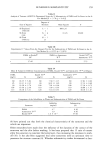
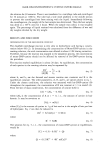
SUNSCREEN SUBSTANTIVITY 359 Table II Analysis of Variance (ANOVA) Determined From the % Substantivity of PABA and Its Esters in the I, Vivo Method IF = 5.78 (p 0.01)] Degrees of Sum of Squares Freedom Mean Squares F SS Explained k - 1 17682.48 2 SS Error N - k 2.84 21 SS Total N - 1 17685.32 23 8841.24 0.123 65490 Table III Experimental 't' Values From the Dunnett Test for the Substantivity of PABA and Its Esters in the In Vivo Method It = 0.573 (p 0.01)] PABA vs Escalol © PABA vs Amerscreen Escalol 507 © vs 507 "P"© Amerscreen "P"© t 57.66 0.16 57.5 Table IV Mean K Values for Different Concentrations of PABA, Escalol 507 ©, and Amerscreen "P"© in Ethanol PABA Escalol 507 © Amerscreen "P"© (rag%) K (mg%) K (mg%) 80 18.35 -+ 5.04 80 7.38 -+ 2.15 80 17.84 _+ 0.62 85 19.31 + 2.35 90 8.01 + 1.45 90 17.14 _+ 0.69 90 19.50 --- 2.76 100 7.01 --- 0.64 100 17.38 --- 0.72 105 19.50 - 2.59 110 7.09 -+ 0.55 110 18.08 _+ 1.41 115 18.10 +- 3.31 120 7.14 - 0.51 120 18.18 _ 1.67 Table V Comparison of the Solubilities in Water and Substantivities of PABA and Its Esters Solubility Substantivity Sunscreen (mg/ml) (%) PABA 4.7 0.30 Amerscreen "P"© 3.9 0.46 Escalol 507 © 1.6 X 10 -3 57.96 (9) have pointed out that both the chemical characteristics of the sunscreen and the vehicle are important. Other researchers have made clear the influence of the duration of the contact of the sunscreen and the skin before washing. It has been proposed that 15 min of contact allow the sunscreen to penetrate the horny layer, thus increasing the resistance to wash- off (10). It has also been suggested that some sunscreens need an optimum time to penetrate the stratum corneum (4). Whether substantivity confers detrimental or ben-

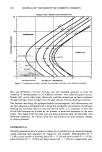
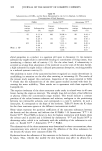
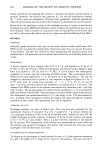
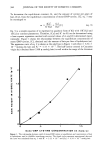
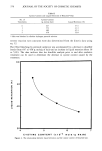
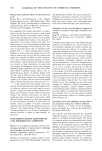
360 JOURNAL OF THE SOCIETY OF COSMETIC CHEMISTS Table VI Substantivities of PABA, and Its Esters Determined by the In Vivo Method, for Different Concentrations of Each Sunscreen PABA Escalol 507 © Amerscreen "P"© Concen- Concen- Concen- tration Substantivity tration Substantivity tration Substantivity (mg%) (%) (mg%) (%) (mg%) (%) Mean - SD 85 0.33 -+ 100 50.08 -+ 80 0.44 _+ 0.05 2.16 0.04 90 0.29 -+ 110 51.20 -+ 110 0.49 -+ 0.04 3.33 0.04 105 0.30 -+ 120 51.23 -+ 120 0.49 -+ 0.04 2.13 0.05 0.30 + 50.84 + 0.47 + 0.02 0.66 0.03 eficial properties to a product is a question still open to discussion (1). An excessive substantivity might result in irreversible binding to constituents of living tissues, thus introducing a distinct risk of toxicity (11). On the other hand, if substantivity is accepted as arising from adsorption of the molecule on active sites of the skin barrier, a high substantivity might induce a delayed percutaneous absorption, resulting possibly in a reduced systemic toxicity (1). The solubility in water of the sunscreen has been recognized as a major determinant in establishing its retention on the skin after sweating or swimming (4). The results of the present study support this conclusion. Inspection of the values reported in Table V reveals that the substantivities of the three agents studied increase with their de- creasing the water solubility. These results are in agreement with those reported by Cumpelik (4). The sorption isotherms of the three sunscreens under study in ethanol were in all cases linear, having the origin as intercept. The straight lines did not show a final inflection or plateau within the concentration range studied. This would indicate a constant partition of the solute between substrate and solution, analogous to the partitioning between two immiscible solvents, and corresponds to a type C isotherm. In such a linear plot, K corresponds to the slope of the isotherm. Table IV shows the K values for the three sunscreen agents at the different concentrations studied. These values represent the partition coefficients of the sunscreen substances between the keratin and the solvents and indicate that K PABA K Amerscreen "P"© K Escalol 507 ©. Thus PABA is shown to have the highest interaction with keratin when the solvent used is alcohol and is followed by Amerscreen "P"© and Escalol 507 © in decreasing order, which is in conformity with the solubility of the substances in eth- anol, i.e. Escalol 507 © Amerscreen "P"© PABA. The substantivies of the three sunscreens were determined at three concentrations these concentrations were selected at levels where the affinities of the three substances for the keratin (K values) were constants (Table VI). Hydration favors the adherence of the sunscreen to the keratin, which results in higher K values. Thus, vehicles that modify the skin hydration may affect its affinity for a
Purchased for the exclusive use of nofirst nolast (unknown)
From: SCC Media Library & Resource Center (library.scconline.org)