J. Soc. Cosmet. Chem., 36, 363-371 (September/October 1985) The disulfide interchange reaction of hydrolyzed hair keratin and bis-dinitrophenyl cystine in concentrated hydrochloric acid ELAINE L. PESCATORE and MAW-SHENG WU, The Gillette Company, Personal Care Division, Gillette Park, Boston, MA 02106. Received March 7, 1985. Synopsis The disulfide exchange reaction of cystine from hair keratin hydrolysates and bis-dinitrophenyl-cystine in concentrated hydrochloric acid was investigated. The reaction rate constants for the forward and the reverse reaction were found to be 12.8 and 5.0 hr -•, respectively. The equilibrium constant was 2.56. Using this reaction, the cystine contents in hydrolysates from intact and peroxide-bleached Caucasian hair were determined. The corresponding liquid retentions for the hair samples were also measured. A corre- lation between the decrease in cystine content due to the bleaching (from 647 • mole/g for intact hair to 450 • mole/g for 5 times bleached hair) and the increase in the liquid retention (from 38 to 53%) was demonstrated. INTRODUCTION The disulfide bonds of cystine in hair keratin contribute significantly to the physical and chemical properties of hair fibers. These bonds can be ruptured in a variety of ways including bleaching, waving, or exposure to UV radiation. Hair fibers undergoing these reactions will change their properties. An estimate of the number of disulfide bonds broken by these treatments would indicate the extent of these reactions with the hair. A disulfide interchange reaction in a concentrated acidic medium was demonstrated by Sanger (1,2) using bis-dinitroprophenyl cystine (DNP-S-S-DNP) and cystine (Cy-S-S- Cy) as model compounds k• Cy-S-S-Cy + DNP-S-S-DNP • 2 Cy-S-S-DNP (eq. 1) k2 (A) (B) (C) The mechanism of this reaction was deduced by Benesch and Benesch (3) and can be represented by the following scheme: INITIATION: RSSR + H + • RS + + RSH EXCHANGE: RS + q- R'SSR' • RSSR' q- R'S + INHIBITION: R'S + q- RSH • RSSR' q- H + 363

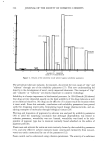
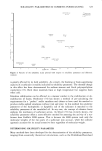
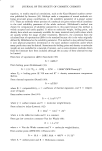
364 JOURNAL OF THE SOCIETY OF COSMETIC CHEMISTS Glazer and Smith (4) employed this reaction to estimate the amount of half-cystine in proteins. However, the reaction rate constants (kl, k2) and the equilibrium constant (K = k•/k2) were not determined. Without these parameters, multiple experiments with several concentrations of a protein were required to determine the cystine content. Herewith we are reporting a study on the exchange reaction of cystine in hair keratin hydrolysates and bis-DNP(dinitrophenyl) cystine to obtain the equilibrium and reaction rate constants. These constants in conjunction with the equilibrium or the kinetic data are used to determine the cystine contents in virgin and oxidized (bleached) hair fibers. METHOD MATERIALS Analytical grade chemicals were used in the study without further purification. Bis- DNP-cystine was obtained commercially. Brown Caucasian hair was used as the source of hair keratin. The hair was cleaned by twice shampooing and repeated rinsing with distilled water. All glassware was acid washed and rinsed well with distilled water prior to use. EXPERIMENTS A known amount of hair, ranging from 0.05 to 0.5 g, was digested in 25 ml of 12 N HCI at 50øC for 48 hours. Then the hydrolysate was filtered using a Milipore glass filter and diluted to 250 ml with 9.6 N HC1. A 20-ml aliquot was subsequently transferred to a screw cap vial containing bis-DNP-cystine. The concentration of bis- DNP-cystine used ranged from 1.2 to 10 mg per ml of hair hydrolysate. The vial was wrapped in aluminum foil to protect it from exposure to light and placed in a 39 + 0.5øC water bath. At certain time intervals, i.e., 1, 2, 3, 4, 8, 10, 15, 23, and 30 days, 1 ml of the reaction solution was withdrawn and diluted with 1.5 ml water. The unreacted bis-DNP-cystine in the solution was removed by extraction with 3 ml ethyl ether 6 times. The aqueous phase was quantitatively transferred to a 25-ml volumetric flask and diluted with 6N HCI. The concentration of mono-DNP-cystine in the solution was determined spectrophotometrically at 357 nm using a Cary 17D spectrophotom- eter. A sample of the hydrolysate without the reagent was taken through the complete procedure as the control. All experiments were run in duplicate. OXIDATION OF HAIR Hydrogen peroxide was used to bleach hair. Two solutions were prepared for the experiment. Solution A contained 10 g urea, 3 g glycerine, 7 g sodium chloride and 12 g ammonia hydroxide (30%) in 68 ml of distilled water. Solution B was a 6% (by weight) hydrogen peroxide solution. A mixture of 10 ml of each solution was heated to 32 -+ 0.5øC in a glass beaker. Then a 2 g hair tress was immersed in the mixture for 30 minutes. The temperature of the solution was maintained by a water bath and the solution was agitated throughout this period. The oxidized hair tress was rinsed thoroughly with distilled water and dried. DETERMINATION OF LIQUID RETENTION To determine the percentage of liquid retained by hair, a 0.2 g hair tress was immersed in a pH 7.00 buffer with 2 drops of 1% Triton X 100 solution. The hair was left in
Purchased for the exclusive use of nofirst nolast (unknown)
From: SCC Media Library & Resource Center (library.scconline.org)