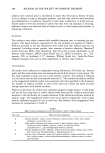
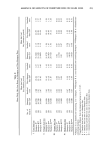
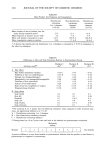
ABSENCE OF EFFECTS OF DIMETHICONE ON HAIR LOSS 197 a 4-point scale where 1 represented oily hair and 4 represented dry hair. Hair damage was assessed in a similar manner on a 4-point scale where 1 represented undamaged hair and 4 represented severely damaged hair. The hair dryness and hair damage scores were totalled and used as a stratification criterion for the balance and assignment of subjects in the study. Subjects were assessed for abnormal hair loss using the following criteria: the pull test (3), the evaluation of short hairs at the hair part for tapered and blunt hair characteristics, and the assessment of the width of the hair part for hair thinning. Other means of assessing abnormal hair loss, such as the pluck test (3) were considered, but the pluck test was not implemented since this procedure entailed significant pain and some hair loss from plucking in a group of healthy normals not in a hair growth study. Subjects deemed healthy, not on chronic medication with the exception of oral contra- ceptives, not having scalp diseases (including psoriasis, seborrheic dermatitis, and ec- zema), and not having scalp inflammation or any abnormal hair loss, were enrolled in the study. A total of 440 females were enrolled. Prior to participation, these subjects were carefully instructed how to collect all shed hair. Special drains were installed in the bathrooms and sinks of each home to aid the complete collection of shed hair. Subjects were requested to maintain their normal routine hair care regimen for two weeks. During this period, they were supervised by field workers on how to collect all shed hair from the sinks, drains, towels, combs, brushes, and pillows on a daily basis. Premarked envelopes were distributed to the subjects to retain the daily collected hair. Field workers visited each subject's home every two to three days to collect the envelopes of hair, redistribute new envelopes for the next set of collections, supervise the hair collection, distribute products, and answer any questions the subject may have had on hair collection and the study. After the two-week baseline period, subjects were assigned to the following shampoo treatments, using random permutations of three after being stratified on total hair dryness and damage scores of 0 to 6 and 7 to 8, and as to whether they used shampoo products only, used shampoo and conditioner products, or used a 2-in-1 dimethicone- containing shampoo as their normal hair care regimen. Number of Group Treatment subjects I Dimethicone-containing 2-in-1 shampoo 145 II Non-dimethicone-containing shampoo 145 III Dimethicone-containing shampoo 145 This was a double-blind study. To ensure blindness, the three shampoo products were packaged in identical containers without identification and were distributed by field personnel from Deemar Survey Research Group. The evaluation team from the Thai Institute of Dermatology had no knowledge of what each subject used. Subjects used the assigned test product ad libitum, at least three times a week for a period of four weeks. The frequency of test product use was recorded on both the envelopes of daily hair collection and the product use diaries. Product consumption was determined pre- and posttreatment. During the treatment phase, the subjects collected all shed hair from the sinks, drains, towels, combs, brushes, and pillows for a period of four weeks.

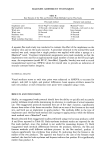
198 JOURNAL OF THE SOCIETY OF COSMETIC CHEMISTS All daily shed hair collections during the two-week baseline and four-week treatment phases were placed in premarked envelopes and sealed daily. The subjects recorded whether they shampooed their hair or not. To ensure compliance in hair collections, field workers visited each subject's home very two to three days throughout the study to collect the envelopes of hair and distribute new envelopes for the next set of hair collections. All envelopes of hair were taken to the Thai Institute of Dermatology for evaluation. A team of eleven nurses, supervised by four dermatologists, counted and typed all the hair collected from the study. Each day's hair collections were counted, examined, and categorized as telogen, anagen, and broken hairs. During the study, it was noted that some of the hair collections contained small pieces of hair resulting from haircuts. The cut hair was recorded separately from the broken hair and not included in the analyses of total hair loss count. At the termination of the treatment period, the subjects underwent a final scalp and hair examination. In addition to the hair and scalp evaluations at the baseline and posttreatment periods, subjects were requested to complete self-assessment questionnaires designed to obtain information regarding their perception of hair fall and hair health. The perceptual questions pertaining to hair fall and hair health were based on a 0-to-7-point scale where 0 represented the absence of a particular hair condition, 4 represented that they per- ceived a moderate condition, and 7 represented that they perceived a severe condition. Subjects were requested to describe the state of their hair health, amount of damage, manageability, thickness, coarseness, fluffiness/fly away, weight of hair, and dryness/ oiliness. In addition, they were requested to assess the state of their scalp health, dandruff severity, hair fall severity, scalp itch, scalp dryness, and scalp irritation. In an attempt to understand why consumers associate hair fall with the use of shampoos, a series of questions was posed to the subjects in this study to determine their perception of the possible causes of hair fall, hair thinning, and hair loss tendencies. DATA ANALYSES Wilcoxon rank sum tests were performed on the mean total, telogen, anagen, and broken hair loss rates at the baseline and treatment periods, and on the differences in total, telogen, anagen, and broken hair loss rates from the baseline to the treatment periods on a daily basis and on shampoo and non-shampoo days. In addition, regression analyses were performed on the differences in the mean total, telogen, anagen, and broken hair loss rates on shampoo versus non-shampoo days. The subjects' perceptions of hair and scalp health were assessed using Wilcoxon rank sum tests on the differences in ratings given by the subjects on the hair and scalp attributes during the baseline and treatment periods. Wilcoxon rank sum tests were performed on the mean number of uses of test product and product consumption. Comparisons with p values of •0.05 were considered statistically significant. Frequency analyses were performed on the subjects' perceptions of possible causes of hair fall, hair thinning, and hair loss tendencies. RESULTS Of the 460 subjects screened for potential participation in the study, 440 subjects were
Purchased for the exclusive use of nofirst nolast (unknown)
From: SCC Media Library & Resource Center (library.scconline.org)