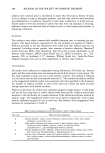
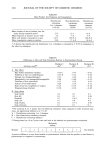
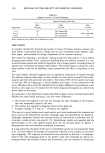
188 JOURNAL OF THE SOCIETY OF COSMETIC CHEMISTS subjects were screened prior to enrollment to assure that they had no history of sensi- tivity or allergy to soap or detergent products, and that they had not used prescribed anti-inflammatory or antibiotic drugs for at least three weeks prior to study start-up. Female subjects were also screened to assure that they were not pregnant or lactating. Informed consent was obtained from all subjects prior to their being issued product or beginning treatments. MATERIALS Test products were either commercially available cleansing bars or cleansing bar pro- totypes. The major formula components of the test products are reported in Table I. Products provided to the test laboratories were coded such that subjects and test site personnel, including trained graders, were unaware of product identities. Masslinn © towels (Chicopee Mills, New Brunswick, NJ) were used as wash implements in the forearm wash method JAECE Identi-Plug © (size D, JAECE Industries, Inc., Ton- awanda, N-Y) or Cerafoam (1.75" diameter, Wilfred Heath Ltd., Stoke-On-Trent, England) sponges were used as wash implements in the flex wash method. TEST METHODS All studies were conducted at independent testing laboratories. The home-use, forearm wash, and flex wash studies were run during the period from winter to early spring. The flex wash implement study was run in late summer however, this method is reported to yield results that are free from seasonal variation (7). The numbers of subjects enrolled in the exaggerated method studies were consistent with those specified in the literature the number of subjects enrolled in each of the home-use studies was based on prior testing experience with similar products. Subjects in the home-use studies were randomly assigned a single product to take home and use for four (soap bars) or twelve (syndet bars) week periods. Subjects periodically returned to the test facility for a visual evaluation of the redness and dryness induced by product usage. The exaggerated studies were run as paired comparisons, with a single product randomly assigned for use on each arm. Key features of the exaggerated wash methods are summarized in Table II. Table I Major Formula Components of the Test Products Used in These Studies Test code Major formula components Sodium tallowate, sodium cocoyl isethionate, sodium cocoate, stearic acid, sodium iesthionate, coconut fatty acid Soap (sodium tallowate and sodium cocoate or palm kernalate types), sodium cocoglyceryl ether sulfonate, glycerin, coconut or palm kernel acid, polyquaternium-7, guar hydroxypropyltrimonium chloride Sodium alkylglyceryl ether sulfonate, sodium lauroyl sarcosinate, sodium soap, stearic acid, lauric acid, Polyquarternium-7, Polyquarternium-10 Sodium cocoyl isethionate, stearic acid, sodium tallowate, sodium isethionate, coconut acid, sodium stearate, sodium dodecylbenzenesulfonate, sodium cocoate or sodium palm kernelate

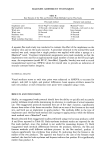
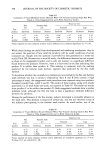
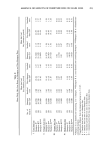
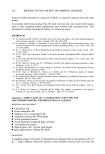
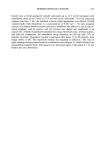
MILDNESS ASSESSMENT TECHNIQUES 189 Table II Key Features of the Flex and Forearm Wash Methods Used in This Study Flex wash method Forearm wash method Implement used Identi-Plug © or Cerafoam sponge Masslinn © towel Bar/implement lathering 10 Seconds--rub sponge on bar 6 Seconds--rub towel on bar Wash area Inner elbow crease Inner forearm Wash time 60 Seconds 10 Seconds Residence time None 90 Seconds Rinse time 10-15 Seconds 15 Seconds Wash visits/day (final day) 3 2 (1) A separate flex wash study was conducted to evaluate the effect of the implement on the subjects' skin and on the study outcome. A procedure identical to the normal flex wash method was used, except that a single product was applied with either a sponge or a Masslinn © towel. Treatment (implement) assignments were made randomly so that the implements were used for an approximately equal number of times on the left and right arms. An evaporimeter (model EP-1C, ServoMed, Uppsalla, Sweden) was used to record transepidermal water loss (TEWL) values for treated sites to provide an indication of stratum corneum barrier integrity. STATISTICAL ANALYSIS Visual attribute scores at each time point were subjected to ANOVA to account for subject, side (left vs right), and product differences. Least squares attribute means for each test product at each evaluation time point were compared using t-tests. RESULTS AND DISCUSSION Ideally, an exaggerated wash protocol should have the ability to quickly and accurately predict mildness trends while maintaining its relevance to conditions of actual consumer use. The exaggerated protocols examined here are of five days' duration, significantly shorter than either of the home-use studies. Both use an area of the forearm as the wash site, and both use an implement to apply product. The methods differ in the type of implement used: the flex wash method uses a sponge to apply product while the forearm wash method uses a Masslinn © towel. Results obtained from exaggerated studies performed using two bar soap products coded A and B are reported in Table III. Only erythema (redness) results are reported for the flex wash method, since this method is not useful for measuring dryness (7). Both exaggerated wash methods differentiate between the products however, the flex and forearm methods yield different mildness pictures. In the flex method, product A induces significantly less erythema than product B, indicating that the former is the milder of the two products. The opposite was found in the case of the forearm wash method the data for both erythema and dryness indicate that product B is significantly milder than product A.
Purchased for the exclusive use of nofirst nolast (unknown)
From: SCC Media Library & Resource Center (library.scconline.org)