1,4-DIOXANE ASSAY 209 dilution of toluene with acetonitrile based upon the expected values of 1,4-dioxane in the cosmetics. The calibration standards were prepared by mixing 2 ml of each 1,4-dioxane standard with 2 ml of the internal standard solution, corresponding to levels of 1,4-dioxane in the cosmetic (0.2 g) in the range 3-200 mg/kg. These solutions were analyzed by GC-MS as reported above, and the response factor relative to the internal standard was deter- mined. SAMPLE PREPARATION Cosmetics were processed by a modification of the method described in an earlier study (9). In brief, the cosmetic product (0.18-0.22 g) was accurately weighed into a 10-ml glass centrifuge tube 4 ml of 20% v/v dichloromethane in hexane were added and the sample was mixed on a vortex mixer and centrifuged at 4500 rpm for 2 min. The extraction was repeated with 1.5 ml of 20% dichloromethane in hexane, and the combined supernatants were applied to a pre-conditioned (2 ml of acetonitrile and then 3 ml of 20% dichloromethane in hexane) BB-SiOH cartridge (sorbent weight, 500 mg) at a flow rate of ca. 1.5 ml/min. The extraction column was then washed with 1 ml of dichloromethane, aspirated to dryness by centrifugation at 3000 rpm for 1 min, and eluted with two 0.8-ml aliquots of acetonitrile. The acetonitrile fraction was passed directly through a BB-C•8 cartridge (sorbent weight, 200 mg), which had previously been primed with 2 ml of acetonitrile. The eluate from the BB-C18 cartridge was made up to volume (2 ml), diluted with the internal standard solution (2 ml), and assayed by GC-MS. RECOVERY AND REPRODUCIBILITY The test samples were prepared by adding 20-•1 aliquots of 1,4-dioxane spiking solu- tions in acetonitrile, corresponding to 40 mg/kg, to the cosmetic products (0.2 g) and mixing them thoroughly. The percentage recovery was determined by comparing the amounts of 1,4-dioxane extracted from samples with those obtained by direct injections of standard solutions. The intra-assay reproducibility was tested by analyzing, on ten different days, 1 •1 of the same stock sample solution from a baby lotion. The inter-assay variability was evaluated by repeated (n = 10) extractions on Bakerbond cartridges and GC-MS anal- yses of the same baby lotion product. RESULTS AND DISCUSSION In a previous investigation (9), solid-phase extraction columns pre-packed with cyano- propylsilica were used for sample preparation prior to assay of 1,4-dioxane in cosmetics by RP-HPLC. Disposable silica cartridges were selected in this study for sample clean- up before GC-MS analysis, since they achieve effective purification of the cosmetic matrices while affording more reproducible recoveries than the cyano-packing. The eluant from the BB-SiOH cartridge was passed directly through a BB-C18 column (see Experimental) to obtain a clear solution suitable for GC injection.

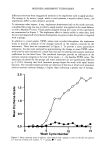
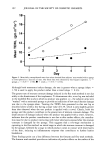
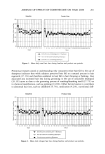
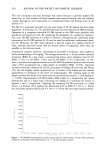
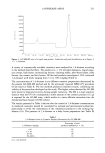
210 JOURNAL OF THE SOCIETY OF COSMETIC CHEMISTS The cool on-column injection technique was chosen because it provides highest GC sensitivity, as 1-•xl volumes of liquid samples were injected directly onto the capillary column through an inlet maintained at a temperature below the boiling point of the solvent (17). The MS of 1,4-dioxane recorded over the mass range of 30-90 daltons has four major fragments, of which m/z 31, 58, and 88 (molecular ion) were selected for SIM recording. Operation of a computer-controlled GC-MS system in the SIM mode provides both specificity and sensitivity (18). By combining the abundance of a number of character- istic ions, the MS functions as a selective detector, eliminating the interfering peaks encountered in GC-FID analysis (6,10) and the need for additional confirmatory meth- ods (9). Moreover, the MS, when adjusted to selected masses for a defined period of time, provides detection limits that are several orders of magnitude lower than are possible in the full-scan mode. Commercial cosmetic products, containing no detectable 1,4-dioxane, were spiked at levels corresponding to 40 mg/kg. The average recoveries (n = 6) and relative standard deviations (RSD) for a day cream, a moisturizing lotion, and a shampoo were 93.2% (RSD, 4.3%), 91.1% (RSD, 3.9%), and 92.4% (RSD, 4.7%), respectively. In con- trast, a previous investigation carried out by GC-FID (6) produced poor recoveries (mean value, 63%) accompanied by a high degree of variability (RSD, 19.9%). Improved recoveries have been obtained by the GC procedures of Rastogi (8) and Italia and Nunes (10), but the lengthy sample preparation (ca. 16 hours) of the former and the limited applicability to shampoos of the latter are disadvantages. The working range of the present method was found to be linear over the concentration interval, 3-200 mg/kg (r 2 = 0.998). Representative GC-MS profiles (SIM mode) of a dioxane-free day cream formulation and of a liquid soap containing 4.6 mg/kg of 1,4-dioxane are shown in Figures ! and 2, respectively. Applying the foregoing GC-MS procedure to a baby lotion, 1,4-dioxane (10.9 mg/kg) was determined with an RSD of 3. !% (n = !0) for the intra-assay reproducibility and of 4.3% (n = !0) for the inter-assay reproducibility. 2000' 1OOO' 17.0 18.0 19.O 20.0 21 .•) 22.0 23.E) 24.0 T•me (m•n.) 25.8 26.0 Figure 1. GC-SIM-MS chromatogram of a day cream preparation. Solvent delay, 16 min. Other operating conditions as described under Experimental I.S. = internal standard (toluene).
Purchased for the exclusive use of nofirst nolast (unknown)
From: SCC Media Library & Resource Center (library.scconline.org)