354 JOURNAL OF COSMETIC SCIENCE INHIBITION OF TYROSINASE Tyrosinase activity is generally determined by spectrophotometry. The procedure fol- lowed that described by Vanny et aL (17). The reaction mixture consisted of 0.05 M phosphate buffer (pH 6.8, 2.3 ml), 1.5 mM L-tyrosine solution (0.4 ml), and 2,000 U/ml mushroom tyrosinase (Sigma), in 0.05 M phosphate buffer (pH 6.8, 0.1 ml). A sample solution (0.2 ml) was added to the reaction mixture and incubated at 37øC for 10 min. The optical density at 475 nm was measured by a spectrophotometer (Beckman). The inhibitory activity of the sample was expressed as the concentration of inhibitor (IC5o) at which it inhibits 50% of the enzyme activity. The percent inhibition of tyrosinase reaction was calculated as follows: Inhibition (%) = [(A-B)/A] x 100 where A is absorbance at 475 nm without a test sample after incubation, and B is absorbance at 475 nm with a test sample after incubation. INHIBITION OF MELANIN SYNTHESIS IN B-16 MELANOMA CELLS We examined the inhibition of melanogenesis in B-16 melanoma cells by CC-516 using the modified method of Maeda and Fukuda (18). B-16 melanoma cells (ATCC CRL 6323) were seeded into 60-mm petri dishes at a density of 5 x 10⁵ cells per dish. After the cells were cultured at 37øC in Dulbecco's Modified Eagle's Medium (DMEM) containing 4.5 g/1 of glucose, 10% fetal bovine serum (FBS), and 1% antibiotic- antimycotic (Gibco, BRL), the medium was replaced with a fresh medium containing various concentrations of chemicals. Then the cells were cultured for 2 days and the medium was replaced with fresh medium, further incubated for a day. Then cells were harvested with a cell scraper, counted with a haemacytometer, and collected by cen- trifugation. Melanin was extracted and measured according to the method of Maeda and Fukuda with some modifications (18). Briefly, cell pellets were resuspended in 1 ml of distilled water, frozen at -20øC, and thawed at 37 øC. This freezing-thawing process was performed three times. Perchloric acid was added to the cell suspensions at a final concentration of 0.5 N. The tubes were set on ice for 10 min and centrifuged at 15,000 g for 5 min. The pellets were extracted with 0.5 N perchloric acid two times, with cold ethanol/ether (3:1) two times, and with ether. The resulting pellets were dried in air, and 1 ml of 1 N NaOH was added to each tube. The tubes were incubated in a boiling water bath for 10 min to dissolve the pellets. Melanin contents were measured by reading the absorbance at 400 nm, expressed as A4oo/106 cells. CYTOTOXICITY TEST OF CC-516 Human fibroblasts were seeded in a 96-well plate at a density of 104 cells/well, supple- mented with 0.2 ml of Eagle's minimal essential medium (EMEM) containing 2% FBS, and incubated for 24 hours. After sample addition, the cells were incubated for another 24 hr, and the survival and proliferation of cells were evaluated by MTT assay (19). One-tenth milliliter of MTT solution was added to each well and incubated for 3 hr. After removing the media, 0.5 ml of DMSO was added, and formed formazan was measured by absorbance at 570 nm using an ELISA reader.

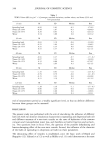
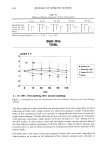
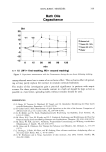
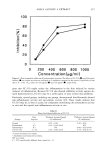
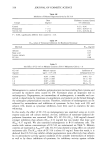
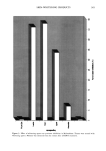
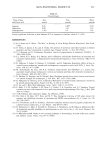
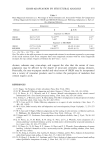
ARECA CATECHU L. EXTRACT 355 HUMAN SKIN IRRITATION TEST We studied the potential of the CC-516 to irritate human skin in 50 healthy female volunteers using a 48-hr closed patch. No skin irritation occurred after application in 50 volunteers. RESULTS AND DISCUSSION We previously screened the inhibitory effect on elastase of methanolic extracts of 150 medicinal plants. The Areca catechu extract showed high inhibitory effects comparable to reference compounds (7). For inhibitory effects of several solvent extracts on elastase the ethanolic extract showed the highest effect, and thus CC-516 was used as the sample in this study. We investigated the effect of CC-516 on the anti-inflammatory and anti-melanogenesis activity by various methods. Table I shows the antioxidative activity of CC-516 and activities of reference compounds such as dl-tx-tocopherol, L-ascorbic acid, and BHT. Figure 1 gives a good dose-response relationship between antioxidative activity. BHT appeared to be the most potent inhibitor, with an IC5o value of 1.5 lag/ml, while other reference compounds, dl-tx-tocopherol and L-ascorbic acid, showed IC5o values of 33.6 lag/ml and 219 lag/ml, respectively. The IC5o value of CC-516 was 45.4 lag/ml. Natural anti-oxidants are usually phenolic or polyphenoic compounds, and these com- pounds include tocopherol, flavonoid, and cinnamic acid derivatives (20). It is known that there are two types of antioxidants (21). The first type of antioxidant inhibits the formation of free radicals that may initiate oxidation. The second type of antioxidant inhibits the free-radical chain propagation reactions. Therefore, some plant extracts may act at the initiation stage of peroxidation, interfering with Fenton's reaction, thus breaking the chain reaction. L-ascorbic acid is one of the most potent scavengers. IC5o values of ascorbic acid, dl-tx-tocopherol, and BHT were found to be 29.7 lag/ml, 33.5 lag/ml and 37.2 lag/ml, respectively. On the other hand, the IC5o value of CC-516 (IC5o: 10.2 lng/ml) showed much lower activity than the well-known reference compounds. Free-radical damage to biosystems is one of the major processes that contribute to degenerative diseases like cancer and aging (22). Detailed free-radical mechanisms and their quantitative contributions are still not clear. Despite these uncertainties, it is clear that free-radical scavengers may inhibit endogeneous, metabolically driven, oxidative DNA damage, as well as mutations and aging caused by exogeneous agents (23-25). Most plants have phenolic compounds such as tannins and flavonoids that may contrib- Table I Inhibition of Lipid Peroxidation by the CC-516 Measured by Fenton's Reagent Linoleate System and Free-Radical Scavenging Activity of CC-516 in a 1.1-diphenyL2-picryl hydrazine (DPPH) Free-Radical Generating System Components IC50 (lag/ml) IC50 (lag/ml) BHT 1.5 37.2 d14x-Tocopherol 33.6 33.5 Ascorbic acid 219.0 29.7 CC-516 45.4 10.2
Purchased for the exclusive use of nofirst nolast (unknown)
From: SCC Media Library & Resource Center (library.scconline.org)