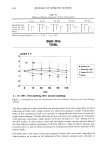
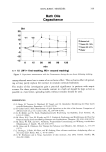
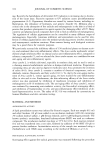
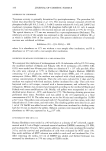
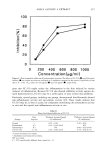
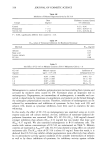
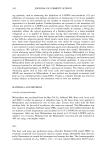
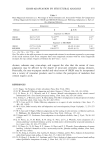
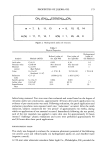
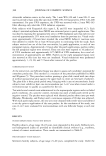
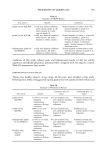
356 JOURNAL OF COSMETIC SCIENCE lOO 80- 60 40 2O 0 20 40 60 80 100 Concentration(pg/ml) Figure 1. Antioxidative activities of CC-516 in response to CC-516 concentrations. ute to their antioxidative activities. Masaki (26) reported that Paeo,ia suffruticosa has a strong scavenging activity against DPPH radicals, and he isolated galloyl glucose as an active compound. In the anti-hyaluronidase activity assay, CC-516 exhibited greater than 65% and 78% of inhibition at concentrations of 0.5 mg/ml and 1 mg/ml, respectively. As shown in Figure 2, CC-516 with 0.1-1 mg/ml as the final concentration exhibited 10% to 78% inhibition. Anti-hyaluronidase activity of Glycyrrhi•a •rale,sis as a control exhibited 10-84% of inhibition at a concentration of 0.1-1 mg/ml. IC5o values of Glycyrrhixa urale,sis and CC-516 were found to be 330 ug/ml and 416 Fg/ml, respectively. CC-516 contains phenolic compounds such as flavonoids and tannins (27), and thus it could be speculated that the active constituents of CC-516 and Glycyrrhixa urale,sis, which have inhibitory effects on hyaluronidase activity, are phenolic compounds. Tables II and Ill represent the topical anti-inflammatory activity of CC-516. Although the activity was found to be weak compared to the potent activity of the reference compounds, prednisolone and indomethacin, CC-516 showed anti-edematous activity as well as anti-hypersensitivity. The mouse ear edema assay is a frequently used animal model for topical application of the various compounds (28). In croton-oil-induced ear edema, 12-o-tetradecanoylphorbol-13-acetate (TPA) is suggested to produce edema, and leukotriene B 4 i'S found in ear area. In arachidonic-acid-induced ear edema, eicosanoids such as prostaglandins and leukotrienes are involved in the inflammation. CC-516 did show anti-inflammatory activity against both inflammatory mediators, which sug-

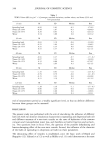
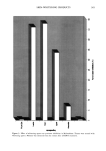
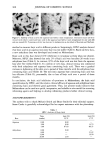
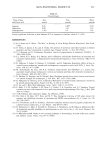
ARECA CATECHU L. EXTRACT 357 lOO 80 6o 4o 20 o o 200 400 600 800 lOOO Concentration ( pg/m I) Figure 2. Dose-dependent inhibition of hyaluronidase activities. The effects of CC-516 (I) and Gyhyrrhiza uralensis (O) on enzyme activities are indicated as % inhibition compared to the control. Significance of the data is P 0.01. IC5o values are 416 pg/ml (I) and 330 pg/ml (O), respectively. gests that CC-516 might reduce the inflammation in the skin induced by various inducers of inflammation. Because CC-516 also showed inhibitory activity against de- layed hypersensitivity, CC-516 may be a useful agent to treat various skin problems. Previously, several groups, including our groups, demonstrated that flavonoids showed anti-inflammatory activity and anti-allergic activity (29). These results indicate that CC-516 may be, at least in a part, the compound contributing the antioxidative activity in vitro and the topical anti-inflammatory activity in vivo. Table II Mouse Ear Edema Inhibition of CC-516 Dose Thickness increased [mm] Thickness increased [mm] Groups (mg/ear) (% inhibition) • (% inhibition) 2 Control -- 0.25 _+ 0.03 0.16 _+ 0.03 Prednisolone 0.5 0.16 _+ 0.02 (36.0) NT Indomethacin 0.5 NT 0.08 _+ 0.02 (50.0) 5% CC-516 3 x 50 0.19 ñ 0.02 (24.0) 0.14 _+ 0.01 (12.5) 1 Croton-oil-induced ear edema. 2 Arachidonic-acid-induced ear edema. NT: not tested. P 0.05, significantly different from control (n = 5).
Purchased for the exclusive use of nofirst nolast (unknown)
From: SCC Media Library & Resource Center (library.scconline.org)