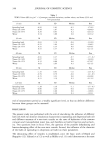
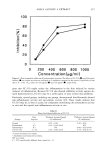
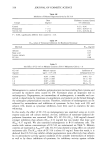
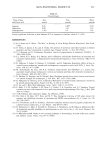
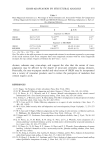
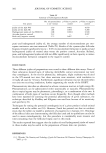
SKIN-WHITENING PRODUCTS 3 67 Table II Clinical Study Type of base One Two Three with kojic acid month months months Aqueous 0.00 0.90* 0.20 Anhydrous 0.80 1.6' 2.6' Hyd roquinone 1.10* 0.2 2.8 * Caused significant reduction in skin darkness (L*) as compared to baseline value (P • 0.05) REFERENCES (1) K. S. Stenn and L. Weiss. "The Skin" in Histology O Tissue Biology (Elsevier Biomedical, New York, 1983). (2) D. Tobin, A. Quinn, S. Ito, and A. Thody, The presence of tyrosinase and related proteins in human epidermis and their relationship in melanin type, Pigment Ce//Res., 7, 204-209 (1994). (3) V.J. Hearing and K. Tsukamoto, Enzymatic control of pigmentation in mammals, FASEB J., 5, 2902-2909 (1991). (4) S.J. Orlow, R. E. Boissy, D.J. Mortan, and S. Pifkohirst, Subcellular distribution of tyrosinase and tyrosinase related protein. 1: Implication for melanosomal biogenesis. J. Invest. DermatoL, 100, 55-64 (1993). (5) K. Nakazwa, F. Sahue, O. Damour, C. Cellombel., and H. Nakazawa, Regulatory effects of heat on normal human melanocyte growth and melanogenesis comparative study with UVB, J. Invest. Der- matoL, 110, 972-977 (1998). (6) M. Archambault, M. Yaar, and B.A. Gilchrest, Keratinocytes and fibroblasts in a human skin equivalent model enhance melanocytes' survival and melanin synthesis after ultraviolet irradiation, J. Invest. DermatoL, 104, 859-867 (1995). (7) R. Halaban, R. Langdon, and N. Birchall, Basic fibroblasts growth factor from human keratinocytes is a natural mitogen for melanocytes, J. Cell. Biol., 107, 1611-1619 (1988). (8) K. Nakazawa, O. Damour, and C. Collombel, Modulation of normal human melanocytes' dendricity by growth promoting agents, Pigment Cell Res., 6, 406-416 (1993). (9) O. Lee and E. Kim, Skin lightening, Cosmet. Toiletr., 110, 51-56 (1995). (10) E. Rafal, C. E. M. Griffiths, C. M. Ditre, L.J. Finkel, T. A. Hamilton, and J.J. Voorhees, Topical tretinoin (retinoic acid) treatment for liver spots associated with photodamage, New. Engl. J. Med., 326, 368-374 (1992). (11) A.M. Fishman, Skin lighteners, Happi., 42, (February 1998). (12) B.J. Kim, J. M. Kim, H. P. Kim, and M. Y. Heo, Biological screening of 100 plant extracts for cosmetic use: Inhibitory activities of tyrosinase and DOPA auto-oxidation, Int. J. Cosmet. Sci., 19, 291-298 (1997). (13) P.S. Friedmann and B. A. Gilchrest, Ultraviolet radiation directly induced pigment production by cultured human melanocytes,J. Cell. Physiol., 133, 88-94 (1987). (14) K. Kameyama, C. Sakai, S. Kondoh, K. Yonemoto, S. Nishiyama, and K. Blanock, Inhibitory effect of magnesium ascorbyl phosphate on melanogenesis in vitro and in vivo, J. Am. Acad. Dermatol., 34, 29-33 (1996). (15) G. Majmudar and M. Smith, In vitro screening technique in dermatology: A review of the tests, models and markers, Cosmet. Toiletr., 113, 69-76 (1998).

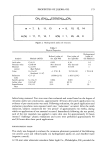
j. Cosmet. Sci., 49, 369-376 (November/December 1998) Reduction in the sweaty smell of 3-methyl-2-hexenoic acid by cross-adaptation using its pleasant-smelling methyl esters JOHN D. PIERCE, JR., DAVID H. BLANK, GEORGE PRETI*, and CHARLES J. WYSOCKI, Monell Chemical Senses Center, 3500 Market Street, Philadelphia, PA 19104-3308 (J.D.P., D.H.B., G.P., C.J.W.) Department of Dermatology, School of Medicine, University of Pennsylvania (G.P.) and Department of Animal Biology, School of Veterinary Medicine, University of Pennsylvania (C.J.W.). Accepted for publication October 15, 1998. Synopsis Magnitude estimates for a 10:1 mixture of (E)- and (_Z)-3-methyl-2-hexenoic acid (3M2H), a principal component of human underarm odor, decreased following adaptation to a mixture of methyl esters of 3M2H (ME3M2H), which possess a pleasant, fruity odor. These results provide further demonstration that struc- turally similar, yet perceptually distinct, odorants may cross-adapt and suggest that the extent of cross- adaptation may be affected by the degree of structural, as well as perceptual, similarity. INTRODUCTION The extent of olfactory cross-adaptation, the decrease in sensitivity to one odorant following exposure to a different odorant, may represent the degree to which odors share common sensory channels (1-4). Thus, by documenting the extent of cross-adaptation among different odorants, inferences about structure-activity relationships and coding in the olfactory system can be drawn. Yet, surprisingly little is known about the determinants of olfactory self- and cross-adaptation. The present report continues our long-term study of the structural features of odorous compounds as they affect cross- adaptation between sweaty-smelling 3-methyl-2-hexenoic acid and its fruity-smelling esters. It is now well established that the occurrence of cross-adaptation typically entails a David H. Blank's current address is Albany Molecular Research, Inc., 21 Corporate Circle, Albany, NY 12203. John D. Pierce, Jr's current address is Department of Psychology, Philadelphia College of Textiles and Science, Philadelphia PA 19144. 369
Purchased for the exclusive use of nofirst nolast (unknown)
From: SCC Media Library & Resource Center (library.scconline.org)