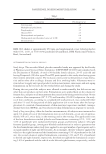
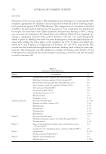
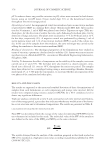
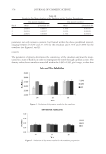
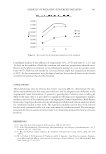
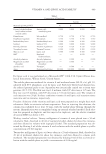
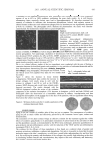
JOURNAL OF COSMETIC SCIENCE 376 pH. In order to detect any possible variations in pH, values were measured in both formu- lations using an mv/pH meter, Crison model digit 501, at the determined intervals throughout the entire storage period. Microbiological control. An impregnated towel was introduced into an inactivator medium of preservatives (MIP) in a laminar fl ow cabinet (Testalr model BIO IIA). After incuba- tion for 30 minutes, 1 ml of MIP was planted onto both a Triptona soy agar (TSA) me- dium plate, for the detection of aerobic bacteria, and a Sabouraud’s medium plate, for the detection of fungi and yeasts. The plates were incubated at 37°C for 48 hours and at 22°C for fi ve days, respectively (23). A negative control was performed by planting 1 ml of sterile peptone water and 1 ml of inactivation medium (MIP) in each of the culture me- dia. In the case of the samples from the emulsion, the same technique was carried out by adding the emulsion to the inactivation medium (MIP). Rheological characteristics. The rheological properties of the formulations were studied in terms of viscosity, a parameter closely related to stability (24). Assays were run at increas- ing shear rates in a Brookfi eld DV II+ viscosimeter (Brookfi eld Engineering Laboratories, Stoughton, MA). Stability. To determine the effect of temperature on the stability of the samples, tests were carried out at 4° and 25°C. The formulae were also tested in a closed container, intro- duced into a Friocell 111 oven at 40°C throughout the entire test period. The samples were then subjected to a centrifugal testing using a microcentrifuge (Kendro, Heraeus, model peak 17, at 3.500 rpm) for ten minutes, to ascertain whether any separation of the two phases of the emulsion had taken place. RESULTS AND DISCUSSION The results are expressed as the mean and standard deviation of three determinations of samples from each formulation, at each temperature and storage time interval. All the results were compared using variance analysis (ANOVA) for a 95% confi dence level to detect any signifi cant differences. Triplicate analysis commenced at time 0 and continued at each time interval until fi naliza- tion of the storage period, a procedure that indicates whether any modifi cation of the formu- lae occurs over time and at determined temperatures. The results are presented in Table II. CALCULATION OF SOLAR PROTECTION FACTOR (SPF) Final SPF was determined from the average of the values for individual SPF (SPFi) for the ten volunteers (n) included in this study. The individual value of the SPF of the emulsion was defi ned as the ratio of the MEDp and MEDn on the same volunteer: i SPF = n ¦SPF The results obtained from the analysis of the emulsion proposed in this work reached an SPF of 30, classifi ed as a high protection value according to guidelines published in 2006 (2006/647/EC) (25).

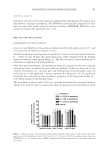
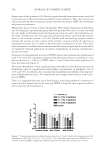
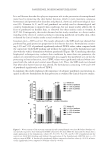
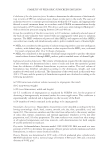
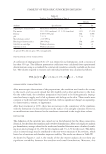
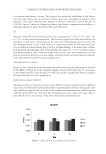
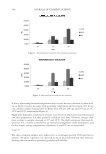
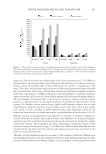
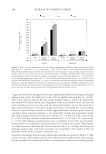
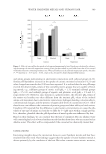
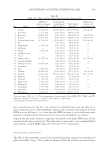
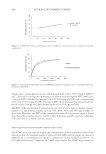
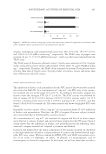
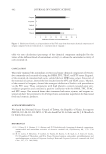
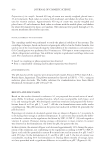
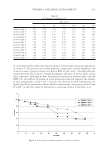
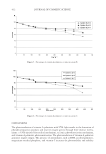
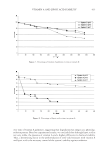
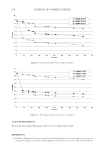
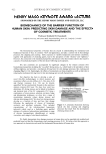
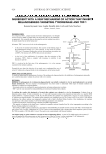
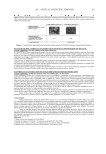
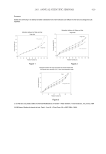
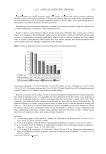
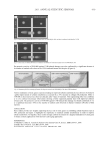
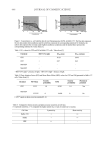
STABILITY OF PEDIATRIC SUNSCREEN EMULSION 377 PREPARATION OF THE TOWELETTES A coeffi cient of impregnation (C.I.) of 3 was chosen for our formulation, with a viscosity of less than 350 cps. The different permeation coeffi cients were calculated from experimental determinations using as a standard the commercial towelettes currently available on the mar- ket. The volume required to moisten each individual towelette was calculated as follows: ( VOL ml):50g m2 ×0.2m ×0.175×3ml g×1 = 5.25 ml ORGANOLEPTIC CHARACTERISTICS After macroscopic observations of the preparations, the emulsion was found to be creamy to the touch, and was easily spread but felt slightly sticky after application to the skin. On the other hand, the towelette preparation was found to be homogenously impreg- nated and easy to apply, and it left a pleasant soft feeling on the skin. These results were constant at each time and temperature interval, with no signifi cant changes in organolep- tic characteristics, texture, or appearance. After heat treatment at 40°C, there was an increase in the consistency of the emulsion, with the formation of a thin solid layer on the surface of its airtight container. However, no modifi cations were observed in the towelettes contained in the single-dose sachets. DRY MATTER The defi nition of the intervals was carried out in the laboratory for the three consecutive, identical, batches from the emulsion and towelette formulations. After each triplicate analysis per formulation, average values for the results and standard deviation were calculated, result- ing in an interval range of 24–29% for the emulsion and 3.5–4.2% for the towel. This differ- ences in interval range may be attributed to the non-woven structure of the towlette, which limits loss of moisture and therefore improves stability. The results are shown in Table III. As shown by Figures 1 and 2, the results of the dry matter analysis do not show any signifi cant variability between the emulsion and towel formulations. Moreover, this Table II Towlette Test and Emulsion at Time 0 Analysis Specifi cation Results T0 E0 Organoleptic characteristics Milky white emulsion coconut smell A A Dry matter 24.0–29% (emulsion) 3.5–4.2% (towelette) 3.9% 27.30% Density 0.985–0.995 g/m3 NA 0.988 pH 7.2–7.5 7.24 7.23 Microbiology control 100 UFC/g 1 2 Rheological characteristics 280–350cps NA 298 Stability in centrifuge Without alteration NA A Stability in oven Without alteration A A A: agreed. NA: did not agree. NA: not applicable.
Purchased for the exclusive use of nofirst nolast (unknown)
From: SCC Media Library & Resource Center (library.scconline.org)