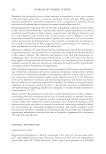
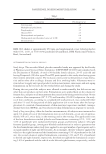
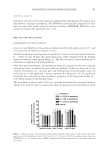
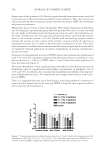
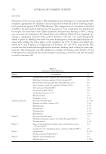
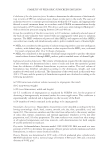
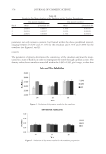
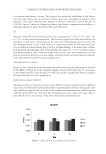
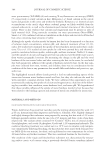
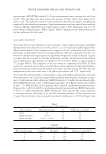
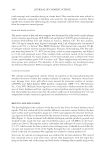
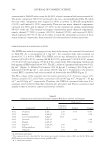
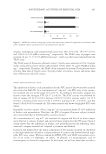
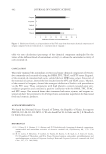
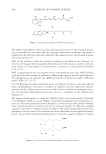
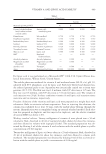
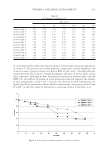
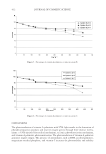
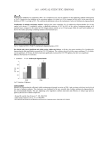
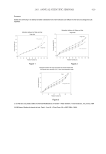
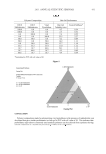
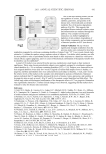
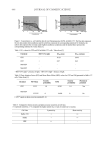
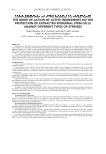
JOURNAL OF COSMETIC SCIENCE 378 parameter not only remains constant, but framed within the above predefi ned interval, ranging between 25.62% and 27.11% for the emulsion and 3.75% and 3.90% for the towelette (see Figures 1 and 2). DENSITY The parameter of density determines the consistency of the emulsion and must be main- tained in a state of fl uidity in order to impregnate the towel through capillary action. The density values for an emulsion must fall within the 0.985–0.995 g/m3 range, a value that Table III Results for Dry Matter Analysis of the Emulsion and the Towlette Formulations Dry matter emulsion Dry matter towelette Batch Mean ± Standard dev. Mean ± Standard dev. 1 24.90% 0.00577 3.70% 0.06110 2 28.40% 0.02517 4.02% 0.06028 3 26.80% 0.03055 3.79% 0.09504 Figure 1. Evolution of dry matter results for the emulsion. Figure 2. Evolution of dry matter results for the towelette preparation.

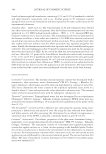
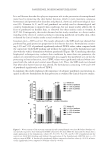
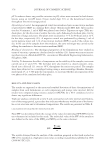
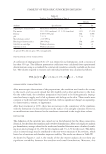
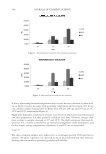
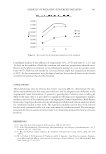
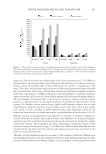
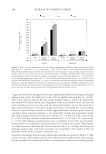
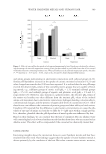
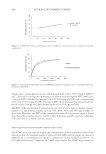
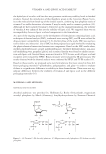
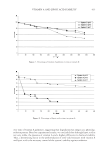
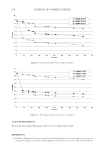
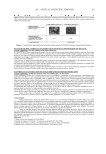
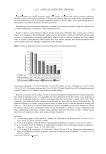
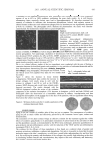
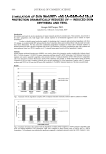
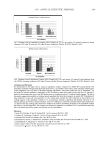
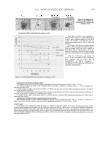
STABILITY OF PEDIATRIC SUNSCREEN EMULSION 379 is lower than the density of water. This interval was previously established in the labora- tory form the production and testing of three consecutive and identical batches of the emulsion. The values obtained were between 0.986 g/m3 ± 0.00153 and 0.993 g/m3 ± 0.00306. Figure 3 shows no changes in density over time or temperature variability, re- maining constant at values between 0.988 and 0.992 g/m3. PH Analysis of the pH of the emulsion gave values ranging from 7.233 to 7.253, and 7.223 to 7.247 for the towelette preparation. These values suggest that both formulations are suitable not only from a physiological, but also from technological point of view. The Neo Heliopan Hydro used in this study is a crystalline powder in acid-insoluble form, but on addition of neutralizing bases, such as triethanolamine, it becomes water-soluble. Consequently, the pH range must be kept within the range of 7.2 to 7.5 in order to main- tain hydrosolubility. The evolution of pH values versus time and temperature did not present signifi cant differences in any sample, and thus both towel and emulsion formula- tions were deemed suitable for topical application. MICROBIOLOGICAL CONTROL Figures 4 and 5 show that both formulations under study met the requirements dictated by the RFE (100 UCF). In the emulsion samples stored at 40°C from day 15, an increase in the number of CFUs was observed, but this increase was signifi cantly lower in samples obtained from the towelette preparation. RHEOLOGICAL CHARACTERISTICS Rheological assays to measure viscosity under different storage conditions and at different times indicated that both formulations showed a pseudoplastic behavior. During the time and conditions applied, the viscosity of the sample was maintained at values between 290,087 and 316,897 cps. Viscosity was determined in cps at a speed of 5 rpm. The re- sults obtained were the average of the three independent determinations. Figure 3. Evolution of density readings for the emulsion.
Purchased for the exclusive use of nofirst nolast (unknown)
From: SCC Media Library & Resource Center (library.scconline.org)