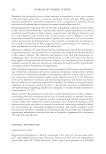
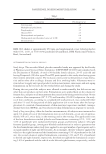
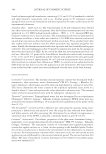
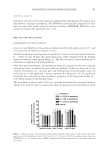
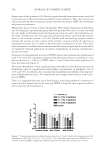
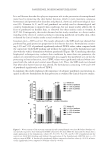
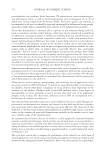
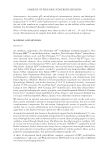
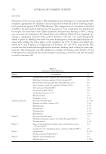
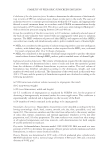
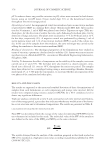
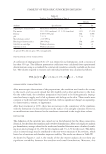
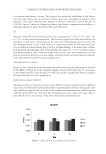
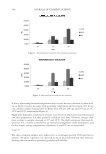
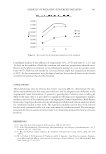
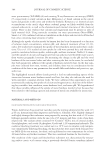
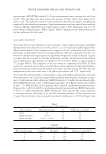
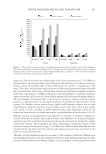
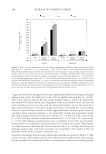
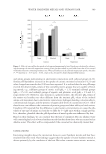
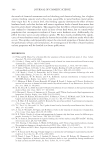
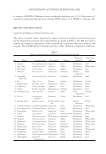
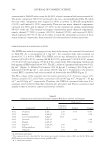
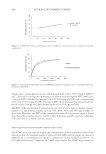
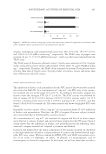
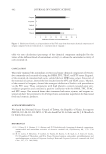
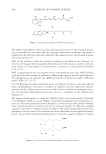
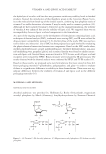
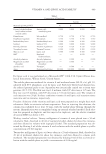
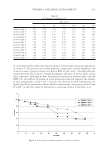
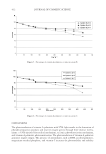
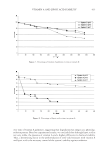
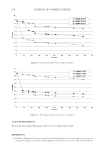
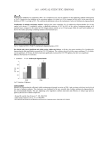
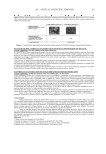
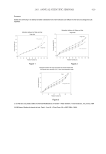
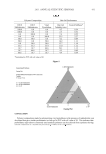
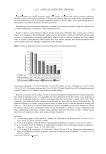
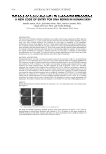
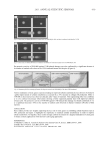
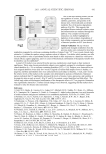
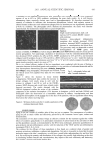
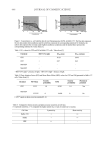
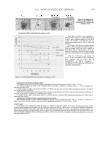
JOURNAL OF COSMETIC SCIENCE 380 A direct relationship between temperature and viscosity has been observed in other stud- ies, in which viscosity decreases with increasing temperature and vice versa (26). In our case, reference values obtained after 24 hours were 290 cps, 298 cps, and 303 cps at 4°C, 25°C and 40°C, respectively (Figure 6). Slight time-dependent variations in viscosity were observed, which were more pronounced just after preparation, but they gradually stabilized over time. However, changes were more evident in samples observed at 25° and 40°C. The slight variations that were ob- served at 4°C, could be attributed to an internal rearrangement of the formulation, and for this reason, storage temperatures of between 4° and 8°C are recommended. STABILITY The three emulsion samples were subjected to a centrifugal speed of 3500 rpm for ten minutes. No phase separation was detected at any of the predetermined time intervals, showing that the emulsion possessed good physical stability. Figure 4. Microbiological results for the towelette preparation. Figure 5. Microbiological results for the emulsion.

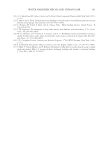
STABILITY OF PEDIATRIC SUNSCREEN EMULSION 381 Centrifugal analysis of the infl uence of temperature (4°C, 25°C) and time (0, 1, 15, and 30 days) on the stability of both the emulsion and towelette preparations showed no in- fl uence on the physical, chemical, or microbiological parameters, even in extreme condi- tions (40°C). However, the results for viscosity showed slight but insignifi cant decreases at 40°C. At this temperature, microbiological analysis also produced better results for the towelette formulation than for the emulsion. CONCLUSIONS These preliminary tests for density, dry matter, viscosity, pH, etc, demonstrate the suit- ability and uniformity of this sunscreen emulsion, and its adequate state of fl uidity in the impregnated towel formulation. It presents a pseudoplastic behavior and a stable pH, while at the same time it is not subject to signifi cant rheological or organoleptic changes, neither in the case of the emulsion nor as an impregnated towel formulation. Both formu- lations meet legal specifi cations for microbiological stability and remain unaltered under the conditions studied in this work. The sunscreen emulsion used in the towels selected for this study remained stable over time and under the conditions tested. The advantages presented by this presentation format make it an interesting proposal for future sunscreen products. REFERENCES (1) C. Soler, The skin of the newborn, El Farmacéutico, 196, 82–86 (1997). (2) E. Ledo, Photodermatosis: Photobiology, photoimnunology, and idiopatic photodermartoses., Int. J. Dermatol., 93, 387–396 (1993). (3) C. Bau and A. Pozo, Child cosmetics. II. Cosmetics with protective action, Offarm, 22-2, 161–164 (2003). (4) M. A. Pathak, T. B. Fitzpatrick, P. Nghiem, and D. S. Agasshi, “Sun-Protective Agents: Formula- tion, Effects and Side Effects,” in Fitzpatrick’s Dermatology in General Medicine, 5th ed. (McGraw-Hill, New York, 1999), pp. 2742–2763. Figure 6. Test results for the rheological properties of the emulsion.
Purchased for the exclusive use of nofirst nolast (unknown)
From: SCC Media Library & Resource Center (library.scconline.org)