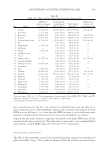
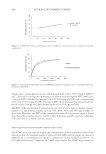
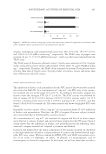
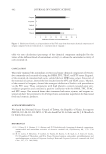
JOURNAL OF COSMETIC SCIENCE 384 mass spectrometry (ToF-SIMS) (6) and scanning X-ray fl uorescence microscopy (SXRF) (7), respectively, to study calcium in hair. Mérigoux et al. found calcium in the cuticle layers and granules in the cortex and within the medulla. Kempson et al. showed calcium accumulations at the cuticle edges where carboxyl groups are likely available from the exposed endocuticle, as well as the aforementioned internal structures of this chemical nature. There is also evidence that calcium and magnesium may be present as salts of lipid material (8,9). Using nanoscale secondary ion mass spectrometry (Nano-SIMS), Smart et al. (10) confi rmed calcium accumulation in the A-layer and exocuticle of bleached hair, areas containing large amounts of sulfur. Although the uptake of redox metals by human hair has been documented as a function of solution metal concentration, solution pH, and chemical treatment of hair (11,12), only a few studies have examined the uptake of water hardness metals under these condi- tions. Uzu et al. (13) studied calcium uptake by cold-wave permed hair, and observed a positive correlation between uptake, solution pH, and hair treatment. Noble (14) exam- ined the uptake of calcium and magnesium from tap and processed (bottled) water sources from various geographic locations. By measuring the change in the pH and the total hardness of the test waters before and after vortexing the hair in the water, he concluded that both parameters infl uenced the uptake of hardness metals by hair. As the hair sam- ples were collected from men, women, and children, there was no consideration for the condition of the hair or any parameters that would differ with habits and practices, age, and/or sex. The highlighted research efforts clearly provide a lead on understanding aspects of the interaction between water hardness metals and hair, but they also indicate the need for well-controlled, consumer-relevant work. We have addressed this opportunity area by systematically studying the uptake of calcium and magnesium as a function of the follow- ing key variables: hair condition, water hardness level, and water pH. We hypothesized that these variables infl uenced the uptake of water hardness metals by hair because they were related to the binding capacity and amount of metal ions available for interaction. MATERIALS AND METHODS HAIR SAMPLE PREPARATION AND CHARACTERIZATION Virgin, dark brown Caucasian hair swatches were the starting substrate for this work (1.5 g/16 cm International Hair Importers and Products, Glendale, NY). Slightly damaged and highly damaged hair substrates were prepared by treating this hair with a 12% active hydrogen peroxide oxidant crème for one cycle of 15 minutes and three cycles of one hour, respectively. The oxidant crème contained 5% Crodafos® CES (a mix of cetearyl alcohol, dicetylphosphate, and ceteth-10 phosphate Croda) and 1.2% ammonium hydroxide. The oxidative bleaching treatment was carried out in a 30°C oven to simulate scalp tempera- ture. Immediately following bleaching, the hair swatches were rinsed with deionized wa- ter (Milli-Q) for one minute, fan-dried, and equilibrated at room temperature for at least 24 hours before any further treatment. This was considered baseline for the swatches. The condition of the virgin and bleached hair substrates was characterized by measur- ing surface cysteic acid content using a previously detailed Fourier transform infrared

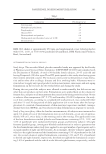
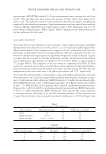
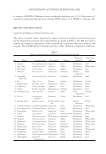
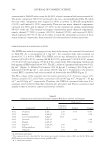
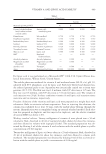
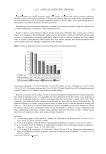
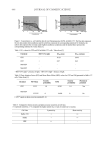
WATER HARDNESS METALS AND HUMAN HAIR 385 spectroscopy (ATR-FTIR) method (5). Four measurements were averaged for each hair swatch. The swatches were then sorted into groups of three, which were balanced for cysteic acid. The lightness value (L*) was assessed to describe the degree of lightening imparted by the bleaching treatment. Eight measurements per hair swatch were made by a Konica Minolta CM3600D spectrophotometer under a D65 illuminant and 10° ob- server (Konica Minolta Opto, Tokyo, Japan). Table I summarizes the characterization of the hair substrates for this work. HAIR SAMPLE TREATMENT To test the effect of water hardness on metal uptake, virgin, slightly damaged, and highly damaged hair was subjected to six wash cycles in 2, 9, or 16 grain per gallon (gpg) water. These water hardness levels represent the categories of soft, moderately hard, and very hard water as identifi ed by the U.S. Geological Survey. The unit originates from the con- version of calcium and magnesium to an equivalent weight of calcium carbonate. A grain is a mass unit that is equal to 64.8 mg of material, and the concentration of water hard- ness is expressed as this quantity in a gallon (3.78 l) of water. Hence, 1 gpg is equal to 17.11 ppm CaCO3. The properties of the test water are summarized in Table II. Each wash cycle consisted of two thirty-second lathers with a commercial clarifying shampoo, thirty-second rinses before and after these two lathers, and fan-drying. The fl ow rate and temperature of the rinse water were 1.06 gallons per minute and 37°C, respectively. To test the effect of water pH on metal uptake, virgin and slightly damaged hair swatches were subjected to ten cycles of treatment with synthetic water hardness solutions contain- ing 1.2 mM calcium sulfate dihydrate (EMD Chemicals), 0.8 mM calcium chloride dihy- drate (EMD Chemicals), and 1.2 mM magnesium sulfate ( J.T. Baker Chemical) in buffers of pH 7 (5 mM bis-Tris [bis(2-hydroxyethyl) amino)] tris(hydroxymethyl)methane Organics Inc.) pH 8 (5 mM Tris tris(hydroxymethyl) aminomethane BDH Chemicals) or pH 9 (5 mM ethanolamine BDH Chemicals). The selected pH values represent a consumer-relevant pH range (14), and the resulting hardness of the solutions was 17 gpg. One treatment cycle consisted of one hour of soaking at a 1:100 hair/liquor ratio Table I Characterization of Hair Substrates Hair condition Bleaching treatment L* FTIR cysteic acid units Virgin n/a 22 25 Slightly damaged 15 min 31 56 Highly damaged 1 hour × 3 cycles 49 155 Table II Characterization of Treatment Water Water hardness (gpg) Ca (ppm) Mg (ppm) pH Alkalinity (as ppm HCO3) 2 11 4 8.4 80 9 40 13 8.4 175 16 71 23 8.5 285
Purchased for the exclusive use of nofirst nolast (unknown)
From: SCC Media Library & Resource Center (library.scconline.org)