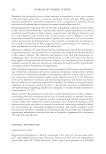
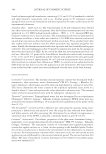
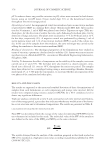
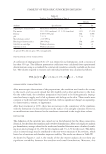
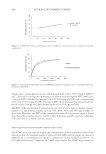
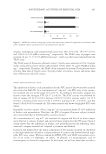
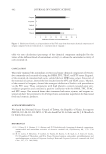
JOURNAL OF COSMETIC SCIENCE 396 and solution were divided by using a centrifuge at 3000 rpm for eight minutes. BHT was used as the positive control. Three replicates were recorded for each sample. The superna- tant was measured with a UV-vis spectrophotometer (SP-8001, Metertech Inc., Taipei, Taiwan) at 760 nm. Different concentrations of gallic acid (10-100 μg/ml) were deter- mined by a calibration curve (y = 45.318x − 0.0181 γ 2 = 0.999 y is the concentration of gallic acid, x is absorbance). The results were shown as micrograms relative to gallic acid equivalents (GAE) per 10 mg of essential oil. TROLOX EQUIVALENT ANTIOXIDANT CAPACITY (TEAC) ASSAY The trolox equivalent antioxidant capacity (TEAC) assay was determined by methods de- scribed by Erkan et al. (16) with the following modifi cations. When ABTS and potassium peroxodisulfate were mixed in a pH-7.4 phosphate buffer solution (PBS), followed by in- cubation in the dark for 16 hours, a blue-greenish ABTS+ solution results. The fi nal con- centrations were 7 mM and 2.45 mM. Next, 300 μl of ABTS+ solution was diluted with PBS to 20 ml, and that solution was incubated in the dark for one hour. After 1mg ml−1 of the test sample (20 μl with 1980 μl dilute solution) was mixed and allowed to react for ten minutes, the absorbance was measured at 730 nm by a UV-vis spectrophotometer (SP-8001, Metertech Inc., Taipei, Taiwan). Trolox (25–800 μM) was used in different concentrations (as standards) to create a calibration curve (y = −3497.2x + 1466.4 γ2 = 0.999 y is the concentration of trolox, x is absorbance) to fi nd the relative concentration of trolox in each sample. BHT was used as the positive control. For each sample, three replicates were recorded. The results were shown as μM of trolox per milligram of essential oil. FERRIC THIOCYANATE (FTC) ASSAY The antioxidant activity analysis was performed by ferric thiocyanate according to the pro- cedure reported by Osawa and Namiki (25) and Zainol et al. (26) with the following mod- ifi cations. The test samples (1 mg) were dissolved in 1 ml of ethanol, and mixed with linoleic acid (2.5%, v/v), 99.9% ethanol (1 ml), and 2 ml of 0.05 M sodium phosphate buf- fer (pH 7). The solution was incubated at 40°C for 240 h. Next, 1.7 ml of 75% ethanol, 0.1 ml of 30% ammonium thiocyanate aqueous solution, and 0.1 ml of ferrous chloride solution (20 mM in 3.7% HCI) were sequentially added to 0.1 ml of sample solution. After ten minutes of stirring, the absorbance was measured at 500 nm by using the ELISA (SunriseTM, Tecan Group Ltd., Männedorf, Switzerland). A control was performed using linoleic acid without the essential oils. BHT was used as the positive control. For each sample, three replicates were recorded. Inhibition of linoleic acid peroxidation was expressed as a percent- age and calculated using the following equation: Inhibition of linoleic acid peroxidation % = [1− (Abs increase of sample at 500 nm/Abs increase of control at 500 nm)] × 100%. STATISTICAL ANALYSIS Data were presented as the mean ± standard deviation (S.D.) from three independent experimental determinations. Statistical analyses were performed using a one-way analysis

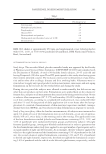
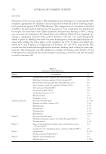
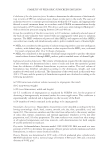
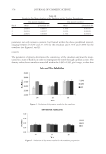
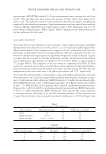
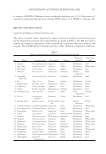
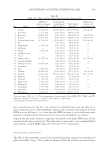
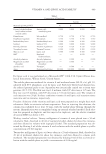
ANTIOXIDANT ACTIVITIES OF ESSENTIAL OILS 397 of variance (ANOVA). Differences were considered signifi cant at p 0.05. Data were cal- culated by employing the statistical software SPSS (version 13.0, SPSS Inc., Chicago, IL). RESULTS AND DISCUSSION ANALYSIS OF CHEMICAL COMPOSITION BY GC-MS The name, scientifi c name, department, origin, extraction method, and extraction part for the twenty-fi ve essential oils studied herein are listed in Table I. GC-MS was used to analyze the chemical components of the essential oils cinnamon bark extra, ajowan, and oregano. The GC-MS data revealed the presence of fi ve chemical components, which are Table I Essential Information for the Twenty-Five Essential Oils Studied No. Name Scientifi c name Department Origin Extraction method Extraction part 1 Ajowan Trachyspermum ammi Apiaceae India Distillation Seed 2 Anis extra Pimpinella anisum Apiaceae Turkey Distillation Whole plant 3 Bay laurel Laurus nobilis Lauraceae Turkey Distillation Leaf 4 Benzoin Styrax benzoin Styracaceae Indonesia Solvent extraction Resin 5 Cinnamon bark extra Cinnamomum verum Lauraceae Sri Lanka Distillation Bark 6 Fir Abies sibirica Pinacea Siberia Distillation Conifer 7 Frankincense Boswellia carterii Burseraceae India Distillation Resin 8 Galbanum Ferula galbanifl ua Apiaceae Iran Distillation Resin 9 Ginger Zingiber offi cinalis Zingiberaceae Vietnam Distillation Root 10 Grapefruit extra Citrus paradisi Rutaceae Israel Cold compression Pericarp 11 Ho-oil Cinnamomum camphora Lauraceae China Distillation Leaf 12 Jasmine (arab.) Jaminum sambac Floral-scented oils India Solvent extraction Flower 13 Lavender Kashmir Lavendula angustifolia Lamiaceae India Distillation Whole plant 14 Lemongrass extra Cymbopogon fl exuosus Poaceae Nepal Distillation Leaf 15 Lemonmint Mentha citrata Lamiaceae India Distillation Whole plant 16 Litsea Litsea cubeba Lauraceae China/Vietnam Distillation Fruit 17 Nutmeg Myristica fragrans Myristicaceae Indonesia Distillation Fruit 18 Oregano Origanum vulgare Lamiaceae Turkey Distillation Whole plant 19 Palmarosa Cymbopogon martini Poaceae Nepal Distillation Whole plant 20 Patchouli Pogostemon cablin Lamiaceae Indonesia Distillation Whole plant 21 Pepper extra Piper nigrum Piperaceae Madagascar Distillation Fruit 22 Peppermint Mentha piperita Lamiaceae India Distillation Whole plant 23 Sandalwood Santalum album Santalaceae India Distillation Wood 24 Spikenard Nardostachys jatamansi Valerianaceae Nepal Distillation Root 25 Wintergreen Gaultheria fragrantissima Ericaceae Nepal Distillation Leaf
Purchased for the exclusive use of nofirst nolast (unknown)
From: SCC Media Library & Resource Center (library.scconline.org)