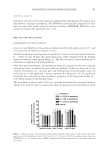
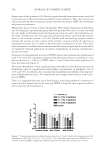
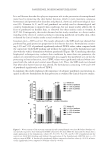
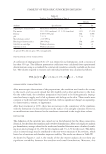
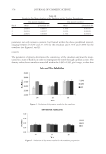
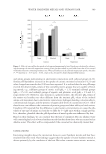
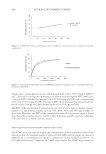
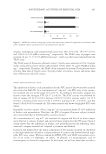
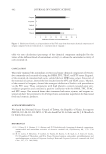
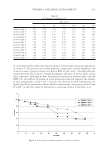
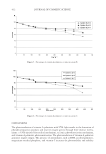
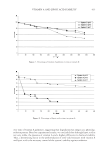
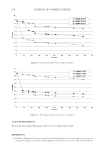
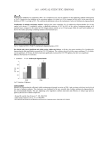
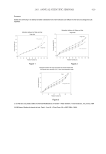
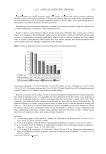
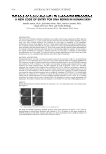
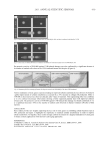
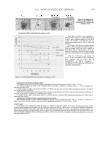
JOURNAL OF COSMETIC SCIENCE 402 table via easy calculations (percentage of the chemical component multiplied by the values of the different kinds of antioxidant activity), to obtain the antioxidant activity of each essential oil. CONCLUSION This study examined the antioxidant activities and major chemical components of twenty- fi ve commonly used essential oils using the DFRS, TPC, TEAC, and FTC assays. Eugenol, of the essential oil cinnamon bark extra, yielded the best DFRS assay values. Carvacrol, of the essential oil ajowan, showed the best results from the TPC and TEAC assays. Thymol, of the essential oil oregano, showed the strongest inhibition of linoleic acid peroxidation via the FTC assay. Those components with high phenolic contents revealed great anti- oxidation properties and contained a positive correlation with the DFRS, TPC, TEAC, and FTC assays. Our research shows that cinnamon bark extra, ajowan, and oregano es- sential oils have the potential to be developed into antioxidant ingredients for functional foods and cosmetic products. ACKNOWLEDGMENTS We thank the National Science Council of Taiwan, the Republic of China, for support (NSC98-2113-M-241-001-MY2-1). We also thank Prof. R. G. Finke and Dr. J. E. Mondloch for helpful discussions. REFERENCES (1) L. I. Daise, D. S. Alviano, C. S. Alviano, and P. P. Kolodziejczyk, Screening of chemical composition, antimicrobial and antioxidant activities of Artemisia essential oils, Phytochemistry, 69, 1732–1738 (2008). (2) M. R. Loizzo, F. Menichini, F. Conforti, R. Tundis, M. Bonesi, A. M. Saab, G. A. Statti, B. Cindio, P. J. Houghton, F. Menichini, and N.G. Frega, Chemical analysis, antioxidant, antiinfl ammatory and anticholinesterase activities of Origanum ehrenbergii Boiss and Origanum Syriacum L. essential oils, Food Chem., 117, 174–180 (2009). Figure 4. Inhibition of linoleic acid peroxidation of the FTC assay from four major chemical components of oregano compared with its essential oil at a concentration of 1 mg ml−1.

ANTIOXIDANT ACTIVITIES OF ESSENTIAL OILS 403 (3) M. Tognolini, V. Ballabeni, S. Bertoni, R. Bruni, M. Impicciatore, and E. Barocelli, Protective effect of Foeniculum vulgare essential oil and anethole in an experimental model of thrombosis, Pharmacol. Res., 56, 254–260 (2007). (4) D. Shaw, J. M. Annett, B. Doherty, and J. C. Leslie, Anxiolytic effects of lavender oil inhalation on open- fi eld behavior in rats, Phytomedicine, 14, 613–620 (2007). (5) T. Komori, T. Matsumoto, E. Motomura, and T. Shiroyama, The Sleep-enhancing effect of valerian in- halation and sleep-shortening effect of lemon inhalation, Chem. Senses., 31, 731–737 (2006). (6) M. Tanida, A. Niijima, J. Shen, T. Nakamura, and K. Nagai, Olfactory stimulation with scent of essential oil of grapefruit affects autonomic neurotransmission and blood pressure, Brain Res., 1058, 44–55 (2005). (7) G. Barja, Free radicals and aging, Trends Neurosci., 27, 595–600 (2004). (8) B. Halliwell, J. M. C. Gutteridge, and C. E. Cross, Free radicals, antioxidants, and human disease: Where are we now? J. Lab. Clin. Med., 119, 598–620 (1992). (9) B. Halliwell, Free radicals and antioxidants: A personal view, Nutr. Rev., 52, 253–265 (1994). (10) S. R. Pinnell, Coetaneous photodamage, oxidative stress, and topical antioxidant protection, J. Am. Acad. Dermatol., 48, 1–19 (2003). (11) G. M. Williams, M. J. Iatropoulos, and J. Whysner, ` Safety assessment of butylated hydroxyanisole and butylated hydroxytoluene as antioxidant food additives, Food Chem. Toxicol., 37, 1027–1038 (1999). (12) N. T. Dung, J. M. Kim, and S. C. Kang, Chemical composition, antimicrobial and antioxidant activities of the essential oil and the ethanol extract of Cleistocalyx operculatus (Roxb.) Merr and Perry buds, Food Chem. Toxicol., 46, 3632–3639 (2008). (13) H. P. Singh, S. Kaur, S. Mittal, D. R. Batish, and R. K. Kohli, In vitro screening of essential oil from young and mature leaves of Artemisia scoparia compared to its major constituents for free radical scaveng- ing activity, Food Chem. Toxicol., 48, 1040–1044 (2010). (14) M. B. Gholivand, R. N. Mehdi, H. Batooli, and A. H. Ebrahimabadi, Chemical composition and anti- oxidant activities of the essential oil and methanol extracts of Psammogeton canescens, Food Chem. Toxicol., 48, 24–28 (2010). (15) G. Chryssavgi, P. Vassiliki, M. Athanasios, T. Kibouris, and M. Komaitis, Essential oil composition of Pistacia lentiscus L. and Myrtus communis L.: Evaluation of antioxidant capacity of methanolic extracts, Food Chem., 107, 1120–1130 (2008). (16) N. Erkan, G. Ayranci, and E. Ayranci, Antioxidant activities of rosemary (Rosmarinus offi cinalis L.) ex- tract, blackseed (Nigella sativa L.) essential oil, carnosic acid, rosmarinic acid and sesamol, Food Chem., 110, 76–82 (2008). (17) A. I. Hussain, F. Anwar, S. T. H. Sherazi, and R. Przybylski, Chemical composition, antioxidant and antimicrobial activities of basil (Ocimum basilicum) essential oils depend on seasonal variations, Food Chem., 108, 986–995 (2008). (18) A. A. Karagozler, B. Erdag, Y. C. Emek, and D. A. Uygun, Antioxidant activity and proline content of leaf extracts from Dorystoechas hastate, Food Chem., 111, 400–407 (2008). (19) C. W. Lin, C. W. Yu, S. C. Wu, and K. H. Yih, DPPH free-radical scavenging activity, total phenolic contents and chemical composition analysis of forty-two kinds of essential oils, J. Food Drug Anal., 17, 386–395 (2009). (20) H. F. Wang, K. H. Yih, and K. F. Huang, Comparative study of the antioxidant activity of forty-fi ve com- monly used essential oils and their potential active components, J. Food Drug Anal., 18, 24–33 (2010). (21) H. V. D. Dool and P. D. Kratz, A generalization of the retention index system including linear tem- perature programmed gas-liquid partition chromatography, J. Chromatogr., 11, 463–471 (1963). (22) R. P. Adams, Identifi cation of Essential Oil Components by Gas Chromatography/Mass Spectroscopy (Allured Publishing Corporation, Carol Stream, IL, 1995), pp. 57–332. (23) M. A. Gyamfi , M. Yonamine, and Y. Aniya, Free-radical scavenging action of medicinal herbs from Ghana Thonningia sanguinea on experimentally-induced liver injuries, Gen. Pharmacol., 32, 661–667 (1999). (24) T. S. Kujala, J. M. Loponen, K. D. Klika, and K. Pihlaja, Phenolics and betacyanins in red beetroot (Beta vulgaris) root: Distribution and effect of cold storage on the content of total phenolics and three individual compounds, J. Agric. Food Chem., 48, 5338–5342 (2000). (25) T. Osawa and M. Namiki, A novel type of antioxidant isolated from leaf wax of Eucalyptus leaves, Agric. Biol. Chem., 45, 735–739 (1981). (26) M. K. Zainol, A. Abd-Hamid, S. Yusof, and R. Muse, Antioxidative activity and total phenolic compounds of leaf, root and petiole of four accessions of Centella asiatica (L.) Urban, Food Chem., 81, 575–581 (2003).
Purchased for the exclusive use of nofirst nolast (unknown)
From: SCC Media Library & Resource Center (library.scconline.org)