JOURNAL OF COSMETIC SCIENCE 404 (27) F. Oke, B. Aslim, S. Ozturk, and S. Altundag, Essential oil composition, antimicrobial and antioxidant activities of Satureja cuneifolia Ten, Food Chem., 112, 874–879 (2009). (28) S. G. Javad, A. H. Ebrahimabadi, D. B. Zahra, and H. Batooli, GC/MS analysis and in vitro antioxidant activity of essential oil and methanol extracts of Thymus caramanicus Jalas and its main constituent car- vacrol, Food Chem., 115, 1524–1528 (2009). (29) D. Godevac, G. Zdunic ´, K. Šavikin, V. Vajs, and N. Menkovic ´, Antioxidant activity of nine Fabaceae species growing in Serbia and Montenegro, Fitoterapia., 79, 185–187 (2008). (30) P. Shanmugasundaram and S. Venkataraman, Hepatoprotective and antioxidant effects of Hygrophila auriculata (K. Schum) Heine Acanthaceae root extract, J Ethnopharmacol., 104, 124–128 (2006).

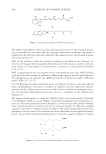
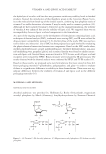
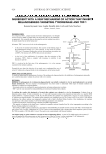
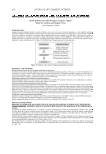
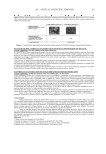
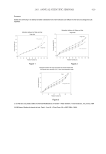
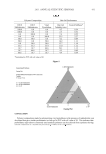
J. Cosmet. Sci., 62, 405–415 ( July/August 2011) 405 Vitamin A palmitate and -lipoic acid stability in o/w emulsions for cosmetic application M. A. MOYANO and A. SEGALL, Cátedra de Control de Calidad de Medicamentos, Facultad de Farmacia y Bioquímica, Universidad de Buenos Aires, Junín 956, 1113 Buenos Aires, Argentina. Accepted for publication February 28, 2011. Synopsis Skin becomes thin, dry, pale, and fi nely wrinkled with age. Retinoids are a large class of compounds that are important in modern therapy for dermatological treatment of wrinkled skin. Of the retinoids, retinol and vitamin A palmitate are thought to induce thickening of the epidermis and to be effective for treatment of skin diseases. Accordingly, α-lipoic acid or the reduced form, dihydrolipoate, are potent scavengers of hydroxyl radicals, super- oxide radicals, peroxyl radicals, singlet oxygen, and nitric oxide with anti-infl ammatory properties (1). Cosmetic ingredient stability prediction relies on kinetic quantitative chemical analysis of active compo- nents at different temperatures. Vitamin A palmitate and α-lipoic acid, are known to be unstable to light or heat (2). The aims of this study were to evaluate the stability of α-lipoic acid and vitamin A palmitate in the presence of vitamin E (acetate) and other antioxidants in lipophilic/hydrophilic medium (O/W emulsions) at pH 3.0, 5.0, and 7.0. The formulations that were investigated contained 0.12% (w/w) vitamin A palmitate, 0.4% (w/w) vitamin E acetate, and 0.5 % α-lipoic acid (formulation A), supplemented with ascorbyl palmitate, magnesium ascorbyl phosphate, and vitamin C (formulation B) or with butylhydroxytoluene (BHT, formulation C) or ascorbyl palmitate (formulation D). The chemical analyses of α-lipoic acid and vitamin A palmitate were car- ried out by HPLC. Formulations C and D at pH 7.0 were selected as the most stable for these components. The purpose of this paper is the selection of the most stable formulations for their application in in vivo studies. INTRODUCTION Vitamin A and its esters (Figure 1) are widely used as active components in cosmetic and dermatological preparations. They take part in the regulation of epidermal cell growth, inhibit the fi nal step of keratinization, participate in the collagen synthesis process, pre- vent atrophy of connective tissue, enhance glycosaminoglycane synthesis, and are essen- tial in the reproduction of basal membrane cells. A characteristic feature of retinoids is their sensitivity to ultraviolet radiation. Both UVB and UVA radiation reduce the vita- min A content of the human epidermis. The chemical nature of retinoids, consisting of polyunsaturated polar lipids, makes them able to interact with oxygen and UV or visible light to produce reactive oxygen species and free radicals (3,4). Address all correspondence to A. I. Segall
Purchased for the exclusive use of nofirst nolast (unknown)
From: SCC Media Library & Resource Center (library.scconline.org)