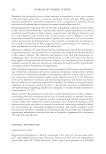
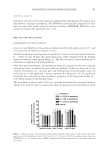
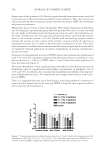
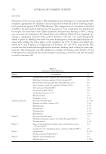
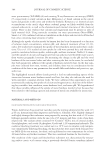
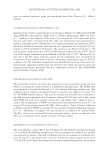
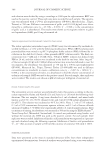
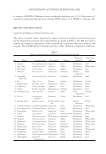
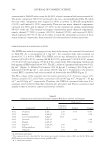
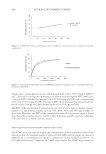
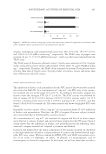
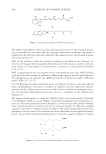
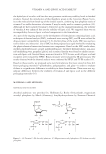
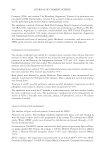
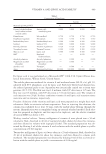
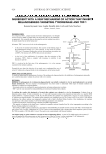
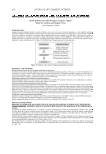
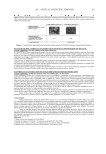
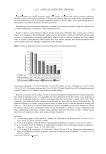
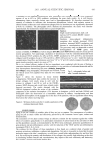
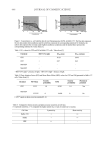
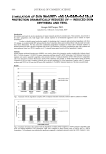
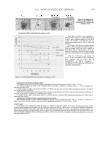
JOURNAL OF COSMETIC SCIENCE 406 The vehicle used infl uences the in vivo skin absorption of vitamin A. Percutaneous absorp- tion is modulated by the skin’s pH and integrity, hydratation conditions, the mode of application, the oil/water partition coeffi cient, the ionization state, and vitamin A palm- itate concentration. (5) Most of the stability studies for vitamin A palmitate described in the literature are based on the liquid chromatographic determination of this drug in cosmetic formula- tions alone or in the presence of antioxidants, sunscreen, or encapsulated liposomes (2–4, 6–13). BHT is important for the correct protection of o/w emulsions over time. BHT provides good protection for vitamin A palmitate, which might suggest that the photodegrada- tion mechanism is an oxidative one. BHT provides better protection under UVA than under UVB. (3,4,7,13,17). In 1951 Reed and coworkers isolated α-lipoic acid (Figure 2). Lipoic acid or the reduced form, dihydrolipoate, are potent scavengers of hydroxyl radicals, superoxide radicals, peroxyl radicals, singlet oxygen, and nitric oxide. Lipoic acid plays an important role in the mitochondrial dehydrogenase processes and as a modulator of the infl ammatory response (1). The purpose of this paper is to study the stability of lipoic acid in the presence of vitamin A (as palmitate) and E (as acetate) (Figure 1) and other antioxidants in semisolids for cos- metic use. Previous studies have shown that lipoic acid was not very stable in these formula- tions, but the presence of vitamin A favors its chemical stability (2). We have included vitamin C derivatives to enhance vitamin A stability. The results reported demonstrate that phosphate esters of vitamin C formulations are more stable than ascorbyl palmitate formu- lations. In particular, esterifi cation with palmitic acid in the 6 position (Figure 3) reduces Figure 1. (A) Vitamin A palmitate. (B) Vitamin E acetate. Figure 2. (A) α-lipoic acid. (B) α-dihydrolipoic acid (reduced form).

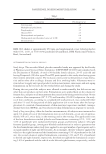
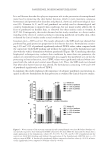
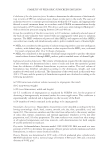
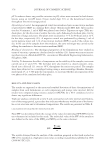
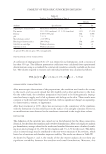
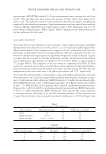
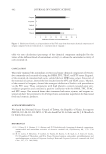
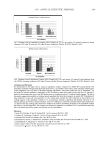
VITAMIN A AND LIPOIC ACID STABILITY 407 the hydrolysis of ascorbic acid but does not guarantee satisfactory stability levels in fi nished products. Instead, the introduction of the phosphoric group in the 2 position (Figure 3) pro- tects the molecule from break-up of the enediol system, confi rming that phophate esters of vitamin C as stable derivatives of vitamin C may be easily used in cosmetic products (14). Although we have included vitamin C derivatives in the original formulation, the stability of vitamin A was enhanced but not the stability of lipoic acid. We supposed there was an incompatibility between lipoic acid and components in the formulation. As a part of the ongoing project on the development of formulations containing lipoic acid, techniques of thermal analysis (DSC), isothermal stress testing (IST), and IR were utilized for drug-excipient compatibility testing (15). In the fi rst phase of the study, DSC was used as a tool to detect any interaction. Use of DSC has been proposed as a rapid method for evaluating the physicochemical interaction between two components. Based on the DSC results alone, methyl p-hydroxybenzoate, propyl p-hydroxybenzoate, butylated hydroxytoluene, non-ionic self-emulsifying wax, propylene glycol, and acetylated lanolin were found to exhibit interac- tion with lipoic acid. Stressed binary mixtures (stored at 50°C for one week) of lipoic acid and excipients were evaluated by HPLC. Binary mixtures were evaluated by IR spectroscopy. The results obtained with the thermal analysis were confi rmed by HPLC and FT-IR studies (15). Based on these results, we proposed some new formulations that were stored in three dif- ferent packaging materials—polyethylene, polypropylene, and glass—in order to evaluate if there is a signifi cative difference in stability in these formulations. There were not sig- nifi cant differences between the stability of vitamin A and lipoic acid in the different packaging materials (16). MATERIALS AND METHODS MATERIALS AND REAGENTS Ascorbyl palmitate was provided by Hoffmann La Roche (Switzerland), magnesium ascorbyl phosphate by Merck (Germany), butylhydroxytoluene by Eastman Chemical Figure 3. (A) Vitamin C. (B) Ascorbyl palmitate. (C) Magnesium ascorbyl phosphate. (D) Sodium ascorbyl phosphate.
Purchased for the exclusive use of nofirst nolast (unknown)
From: SCC Media Library & Resource Center (library.scconline.org)