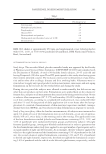
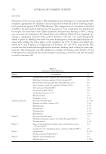
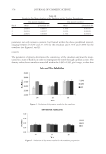
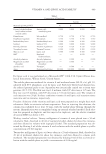
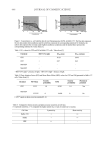
JOURNAL OF COSMETIC SCIENCE 408 Company (USA), and vitamin C by Kromberg (Argentina). Vitamin A (as palmitate) was provided by DSM (Netherlands), vitamin E (as acetate) by Merck (Germany), and lipoic acid by Labochim (Laboratorio Chimico Internazionale, Italy). The emulsions consisted of silicone fl uid (Dow Corning, Brazil) mineral oil and petrola- tum (R.A.A.M., Argentina) as oil phase anionic self-emulsifying wax (Flamacer SX, Fla- maquímica, Argentina) as surfactant imidazolidinyl urea (ISP, United Kingdom) as preservative and sorbitol 70% (water solution) (Unión Química Argentina, Argentina) and demineralized water as hydrophilic phase. All chemicals used were of analytical grade. Methanol, acetonitrile, and water were of HPLC grade. Solvents were fi ltered through a 0.45-μm membrane and degassed. PREPARATION OF THE EMULSIONS The anionic emulsifi er was melted in a stainless steel container then silicone fl uid and mineral oil were added. The emulsion was mixed by slow agitation, avoiding the incor- poration of air and keeping the temperature between 72°C and 74°C. Lipoic acid and butylhidroxytoluene were then added. The emulsion was stirred, maintaining the tem- perature until a full dispersion was obtained. Demineralized water, sorbitol 70%, and imidazolidinyl urea were mixed in another stain- less steel container. This mixture was heated to 75°C. Both phases were fi ltered by gravity fi ltration. Then mixture 1 was incorporated into mixture 2 and stirred at 900 rpm for fi ve minutes. Then cooling was started and stirring was slowed down. Vitamins A and E, ascorbyl palmitate, sodium ascorbyl phosphate, magnesium ascorbyl phosphate, and vitamin C diluted in water were incorporated at 45°C. The emulsions were stored for 15 months at room temperature, and were analyzed under the same conditions in all cases. The quantitative compositions of the formulations are shown in Table I. The pHs were corrected, adding 1 N phosphoric acid or 1 N sodium hydroxide if needed. ANALYSIS OF THE ACTIVE INGREDIENTS The analyses of lipoic acid and vitamin A were made by HPLC. Materials and reagents. The working standards employed for lipoic acid and vitamin A were the same as those used in the preparation of the creams. The solvents were HPLC grade. Water (HPLC grade) was obtained by distillation and passed through a 0.45- micron membrane fi lter. Instrumentation. The HPLC system consisted of a dual-piston reciprocating Spectra Phys- ics pump (model ISO Chrom. LC pump), a UV-Vis Hewlett Packard detector (Model 1050), a Hewlett Packard integrator (Series 3395), and a Rheodyne injector (Model 7125). HPLC conditions. The experiment was performed on a LiChroCARTR 125*4 mm HPLC Cartridge LiChrospher® 100 RP-18 (5 μm) (Merck, Darmstadt, Germany) for vitamin A.

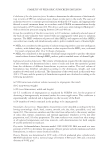
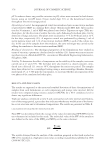
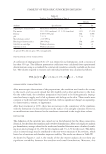
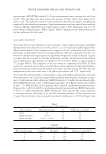
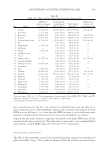
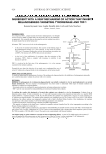
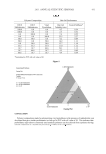
VITAMIN A AND LIPOIC ACID STABILITY 409 For lipoic acid it was performed on a Microsorb-MV® 100Å C18 (5 μm) (Varian Ana- lytical Instruments, Walnut Creek, United States). The mobile phase was methanol for vitamin A and methanol:water (80:20, v/v), pH 3.0, adjusted with 85% phosphoric acid, for lipoic acid. Both were fi ltered and degassed un- der reduced pressure prior to use. Separation was isocratically carried out at room tem- perature (20 ± 2°C). The fl ow rate was 1.8 ml/min, with UV detection at 325 nm. The fl ow rate was 0.6 ml/min, with UV detection at 332 nm for lipoic acid. The volume of each injection was 20 μl. In these conditions vitamin A and lipoic acid retention times were nine and six minutes, respectively. Procedure. Solutions of the vitamins and lipoic acid were prepared on a weight basis with volumetric fl asks to minimize solvent evaporation. Prior to injecting the solutions, the column was stabilized for at least 30 min, with the mobile phase fl owing through the system. Quantifi cation was accomplished using an external standard method. Each solu- tion was prepared in duplicate and was injected in triplicate, and the relative standard deviation (RSD) was below 2.0%. Working standard solutions. Twenty milligrams of vitamin A were placed into a 50-ml volumetric fl ask, dissolved in 40 ml of isopropyl alcohol, shaken for about fi ve minutes, and then diluted to volume with isopropyl alcohol. The standard preparation was ob- tained by diluting 4 ml of the vitamin A stock solution with the mobile phase to yield a concentration of 0.016 mg/ml. Twenty-fi ve milligrams of lipoic acid were taken in a 25-ml volumetric fl ask, dissolved in 20 ml of methanol, shaken for about fi ve minutes, and then diluted to volume with methanol. The standard preparation was obtained by diluting 8 ml of this acid stock so- lution with the mobile phase to yield a concentration of 0.08 mg/ml. Table I Composition of Emulsions Materials (g/100 g) INCI System A B C D Cetearyl alcohol/sodium lauryl sulfate/sodium cetearyl sulfate Anionic self- emulsifying wax 9.000 9.000 9.000 9.000 Dimethicone Silicone fl uid 0.750 0.750 0.750 0.750 Paraffi num liquidum Petrolatum 5.750 5.750 5.750 5.750 Imidazolidinyl urea Imidazolidinyl urea 0.200 0.200 0.200 0.200 Sorbitol Sorbitol 70% 9.000 9.000 9.000 9.000 Retinyl palmitate Vitamin A palmitate 0.120 0.120 0.120 0.120 Tocopheryl acetate Vitamin E acetate 0.400 0.400 0.400 0.400 Thioctic acid Lipoic acid 0.500 0.500 0.500 0.500 BHT Butylated hydroxytoluene — — 0.020 — Ascorbyl palmitate Ascorbyl palmitate — 0.200 — 0.200 Magnesium ascorbyl phosphate Magnesium ascorbyl phosphate — 0.500 — — Ascorbic acid Vitamin C — 0.500 — — Aqua Demineralized water 100.000 100.000 100.000 100.000
Purchased for the exclusive use of nofirst nolast (unknown)
From: SCC Media Library & Resource Center (library.scconline.org)