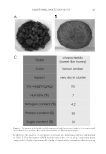
JOURNAL OF COSMETIC SCIENCE 150 compared with PG-TiO2. This opens up an opportunity for a new substitute to replace the PG-TiO2 or TiO2-SiO2 in the cosmetic industry. Titanium phosphates (TPs) are gentle white powders and weakly photoactive (8,9). Therefore, TPs are potential candidates for replacing PG-TiO2 or TiO2-SiO2. Usually, TPs are synthesized using titanium com- pounds, such as titanium chloride and sulfate (10–13). The decomposition of sphene, CaTiOSiO4, by H3PO4 has also been successfully used to synthesize TPs (14). The direc t use of a natural material to synthesize TPs has environmental and economic advantages. The common natural titanium-rich minerals used in the TiO2 manufacturing process are rutile, ilmenite, and leucoxene (15). Ilmenite (FeTiO3) is currently the most common feedstock because many rutile deposits are becoming depleted through com- mercial use (16,17). The prese nt investigation reveals a simple, low-cost method to synthesize titanium bis- monohydrogen orthophosphate monohydrate (TOP) and TP with the chemical formulae of Ti(HPO4)2·H2O and TiP2O7 respectively, using a natural starting material of ilmenite mineral sand. The optical properties, the water retention (WR) capacities, and the pho- toactivities of the synthesized TPs were compared with PG-TiO2 to assess the suitability of these materials for the cosmetic industry. EXPERIMENT AL SECTION In a typic al experiment, TOP, i.e., Ti(HPO4)2·H2O was synthesized by digesting 100 g of ilmenite (Lanka Mineral Sands Limited, Rajagiriya, Sri Lanka) and 400 mL of 85% H3PO4 (Daejung Chemicals, Siheung-si, South Korea) for 5 h with vigorous stirring at 150 °C. The reaction mixture was allowed to cool and settle down at room temperature. Dense unreacted ilmenite (gray black color) settled down to the bottom of the vessel rapidly, whereas less dense solid TOP (white color) slowly settled as two very distinct solid layers (Figure 1). Leachate was carefully decanted and the solid TOP layer was sepa- rated out from the unreacted ilmenite and thoroughly washed with distilled water several times to remove any trace acid. TOP was dried at 80 °C and stored in a desiccator for further use. The resulted TOP was converted to TP by calcining (box-type resistance furnace SX-2.5-10, Zhejiang Top Cloud-Agri Technology Co. Ltd, Zhejiang, China) at 900 °C for 4 h. X-ray diffrac tion (XRD) patterns of ilmenite and the synthesized TPs were analyzed us- ing XRD instrument (Rigaku Ultima-IV, Rigaku, Tokyo, Japan) equipped with Cu Kα source and scintillation detector. The morphology of the powder materials were investi- gated by the high-resolution transmission electron microscopy (HR-TEM ZEISS Libra 200 Cs-TEM, Carl Zeiss AG, Oberkochen, Germany) at an accelerating voltage of 200 kV. An energy-dispersive X-ray (EDX) analysis coupled with (scanning electron microscopy, Zeiss EVO 18, Carl Zeiss AG) microscope was also used to obtain the elemental identi- fi cation of the samples. X-ray photoelec tron spectroscopic (XPS) analyses were carried out with Axis Ultra DLD spectrometer (Kratos, Kratos Analytical Ltd, Manchester, UK) using a monochromatic Al Kα source. Instrument base pressure was 8 × 10⁻¹⁰ Torr. The XPS spectra were collected using an analysis area of ~300 × 700 μm. The pass energy of 160 and 20 eV were used for wide and narrow spectra, respectively. The charge neutralizer system was used for all analyses. Curve fi tting of raw data was performed using XPS Peak Fit software Version 4.1

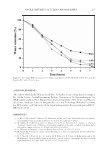
FACILE SYNTHESIS OF TITANIUM PHOSPHATES 151 (Morton, S. 1995–2006, Casa Software Ltd, Teignmouth, UK) with a Lorentzian/Gaussian percentage as 40 and a Shirley background. Fourier-transform infrared (FTIR) data were acquired using Thermo Scientifi c Nicolet iS10 FT-IR spectrometer (Thermo Fisher Sci- entifi c, Waltham, MA). The WR capacities of synth esized pigments were tested by mixing a sample of 1.9 g of pigment material with 0.1 g of urea and 1.3 g of distilled water. The thoroughly mixed paste was spread on a glass plate to make a thin layer, and weight loss was measured using an analytical balance (Precisa XT 220A, Precica Gravimetric AG, Dietikon, Switzerland) at 26°C and at a relative humidity of 57%. The weight loss of the samples was recorded hourly for 7 h. PG-TiO2 (Brand Ti-Pure™, Chemours, Wilmington, DE) and Degusa P25 (Nippon Aerosil Co., Ltd., Tokyo, Japan) were used as the control. Percentage WR was calculated using the following equation: WR% = 0 1 0 t £ ¯² ¦ ¢ ±¦ ¤ »q100 ¦ ¦ ¦ ¦ w w w w where, Figure 1. The fl owchart of TOP and TP preparation process.
Purchased for the exclusive use of nofirst nolast (unknown)
From: SCC Media Library & Resource Center (library.scconline.org)