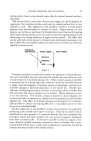
WHAT MANAGEMENT EXPECTS OF RESEARCH 311 An essential feature in a good research program is an adequate and effec- tive presentation of the results. Too many reports to management resemble articles in our scientific journals. The important points in these reports simply never reach a management that has neither time nor ability to comb them through for significant findings. As a result, excellent work has been made useless. This matter of reports is so important that we recently acquired the services of a competent specialist on this subject. One of his contributions has been in helping our staff write summaries to go at the beginning of the report and which present the important findings so clearly and concisely that a busy management can appraise the project and appreciate the action indicated. Reports should permit management to answer these questions: Where have we been? Where are we now? Where do we go from here? What is it all worth, supposing we get there? Conferences with management rarely center around the necessity for synthesizing alpha alpha' his para para' something or other. Conferences are more likely to be concerned with something like an easing in the supply of sisal fiber and if its water absorption could be reduced and, if so, could it compete with Fiberglas on a pound-for-pound base. Above all, perhaps management expects of research an understanding of manageme•at objec- tives. Research leadership should first find where management wants to go and help it go there. A glib answer is that management often does not know where it wants to go that research should show it. Now one of the principal responsibilities of research directorship is that of helping management define its research objectives. Those objectives must be defined in terms both desirable and reasonably attain/•ble. The early stages of a research program, when man- agement and research agree upon an assignment, are vital. But helping management define its objectives is not telling it where it wants to go. If management is competent, it has defined, or will define-- perhaps with financial, market, and technological advice--its basic objec- tives. If it is in the cosmetic business, it does not welcome diversion of much of its research fund and effort from nail enamel to an automobile lacquer merely because a chemist dropped some on a fender and thought it had promise. ' • I am aware that unless I expand this point, I shall have my favorite re- search word, serendipity, thrown at me. I am aware that many great dis- coveries have been made in this way. But I am also aware of the stubborn- ness of some research men, and even research departments, in pursuing ob- jectives outside the company's area of interest after management has evaluated the project from its point of view and decided not to pursue it. It may be that the company's working capital does not permit even serious preliminary explorations of a new product in the paint and lacquer field. It may be that management knows better than the chemist that its net

31:2 JOURNAL OF THE SOCIETY OF COSMETIC CHEMISTS returns, even given success, would not warrant the diversion of effort. Where and when to draw the line between dropping such a project and insisting on further support by management is a matter of judgment. Management expects research to understand and allow for its broad policies and purposes, and even for its financial and administrative capacities in making such decisions. Nor is an industrial research laboratory a university. The fine line be- tween acquisition of basic knowledge in the company's interest and acquisi- tion of knowledge for the personal satisfaction of the research workers again calls for judgment. Most moderate-sized companies are reluctant to support fundamental research within their own walls that is not reasonably certain to pay off, in one way or another, within a reasonable time. If management is broad-gauged and farsighted, it may sponsor such work in its field at educational or other institutions. But it does not like to mix objectives, and most moderate-sized laboratories are expected to keep management targets in their sights. As laboratories grow larger, men competent to delve deeply into sound fundamental approaches in the com- pany's field can be added to the staff, and feed the balance of the staff and the industry with basic and significant advances. Perhaps most discouraging to management is a staff not qualified to compete with university researchers in advancing the art, and not imagina- tive enough to develop new products or significant improvements, that yet plods on, acquiring technical knowledge (often second-hand knowledge) with only minor increments of improvement and even of product knowledge. Men on such a staff become "experts" of a sort, and production and sales men lean on them for information and aid on minor problems. Important as is such production and sales service, it is not research. If it is confused with research, management soon begins to wonder why competition leads. A related problem is the matter of significance of objectives and results. A moderate-sized company cannot afford large expenditures for improve- ments that have minor economic significance. Nor can it spend much to make only minor increments in the fixed or basic scientific knowledge in its field. Industrial research is a speculation. It may be a calculated risk, and the degree of speculation often varies inversely with the significance of the objectives. But it is a speculation. And management expects of its re- search leadership that when it backs either fundamental research, or expen- sive target-seeking research, the winnings if achieved will be in proportion to the size of the stake risked. Management is becoming more sophisti- cated in its understanding of research, either from continued experience with it, or from including research-experienced men within management. Able, driving, wise management likes, perhaps least of all, frittering away time and money on petty objectives. Lest I be misunderstood, a word of caution here. Increasingly, it is diffi-
Purchased for the exclusive use of nofirst nolast (unknown)
From: SCC Media Library & Resource Center (library.scconline.org)