FINE PARTICLES IN THE COSMETIC INDUSTRY 195 of microscope technique of counting and measuring fine particles could now be handed over to electronic scanning instruments. For anyone wishing to pursue this subject further the following publica- tions should be consulted. They all carry extensive references to the litera- ture on the subject, both academic and applied. Heywood, Trans. Institution Mech. Engineers, London (1933). Heywood, ibid. (1938). Am. Soc. for Testing Matehals. Symposium on Particle Size Deter- mination (1941). B.C.U.R.A. and B.C.O.R.A., London, Report on Determination of Particle Size (1944). Inst. Chem. Engineers, London. Symposium on Particle Size Analysis (1947). Dalla Valle, Micromeritics (1948). Brit. Journal Applied Physics, Suppl. 3 (1954). Finally, I must thank Dr. H. Heywood of Imperial Institute, London, for slides used to illustrate this lecture, and Miss L. P. Torry, a fellow member, for help in preparing the paper. Erratum. In the article on "Smell-Threshold Concentration," by A. W. Middleton, B.Sc., Ph.D., F./•.I.C., which appeared in Volume VIII, No. 1, of the Journal of the Society of Cosmetic Chemists, the word "basis" appearing in line 3, paragraph 4, page 41, should read "hairs."

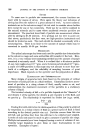
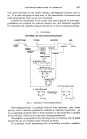
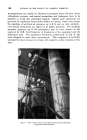
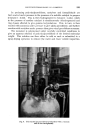
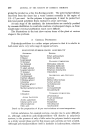
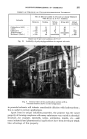
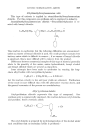
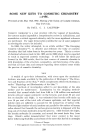
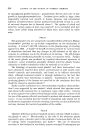
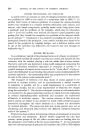
POLYVINYLPYRROLIDONE, ITS MANUFACTURE, PROPERTIES AND USE IN COSMETICS By I. GREENFIELD, B.$c., A.R.I.C.* A lecture delivered to the Society on Friday, February 1st, 1957 1. HISTORICAL NOTE POLYVINYLPYRROLIDONE WAS first synthesised in Germany by Walter H,•C. CH,• I I I H•C CO -- Fig. 1. Structure of Polyvinylpyrrolidone. Reppe during the late 1930's •'"a and was initially evaluated there as a possible blood plasma substitute during World War II. • It has, of course, been known for many years that hydrophilic colloids could be retained in the blood stream long enough to be suitable as replacement fluids for natural blood, and during the first World War substances such as gum arabic were used for this purpose. These early matehals, although useful in an emergency, all exhibited harmful side effects, and at the beginning of World War II two German workers, Weese and Hecht, evaluated a number of the newer water-soluble colloidal high polymers with a view to developing an improved plasma substitute without the earlier defects. They finally settled on polyvinylpyrrolidone, • and a plasma substitute based on this was used quite widely by the German medical services during the war, and similar materiMs have indeed been used subsequently in America, Europe and elsewhere. From this initial use a number of other medical applications have been developed, and it is not surprising that uses outside the medical field have received a good deal of attention. To date, industrial uses for the polymer * British Oxygen Research & Development, Ltd., London, S.W. 19. 196
Purchased for the exclusive use of nofirst nolast (unknown)
From: SCC Media Library & Resource Center (library.scconline.org)