232 JOURNAL OF THE SOCIETY OF COSMETIC CHEMISTS Lawrence, C. A., Surface-active Quaternary Ammonium' Germicides. Academic Press Inc., N.Y., 1950. Reddish, G. F. (ed.), Antiseptics, Disinfectants, Fungicides, and Physical and Chemical Sterilisation, Henry Kimpton, Lond., 1954. Mills, C. M., Ester, V. C., and Henkin, H., Journal of the Society of Cosmetic Chemists, 7, (5), 466 (1956). Hilfer, H., Drug and Cosmetic Industry, 73, 766 (1953). I-Iiloeer, t-I., Ibid., 77, 180,279 (1955). Monsavon-L'Oreal, British Patent 741,307. Kempson-Jones, G., Export Review, p. 40 (Oct. 1955). Barber, A., Chinnick, C. C. T., and Lincoln, P. A., J. appl. Chem., 5,594 (1955). Chinnick, C. C. T., and Lincoln, P. A., 1st Worm Congress on Surface ,4ctive Agents, 1, Sect. 2. 209, Paris, 1954. Barber, A., Chinnick, C. C. T., and Lincoln, P. A., Analyst, 81, 18 (1956). Lincoln, P. A., and Chinnick, C. C. T., Analyst, 81, 100 (1956). Lincoln, P. A., 1st World Congress on Surface Active Agents, 2, Sect. 9,761, Paris, 1954. Lincoln, P. A., Sanitarian, 64, 4, 1955. Lincoln, P. A., Brit. g/led. Jnl., No. 4971, 874 (1956). Richard Hudnut, French Patent 1,098,369. Monsavon-L'Oreal, British Patent 730,279. Dehydag Deutsche Hydrierwerke, British Patent 767,840.

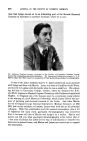
SOME NEW KEYS TO COSMETIC CHEMISTRY --1956. Presented at the May loth, 1957, Meeting of the Society of Cosmetic Chemists, New York City. By PAUL G. I. LAUFFER* COSMETIC CHEMISTRY is 13. vast province with the vaguest of boundaries. Its vastness makes impossible a comprehensive review in tabloid form, and necessitates a critical approach whereby only the more significant advances are mentioned. Its vague demarcation justifies the use of some judgment in selecting the areas to be included. In 1955, the writer attempted, in an article entitled "The Emerging Cosmetic Chemistry"•½, to describe and delineate the body of cosmetic chemistry that had taken form in the previous ten years. This is a review of chemical advances made in late 1955 and in !956 which may be expected to result in improved cosmetic technology. It will follow the thesis put forward in the 1955 article, that the first concern of cosmetic chemists is with knowledge of the structure, composition, and functioning of the skin, and that all exact data and concepts regarding these subjects come within the purview of cosmetic chemistry. SKIN A wealth of up-to-date information, with stress upon the anatomical features, was made available by the publication of Montagna's "The Struc- ture and Function of the Skin, "• which complements effectively Rothman's earlier "Physiology and Biochemistry of the Skin. "a Newer methods of investigation added to our knowledge of the skin surface and its maintenance. Examination by the stripping method • revealed that normal adults had from 0.66 to 1.39 million non-nucleated keratin cells per square centimetre on the forearm, and about 50 per cent less on shoulder and thigh it was estimated that keratin cells make up over 10 per cent of the total cells of human epidermis, and that reported mitotic rates are sufficient to account for the normal loss of surface cells. Polarised light studies 5 of serial sections cut parallel to the surface of human callus showed that beneath the surface grooves keratin is disposed with the long axis of its chain molecules along the grooves while beneath the ridges, the keratin molecules lie crosswise, and around the sweat ducts they form rings. Blank's earlier demonstration G that water content is the major factor influencing flexibility and softness of the outer skin has led to attempts * House of Tangee. Title appeared erroneously as "The Emerging Cosmetic Industry." 233
Purchased for the exclusive use of nofirst nolast (unknown)
From: SCC Media Library & Resource Center (library.scconline.org)