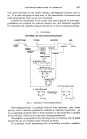
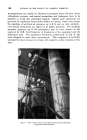
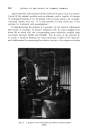
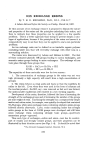
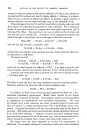
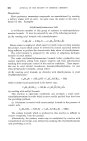
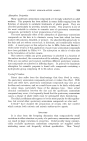
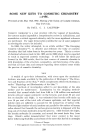
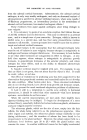
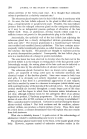
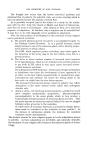
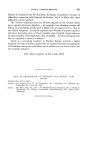
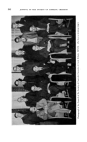
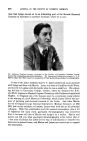
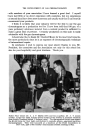
I:OLYVINYLI:YRROLIDONE IN COSMETICS 199 In proc•ucing polyvinylpyrrolidone, acetylene and formaldehyde are first reacted under pressure in the presence of a. suitable catalyst to prepare 2-butyne-1 '4-dio,1. This is then hydrogenated to butane-1 ß 4-diol, which in the presence of-another catalyst is simultaneously dehydrogenated and ring closure effected to give gamma butyrolactone. This, in turn, is then reacted with ammonia under pressure to give alpha pyrrolidone, and further reaction with acetylene under pressure then gives vinyl pyrrolidone monomer. The monomer is polymerised under carefully controlled conditions to give an aqueous solution of polyvinylpyrrolidone of the desired molecular •veight. This solution can then either be sold as such or submitted to a spray-drying operation to remove ,the water and trace volatile impurities, Fig. 4. The reactooe for pyrrolidone production with a vacuum still in the background.

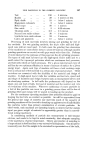
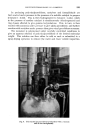
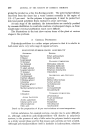
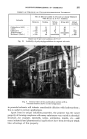
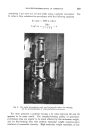
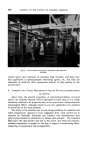
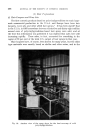
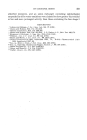
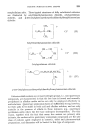
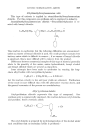
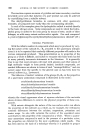
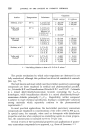
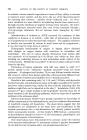
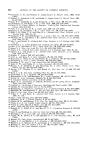
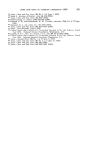
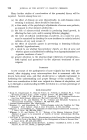
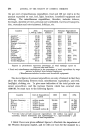
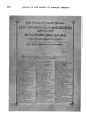
200 JOURNAL OF THE SOCIETY OF COSMETIC CHEMISTS giving the product as a fine free-flowing powder. The polyvinylpyrrolidone recovered from the dryer has a water content normally in the region of 1'2--1'7 per cent. As the polymer is hygroscopic, it must be packed hot into heat-sealed polythene liners enclosed in stout outer kegs. At each stage of the synthesis, the intermediates are carefully purified by vacuum distillation to avoid side reactions at subsequent stages, as these would make eventual purification much more difficult. The illustrations in the text show various items of the plant at various stages in the synthesis. 3. GENERAL PROPERTIES Polyvinylpyrrolidone is a rather' unique polymer in that it is soluble in both water and a very wide range of organic solvents. POLYVIN•LFYRROLIDOIqE SOLUBILITY ALCOHOLS Methanol El/hanoi Isopropanol N l•utanol Sec butanol Isobutanol N amyl alcohol Isoamyl alcohol N hexanol Sec hexanol Cyclohexanol Diethyl ethanol Ethylene glycol Glycerine Propylene glycol Diacetone Methyl isobutyl carbinol ETHERS Cellosolve ACIDS LACTON•ES Acetic anhydride Glacial acetic acid •,Butyrolactone Oleic acid ESTERS Ethyl acetoacetate Butyl tartrate HALOGEN COMPOUNDS Methylene chloride Ethylene dichloride Ethylene dibromide Ethylene chlorhydrin Chloroform ALDEHYDES XND I•ETONES Acetone Methyl ethyl ketone Acetyl acetone Cyclohexanone Glyoxal Crotonaldehyde Benzaldehyde ]NITROGEN COMPOUN'DS •Pyrrolidone Vinyl pyrrolidone Pyridine Morpholine Nitrobenzene Acrylonitrile Based on the preparation of 10 per cent solutions at room temperature. Certain substances, for example acetone, can give rise to some difficulty as, although anhydrous polyvinylpyrrolidone will dissolve in anhydrous acetone, in the presence of only a little water the polymer tends to separate as a sticky second phase and for this reason such solvents are best avoided. Although polyvinylpyrrolidone itself is insoluble in hydrocarbons, solutions
Purchased for the exclusive use of nofirst nolast (unknown)
From: SCC Media Library & Resource Center (library.scconline.org)