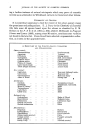
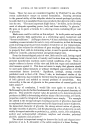
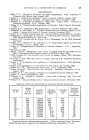
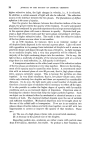
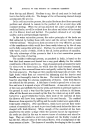
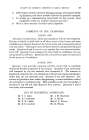
GLYCERIN AS A CONSTITUENT OF COSMETICS 25 REFERENCES Wells, F. V., "Glycerin in Cosmetics and Toilet Preparations," Sort], Perfumery • Cosmetics, Feb., March, June, August, 1957. Kalish, J., "Glycerin and Cosmetics," Druoa •, Cosmetic Industry, August, 1957. Pickthall, J., "Glycerol in Aerosols," .Mrtnufrt•t•ring Chemist, December, 1957. Reckless, F., "Glycerine in Adhesives," 3//fg. C/win., August, 1957 "Glycerin in Household Products," S.P.C., October, 1957. Bragg, H. J., "Pharmaceutical Application of Glycerin," Retrtil Chemist, November, 1957. Stetson, R. A., "Glycerine in Hair Preparations," •'tmeri•rtn Perf•mer, April, 1953. Chadwick, E., and Pears, G., "Solvents, Humectants and Blending Agents in Cos- metics," Journal of the Society of Cosmetic Chemists, November, 1951. Harry, R. G., Modern Cosmeticology, Vol. 1 (revised 1955), Leonard Hill Ltd., London. Leffingwell, G., and Lesser, M., Glycerin: Its Industrial and Commercial Applications, 1945, Chemical Publicity Co., New York. Lawrie, J. W., Glycerin and the Glycols, A.C.S. Monograph, No. 44, 1928, Reinhold, New York. Griffin, W. C., Behrens, E. W., and Cross, S. T., "Hygroscopic Agents and their Use in Cosmetics," J.S.C.C., March, 1952. Velon, P., "Interpretation of Constants in Cosmetic Analysis," S..P.C., September, 1951. See ReL 8, p. 754. Blank, Irvin H., "Mechanism of the Action o• Agents Used for the l•elie• o• Dry Skin," .proceedings of the Scientific Section o• the T.G.A., May, 1955. • Wall, Florence E., The .principles and .Practice of •eauty Culture, 1950, Keystone, New York. •6 See Ref. 1, Feb. 1957 (also issued in reyrint form by U.K. Glycerine Producers Association). Boner, C. J., Manufacture and Application of oe•bricating Greases," 1954, Reinhold, New York. •8 Segur, J. t3., and Miner, C. S., _Proceedings Sc. Sect. T.G.A., No. 19, May, 1953. Fisher, W. J. W., "Shaving Soaps and Creams," S..P.C., September, 1936. Singer, David B., "How Glycerin Aids Research," Industrial Laboratories, U.S.A., August, 1957. Pepper, W. P., "Face Creams," .perfumery • Essential Oil l•ecord, February, 1952. Chino, H., Nature, September 21, 1957. Strianse, S.J. Chapter 6, Cosmetics: Science and Technology, New York and London, 1957. Wells, F. V., "Glycerin Rediscovered," Drug and Chemical Exports, December, 1957. SELECTED PHYSICAL PROPERTIES OF GLYCERoL-WATER SOLUTIONS Boiling Per Cent Glycerol Point Specific Viscosity Freezing Relative % wt. o C. at Gravity Centipoises Point Humidity 760 mm. 20/20 ø C. 20 ø C. ø C. at Equilibrium. _ 100 290 1-26362 1410 18.0 0 99 239 1.26105 1150 15'9 4 98 208 1.25845 939 13'9 9 95 164 1.25075 523 7'7 20 90 138 1.23755 219 1.6 32 70 114 1.18355 22.5 38'9 65 66.7* 112 1.17448 17-5 46'5 67 50 106'7 1'12845 6.00 23'0 82 30 102.9 1'07470 2'50 9.5 92 10 100-7 1.02395 1'31 1.6 98 0 100.0 1.00000 1.005 0'0 100 * Eutectic mixture, minimum freezing point. (Table reproduced from "Glycerine Properties and Uses," issued by the Glycerine Producers' Association, U.S.A.)

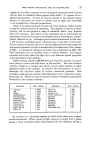
MILK WHITE APPEARANCE AND ITS SIGNIFICANCE IN COSMETIC EMULSIONS By PAUL MANNHEIM, Ch.E.* The •actors governing milky white appearance are elaborated and shown to be closely connected with emulsion stability. AN ATTRACTIVE appearance in a cosmetic emulsion is as desirable as adequate stability, performance and a pleasant odour. The important factors in emulsion stability are: sufficient emulsifier of the correct type, fine particle size and correct phase-volume ratio. Foremost among properties of appear- ance is a milky whiteness. "Milky-white" has for ages been the sign of purity. In this article we Wish to point out that a milky-white appearance in cosmetic emulsions is closely associated with the factors responsible for the stability of the emulsion. Animal and vegetable milks are typical examples of the way in which Nature makes use of emulsions. The emulsion is the most logical form of the transportation of fatty substances within the aqueous environment of the living cell. The finely dispersed fat droplets form the internal phase of the thin milk emulsions. In this way the resorption and digestion of fatty bodies by the organism is well facilitated. There are other circumstances which justify the existence and use of emulsions. Man and animal alike need three basic food elements: carbohydrates, proteins and fats, and, in addition, water, various salts and vitamins. Natural milk is the ideal mixture of these hydrophylic and hydrophobic food elements. Taking into consideration the foregoing properties of milk, one can summarise the advan- tages of an emulsion as follows: 1. The possibility of combining the various hydrophylic and hydrophobic materials in one uniform liquid or cream emulsion. 2. The possibility of regulating the consistency of the emulsion according to any requirements. 3. The dilution of otherwise too concentrated an ingredient, e.g., fats. In preparing an artificial emulsion one often keeps in mind the require- ments of a natural emulsion. In general, one does not limit oneself to the low concentration and small particle size of natural emulsions: one seeks to achieve a more concentrated emulsion of uniformly dispersed particles and of long shelf life. OPAQUE APPEARANCE It is rather strange that an emulsion possesses a milky whiteness in spite of the fact that both phases are transparent and colourless. How can we * Ramat-Gan. Israel.
Purchased for the exclusive use of nofirst nolast (unknown)
From: SCC Media Library & Resource Center (library.scconline.org)