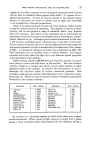
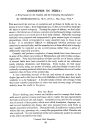
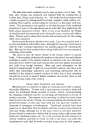
MILK WHITE APPEARANCE AND ITS SIGNIFICANCE 27 explain the fact that a mixture of two transparent substances such as water and oil, form an emulsion which appears milky-white ? It appears to be a physical phenomenon. It must be of great interest to the cosmetic manu- facturer to determine the causes of opacity and to apply this knowledge to the manufacture of his own preparations. Colour is an optical property of each and every materiM, whilst opacity is only the optical property of emulsions. The opposite of opacity is trans- parency, and we can prepare a range of emulsions which vary between these two extremes. The colour of any substance can be determined by colorimetric methods, by means of instruments such as colorimeters, chromo- meters, tintometers, etc. Although opacity cannot be measured in this way, I will mention something about refractometers or the idea of refraction. From an optical viewpoint, there is an obvious difference between transparent and opaque dispersion, and this is manifested by the behaviour of the passage of light. A transparent substance will allow the transmission of light with little opposition, but an emulsio• forms a definite obstacle. The opaque emulsion will in fact reflect the light due to the different optical properties of the ingredients of the emulsion. Light travels at a speed of 186,000 miles per second in a vacuum, but much more slowly in water and still slower in oils and fats. The ratio between velocity of light in a vacuum and velocity in any other medium is called Refractive Index of the medium. In industry the refractometer is used to determine the refractive index of various commercial products. This provides a rapid and easy method of identifying the purity of oils, fats, waxes, fatty acids, etc. Below is a table of refractive indices of emulsion constituents of interest to the cosmetic industry :, Materials _ Reft. indices Materials Reft. indices Vacuum 1.0000 Olive oil 1 '469 Air 1.0003 Castor oil 1 '478 Water 1.3300 Almond oil 1.471 Methylalcohol 1.329 White mineral oil 1.475 Ethylalcohol 1.362 Glycerin 1.47 Isobutylalcohol 1.3900 Benzene 1.50 Kerosene 1.4500 Gelatine 1.54 Japan Tallow 1'458 Woolwax 1.48 Coconut oil 1-449 Paraffins 1.42 Cacao Butter 1 '457 Beeswax 1.44 Palm-nut oil 1'451 Carnauba wax 1-39 Palm oil 1-454 An emulsion is a two-phase system in which each phase may contain several ingredients. When a beam of light passes at an angle from a phase having a lower refractive index (water-phase) into the oil-phase having a

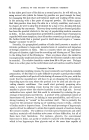
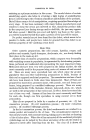
28 JOURNAL OF THE SOCIETY OF COSMETIC CHEMISTS higher refractive index, the light changes in velocity, i.e., it is refracted. In addition, a certain amount of light will also be reflected. The reflection occurs at the interface between the two phases. The phenomenon of di,•use reflection is the cause of opacity. Now the greater the distance between the refractive indices of the two phases, the greater will be the opacity of the emulsion. It can be anticipated and indeed confirmed by practical experiences that a large amount of glycerin in the aqueous phase will cause a decrease in opacity. Glycerin itself pos- sesses a high refractive index and the water-phase containing it will there- fore be of higher refractive index. The result is that the refractive indices of the two phases are now closer to one another. In an O/W emulsion, for instance, there is an immense number of oil droplets finely dispersed in the external aqueous phase. Light will meet with opposition to its passage from individual oil droplets and it strains to penetrate deeper and deeper through the mass of droplets. As light impinges on an emulsion droplet, only a very tiny proportion will be reflected, the majority of the light continuing deeper into the emulsion. On its way, the light strikes a multitude of droplets of the internal phase until at a certain stage there is a total reflection, i.e., full opacity is developed. A transparent emulsion on the other hand occurs if the refractive indices of the two phases are identical or very dose together. Moreover, the develop- ment of the opacity may be caused by other factors. A concentrated emul- sion with an internal phase of over 50 per cent, that is, high phase-volume ratio, appears extremely opaque. This is because the particles are close together. In very dilute emulsions, that is, low phase-volume ratio, there exists only relatively few droplets and these are separated by considerable distances. On its way, the light meets only a small number of droplets and therefore a heavier layer of emulsion will be necessary to reflect all the light. It is also possible to realise the higher degree of opacity with favourable conditions such as an increased degree of dispersion. Dispersion aims at breaking the cohesive forces that keep the larger particles together. Such an object can be attained either by mechanical or chemical means or a com- bination of both. The chemical method depends upon the use of suitable and sufficient emulsifiers. Mechanical dispersion may be brought about by the use of the colloid mill or homogeniser. If we use in an emulsion two phases whose refractive indices are fairly close together, we are left with two opportunities to correct or improve the opacity of that emulsion. These are: (a) The use of a high phase-volume ratio (concentrated emulsion). (b) A decrease in the particle size of the droplets. Regarding particle size, emulsions are rather coarse with particle sizes from 5-10 micron, therefore, less stable. To produce a finer emulsion, we
Purchased for the exclusive use of nofirst nolast (unknown)
From: SCC Media Library & Resource Center (library.scconline.org)