ALLANTOIN•ITS PROPERTIES AND USES $9 wound discharges and sloughs into end-products, which are then consumed by the maggots. 4. The therapeutic active principle of maggots stimulates rapid growth. The beneficial effects (1) to (3) listed above can only be given by maggots themselves, while (4) could be given by allantoin. Thus, it is not difficult to see why maggot therapy does not necessarily equal allantoin therapy. ALLANTOIN THERAPY The synthetic allantoin has been mainly used in the form of a saturated solution (0.5 per cent at normal temperatures) or in the form of an ointment (2 to 5 per cent in a greaseless base).9 Almost all cases treated were those suffering from severe ulcers, suppura- tive wounds and osteomyelitis, and considerable success was claimed, although adequate testing and controls have not been carried out. •o,,,•,•s,• • CELL PROLIFERANT ACTION OF ALLANTOIN Most of the observations on the cell proliferant action of allantoin are qualitative in character, since they generally relate to the healing of wounds. Attempts to demonstrate the cell proliferant action of allantoin using the methods of tissue culture have not met with significant success.•', •' Allantoin does not normally play an important role in human meta- bolism, and occurs only to a small extent in human urine. However, it occurs in much higher concentrations in the allantoic fluid and in the urine of pregnant women. It is the normal end-product of purine metabolism in many animals, e.g., dogs, and again occurs in higher concentrations in the allantoic fluid. This association of allantoin and pregnant animals has again led to the inference that allantoin is closely associated with cell proliferation." Robinson has suggested that allantoin actually re-enters the cell nucleus. It has been suggested that one of the functions of allantoin is to cause phagocytosis. Berthelot and Bertrand •' reported that allantoin could cause leucocytosis in guinea pigs, while Macalister •9 showed that oral administra- tion of allantoin could increase the leucocyte count from 5 to 15 per cent. The successes he obtained with allantoin in the treatment of pneumonia were attributed to the increase in leucocytosis. THE CHEMISTRY OF ALLANTOIN Allantoin may be obtained by the alkaline oxidation of uric acid in the cold. It is a white, crystalline substance, m.p. 238 ø C., and is soluble to the extent of 0.6 per cent in cold water, 0.2 per cent in alcohol and insoluble in ether. It is appreciably soluble in hot water and alcohol. It is readily

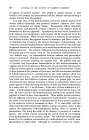
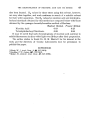
60 JOURNAL OF THE SOCIETY OF COSMETIC CHEMISTS decomposed by alkali and strong acids to give a variety of products. The pH value of a saturated solution is 5-5, and it is recommended that the solution should be kept at a slightly acid pH value. The constitution of allantoin has been shown to be H N -- .CO øc/ N -- CH -- NH.CO.NH• N * Examination of the above formula shows that it contains an asymmetric carbon atom (*). The allantoin should therefore exist in two optically active forms, but early attempts to isolate these forms were, however, unsuccessful. 2o However, dl allantoin was resolved by Fosse, Thomas and de Graeve, 2• who isolated the 'T' form by treating the allantoin with an enzyme from soya which preferentially fermented the "d" form. The "d" form is probably the one that occurs naturally, and has now been isolated from calves' urine and certain plants by extraction methods avoiding all temperature rises. The "d" and 'T' forms are both readily racemised even by warming in aqueous solution. Theease of racemisation is now known to be the reason for the failure of the early attempts at separation. The ready racemisation is almost certainly due to a keto-enol tautomerism existing between the asym- metric carbon atom and the neighbouring keto group. In view of this tautomerism, in order to maintain optical activity, solutions should be kept at pH values slightly less than 7. Allantoin is amphoteric forming salts with both acids and bases. Ammonium, TM piperazine 2• and bismuth 2' allantoinates have been used therapeutically, but they offer no advantage over the allantoin itself. CONCLUSIONS By analogy with other optically active systems, there should be a biological difference between "d" an 'T' allantoin on the one hand as well as between them and racemic allantoin on the other. It is apparently the "d" form which normally functions in the living plant and animal. When racemic allantoin is applied therapeutically, it may be presumed that only one-half of it is active, while the other half may be inert or could even be in part an inhibitor or poison. No practical work has, however, been done on this aspect of allantoin therapy. However, it is almost certain that the allantoin in the extract of comfrey would be racemic, since the extract was obtained with the aid of heat. The latest use of allantoin has been in association with the sulphanilamide drugs, where it has been used in cases of impetigo, dermaphytosis, pyoderma,
Purchased for the exclusive use of nofirst nolast (unknown)
From: SCC Media Library & Resource Center (library.scconline.org)