ALLANTOIN--ITS PROPERTIES AND USES 61 folliculitis." ,Twq cases of seborrhoeic der,matiti, s h,ave, ,been treated with this sys. tem."' The secondary symptoms of the.latter, due to infection, were cleired within 'three' weeks. O/:her uses for this coi•binatiSn' have been in the preparation of wounds' for skin grafting and in controlling wound infections. In this combination can be seen a similarity to maggot therapy in that the sulphanilamide provides the bactericidal properties m)rmally provided by the maggots, which are absent when allant0in alone is used. It can be seen from the above account that the work reported on allantoin therapy is somewhat unlikely to be of great use in the cosmetic industry unless its alleged properties are more firmly established than hereto. It is of interest to note that allantoin is omitted fro m the latest editions of the Pharmacopoeia. The author wishes to thank the directors of County Laboratories Ltd. for their permission to publish this paper. REFERENCES Macalis. ter, B.3//.J., 1912, i, 10. Macalister, Th• Symphytum OJficinale and Its Contained A lla,ntoin, John Bale, Sons & Danielsson Ltd., London, 1936. Baer, J. Bon• & Joint Surgery, 13, 438 (1931). Robinson, J. Bon• • Joint Surgery, 17, 267 (1935). Robinson and Norwood, J. Lab. • Clin. 31ed., 19, 581 (1933-34). Robinson and Norwood, J. Bone & Joint Surgery, 15, 409 (1933). Livingston, J. Bon• & Joint Surgery, 18, 751, (1936). Livingston, Am. J. of Surgery, 35, 554 (1937). Greenbaum, 1938, U.S. pat. 2,124,295 .... Bethune, J. Thoracic Surgery, 5, 322 (1936). Gordon, Intern. J. Orthodontia, 23, 840 (1937). Kaplan, J.A.31. A., 168 (1937). Greenbaum, J. Am. Pharm. Assn., Sci. Ed., 31,263 (1942). Sussman, Dental Items of Interest, 59, 510 (1937). Shipp and Hetherington, Proc. Soc. Exp. Biol. and 31ed., 35, 180 (1936-37). Pomerat, Proc. Soc. oexp. Biol. and 31ed. , 51,345 (1942). See (2). ' Berthelot and Bertrand [see (2)]. See (2). Mendel and Dakin, J. Biol. Chem., ?, 153 (1909). Fosse, Thomas and deGraeve, C.R., 198, 689 (1934). Robinson and Spring, 1942, U.S. Pat. 2,303,765. Greenbaum, J. Am. Pharm. Assn., Sci. Ed., •1,263 (1942). Engels, Rahway and Stein, U.S. Pat. 2,104,738. Niedelman and Horoschok, Urolog. •, Cutan. Rev., 48, 172 (1944).

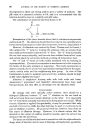
A NEW METHOD FOR THE IDENTIFICATION OF SMALL QUANTITIES OF NICOTINIC ACID AND ITS ESTERS By D. R. PYE, B.Sc., A.R.I.C. The colour reaction o• nicotinic acid and its esters with epichlorhydrin is developed as a method •or identification of these bodies. T•E ?mNC•AL method for the identification of nicotinic acid has hitherto been based upon the cyanogen bromide reaction of K6nig. • In this, nicotinic acid and cyanogen bromide react to give glutaconaldehyde, which gives coloured complexes with aromatic amines. This method has been applied by Huebner 2 for the separation and identification of nicotinic acid by paper chromatography in quantities down to 5/•g. This author's method has recently been applied in this laboratory to identify successfully both nicotinic acid and its tetrahydrofurfuryl ester in the presence of each other. The highly toxic and unstable character of cyanogen bromide, however, prompted a search. for a simple, stable and innocuous reagent specific for nicotinic acid and its esters. This report records the successful application of epichlorhydrin CH•.CH.CH•C1 for this purpose. Melzer* employed this reagent for the identification of nicotine itself. Prolonged boiling of the alkaloid in dilute aqueous solution with epichlorhydrin gave an orange-yellow solution with as little as 0.25 mg. of alkaloid. The present work shows, however, that nicotinic acid and certain of its esters will also react with this reagent, on strong heating, to give a lemon- yellow colour in ordinary light. Such traces, when absorbed on filter paper, will give well defined spots of brilliant blue-green fluorescence under ultra- violet light. Chromatograms were therefore prepared in the following way. Spots of alcoholic solutions of nicotinic acid and some of its esters were applied to sheets of Whatman No. 1 chromatographic paper and allowed to dry in air at room temperature. The sheets were then developed by upward displacement with n-butanol saturated with 1.5 N aqueous ammonia (Huebner, loc. cit.) for 1-2 hours. They were then dried in air at room temperature and sprayed with a solution of 1 volume epichlorhydrin in 4 volumes acetone. Finally, they were dried in air over a hotplate at maximum temperature for 3-5 minutes. Subsequent irradiation by ultra-violet light shows that 0.5/•g. of nicotinic acid may readily be detected by this method, and quantities down to 5/•g. of tetrahydrofurfuryl-, methyl- and n-heptyl nicotinates have 62
Purchased for the exclusive use of nofirst nolast (unknown)
From: SCC Media Library & Resource Center (library.scconline.org)