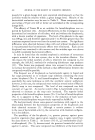
448 JOURNAL OF THE SOCIETY OF COSMETIC CHEMISTS (30 per cent) appears as a significant factor at least once for each oil. With oleic acid and methylphenyl silicone, a low preparation temperature (25øC.) and addition of water to oil were found to be significant in a few cases. Thus, with w/o emulsions as compared to o/w the chemical and physical nature of the oil and emulsifier is even more important than pre- parative variables in determining stability. In summary, within the limits studied, the results of the statistically designed experiment applied to four oils and thirteen surfactants have confirmed the previously known importance of a high proportion of water in making stable o/w emulsions and a small proportion of water in making w/o emulsions. Of discernible, but lesser, significance to emulsion type and stability is the addition order adding oil to water yields the expected o/w emulsion. Higher levels of emulsifier concentration and a higher preparative temperature are important in conferring stability on o/w emul- sions. Emulsifier location and, within the experimental limits studied, method of agitation do not exhibit consistent significance. In a large number of the emulsifier-oil pairs studied, particularly those forming w/o emulsions, none of the individual preparative variables showed significance in determining stability. It is evident that the chemical and physical nature of particular emulsifiers and oils in combination have a major influence on the type and stability of emulsions which are formed. Acknowledgment: The authors wish to express their appreciation to B. N. Baer, A. N. Green, A.M. Levine, R. D. Charles and P. Becher for their several contributions to this study. (Received May 8, 1962) REFERENCES (1) Becher, P., "Emulsions: Theory and Practice," ACS Monograph No. 135, New York, Reinhold Publishing Corp. (1957), pp. 209-244. (2) Becher, P., 7. Soc. Cosmetic Chemists, 9, 141 (1958). (3) Becher, P., Ibid., 11, 325 (1960). (4) Davies, O. L., "Design and Analysis of Industrial Experiments," London, Oliver and Boyd (1954), pp. 484485. (5) Griffin, W. C., in "Encyclopedia of Chemical Technology," Vol. 5, New York, The Inter- science Encyclopedia, Inc. (1950), pp. 692-718. (6) Griffin, W. C., and Behrens, R. W., Anal Chem., 24, 1076 (1952). (7) Ross, S., Chen, E. S., Becher, P., and Ranauto, H. J., 7. Phys. Chem., 63, 1681 (1959).

EVALUATION OF HAIR DYES USING PHOTOELECTRIC COLORIMETRY By J. CALLISON, C. SCHMIDT, R. PIEL, S. GRANT and W. HOLLAND* Presented May 8, 1962, New York City IN THE manufacture of hair coloring products, the importance of control cannot be over-emphasized. To produce hair dye colors which will not vary from one production batch to another and which will con- sistently duplicate the desired shade on a subject's hair presents com- plex problems. The method of standardization employed at present by most manufac- turers is a visual evaluation by an experienced colorist. Generally, in the laboratories of hair dye manufacturers, the accepted method of hair color evaluation is the dyeing of human hair swatches and color assessment by an expert technician. The trained colorist is not only able to determine color difference in terms of strength, but he is also capable of estimating the quantitative magni- tudes of these differences. This skill is learned by experience and careful tutelage forming the traditional basis for color assessment in all the in- dustries concerned with colors. It is understandable that even an expe- rienced colorist cannot reproduce his judgments perfectly. Color tech- nicians, since they are individuals with characteristic visual differences, are often not in agreement on their observations. They are handicapped because they occasionally must work with increments of color that are just within their powers of discrimination, and the latter are not always capable of faithfully reproducing their decisions. This difficulty, coupled with the fact that all hair is different in texture and in its affinity for color pick-up, made it obvious that a better method of evaluation should be employed. This paper concerns a new application of an old system to solve this problem. Color standardization utilizing instrumental methods has been accepted in the paint, plastics, ceramics and textile industries. In the dye industry the use of colorimetry, or transmission spectrophotometry, has been applied in the control of the dye bath and the manufacture of the * Helene Curtis Industries, Inc., Chicago 39, Ill. 449
Purchased for the exclusive use of nofirst nolast (unknown)
From: SCC Media Library & Resource Center (library.scconline.org)