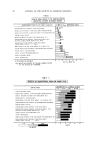
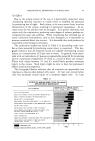
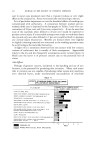
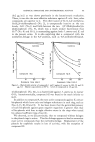
452 JOURNAL OF THE SOCIETY OF COSMETIC CHEMISTS concentration, temperature, washing solutions and drying procedures. The colorimeter is calibrated by a standard which is provided with the instrument. Then the dyed wool patch is instrumentally compared with an undyed, identical patch of wool. The tristimulus values are recorded and graphed on a specialized graph paper provided for the purpose. The standard wool patches used for a particular color are produced from a re- tained color sample which has been previously accepted by a color expert in our Dye Color Center. This standardized color has satisfactorily been applied to the hair of many subjects. When, for example, we dye our wool patches with a warm brown dye, we may find that our readings will be plotted above that of our standard. This indicates that the color take-up is too slight and produces a brighter hue or weaker color. This has been confirmed on the dyeing of natural hair. The indication, that more of the dye material must be added to our production batch, is obvious. If we over-correct with too great an addition of dye material, our readings are plotted below our standard. This also has been confirmed on a subject's head. By exercising great care and from the experience of many observations and adjustments, a good colorist may usually make a proper correction in a single addition or dilution. The method of control outlined has been primarily presented for the control of finished products. This, however, is not the only use which may be made of this system. Specifications for raw materials may be formulated by the use of this form of colorimetry. The approximate purity of individual dyes may be estimated. The effectiveness of bleaching prior to applying dyes can readily be revealed. It would appear that we have diminished, to a great extent, the problem of color control on hair dyes. Actually this is only partly true. An old axiom, that all control chemists know well, states, "The control is only as good as the standard used." Our standard, the dyed textile patch, has a distressing fault. We may perform a test of a sample against a standard and obtain a near perfect match. However, after an extended period of time, they will not match because of fading of either the sample or the standard, or both. The fading of a standard patch will necessitate a complete restandardization cycle and presents an entirely new problem. We have decided that this can be corrected by the preparation of colored ceramic tiles which will give the identical values as those of our wool patches. We are attempting, at the present time, to correlate our work with this idea. The use of the tristimulus colorimeter to conduct the routine control of hair coloring products is in no way to be considered a means to replace the expert colorist. The expert is still needed to establish the standards by which the instrument may be calibrated. The colorimeter will, however, relieve him of the time-consuming and tedious drudgery involved in the

EVALUATION OF HAIR DYES 453 continuous control of solutions. The operation of the instrument may be relegated to a technician. The expert colorist is now able to apply his skills to more important matters. This system, thus, is more efficient and economical without sacrificing quality of product. (Received May 8, 1962) REFERENCES (1) Davidson, H. R., and Godlove, I. H., z/re. Dyestuff Reptr., 39, 628 (1950). (2) Alderson, J. V., Atherton, E., and Derbyshire, A. N., 7. $oc. Dyers Colonrists, 77, 657 (1961). (3) Trotter, I. F., Ibid., 78, 76 (1962). (4) Glasser, L. G., and Troy, D. J., 7. Opt. Soc..aim., 42, 652 (1952). (5) Wright, W. D., Trans. Opt. Soc. (London), 30, 141 (1928-29). (6) Hunter, Richard S., Circulars of the National Bureau of Standards, 429, 1 (1942). (7) "Instructional Manual No. 1000G for Model D Color Eye," Instrumental Development Laboratories, Inc., Attleboro, Mass. Copyright 1956. (8) Wilmsmann, H., .aim. Perfumer dromt., 75, 41 (1960). (9) Moore, W, R., 2 e. Soc. Dyers Colourists, 69, 149 (1954). (10) Brommelsick, William F., and Von Bergen, Werner, .aim. Dyestuff Reptr., 44, 73 (1955).
Purchased for the exclusive use of nofirst nolast (unknown)
From: SCC Media Library & Resource Center (library.scconline.org)