ROLE OF GLYCEROL IN SKIN HYDRATION 457 for weighing, this probably gave the glycerol a chance to rehydrate by taking up water from the air. Thus, it is indeed possible that the results obtained by Powers and Fox can be fully explained by water loss from the hydrated glycerol rather than an increase in water loss from the skin. It has recently been reported by Flesch (4) that glycerol plus callus exhibits unusual humectant properties, over and above those which would be predicted from the humectancy of glycerol and callus taken separately. These results have led to the speculation that glycerol penetrates between the keratiu fibers of the horny layer and facilitates the absorption of water. Flesch studied the moisture uptake of glycerol, callus and callus-glycerol mixtures when exposed to 100 per cent R.H. Under such conditions, minor fluctuations in temperature can cause water to condense. Furthermore, the attainment of equilibrium conditions with glycerol is virtually impossi- ble since glycerol is miscible with water in all proportions. In any case, the author's results actually show that the rate at which a mixture of glycerol and callus picks up moisture is greater than would be predicted from the rate at which callus alone and glycerol alone pick up moisture. The fact that Flesch is dealing with rates rather than equilibrium con- ditions is most apparent when one considers that his data show that at the conclusion of this experiment, glycerol had taken up about 130 per cent of its own weight in moisture. At a R.H. in the high 90's, one would expect glycerol to take up well over 900 per cent of its own weight in water (5). When dealing with rates of water uptake, such things as surface area of glycerol and callus, and size and shape of the vessel in which the glycerol and callus are placed become critical. One can readily see how a potentia- tion in rate of water uptake could be achieved in the glycerol callus system if the surface area of the glycerol were increased due to the presence of callus. With this in mind, an experiment was set up to test the hypothesis that the rate of water uptake of a glycerol-callus system was elevated above that which would be predicted by callus and glycerol alone, but that the equilibrium uptake was merely a summation of the water taken up by glycerol plus that taken up by the callus. Into three glass vials, 50 mg. of ground callus (80 mesh) was weighed. To one of these vials was added 50 mg. of anhydrous glycerol and to a second 250 mg. of anhydrous glycerol was added. Into two other identical vials, about 50 mg. and 250 mg. of anhydrous glycerol was weighed. All five vials were then placed into a constant humidity chamber at 97 per cent R.H. and weighed at regular intervals. From the amounts of water taken up by the 50 mg. sample of callus alone and the 50 mg. and 250 rag. samples of glycerol alone, calculations were made as to how much water should be taken up by the two glycerol-callus mixtures, assuming a strictly addi-

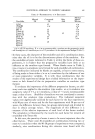
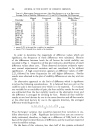
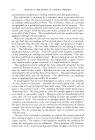
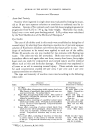
458 JOURNAL OF THE SOCIETY OF COSMETIC CHEMISTS rive effect. These calculated values were then compared to the actually measured values for the two glycerol-callus systems (Results--Table 1). TABLE 1--MoxsTUaE UPTAKE BY GLYCERoL-CALLUS SYSTEM 50 mg. callus & 50 mg. glycerol 50 mg. callus & 250 mg. glycerol Days Calculated Observed Calculated Observed 1 39 mg. water 33 mg. water 82 mg. water 73 mg. water 2 50 mg. water 47 mg. water 122 mg. water 114 mg. water 4 68 mg. water 65 mg. water 184 mg. water 173 mg. water 7 84 mg. water 81 mg. water 247 mg. water 237 mg. water 11 104 mg. water 100 mg. water 315 mg. water 303 mg. water 14 114 mg. water 111 mg. water 354 mg. water 342 mg. water 18 115 (?) mg. 124 mg. water 396 mg. water 388 mg. water 21 130 mg. water 131 mg. water 429 mg. water 419 mg. water 25 141 mg. water 145 mg. water 468 mg. water 464 mg. water 28 147 mg. water 151 mg. water 492 mg. water 490 mg. water As the results indicated, in neither case was a "potentiation" of water uptake seen. It should be noted that even after twenty-eight days, neither system had reached equilibrium. The reason for our inability to demon- strate the increased rate of water uptake reported by Flesch is not clear. It is most probably related to the fact that the size and shape of the vessels used by Flesch were better suited to increase the surface area of glycerol in the glycerol-ca]lus system than were the vessels used in this experiment. In any case, it is clear that the glycerol-callus system does not possess any enhanced ability to bind moisture over and above that which would be predicted on the basis of water uptake by glycerol alone and callus alone. Thus the functional role of glycerol on the skin, from a biological stand- point, has not clearly been established. Whether it has some specific biological action remains to be determined. (Received May 17, 1962) REFERENCES (1) Blank, I. H., y. Invest. DermatoL, 21,259 (1953). (2) Peck, S. M., and Glich, A. W., y. $oc. Cosmetic Chemists, 7, 530 (1956). (3) Shelmire, J. B., Jr., y. Invest. DermatoL, 26, 105 (1956). (4) Flesch, P., Proc. Sci. Sect. Toilet Goods Assoc. No. 35, 1 (1961). (5) Powers, D. H., and Fox, C., Ibid., No. 28, 21 (1957). (6) Powers, D. H., Rieger, M. M., and Fox, C., Ibid., No. 35, 4 (1961). NOTE: A recent publication by Fox, et al. [5*. Soc. Cosmetic Chemists, 13, 263 (1962)} has clearly shown that the enhanced water sorption of glycerol-callus systems, reported by Flesch, was a result of rate rather than equilibrium measurements.
Purchased for the exclusive use of nofirst nolast (unknown)
From: SCC Media Library & Resource Center (library.scconline.org)