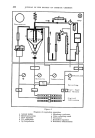
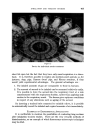
J. Soc. Cosmetic Chemists 15 395-409 (1964) ¸ 1064 Society of Cosmetic Chemists of Great Britain INHALATION AND TOXICITY STUDIES H. J. KINKEL, Dr. rer. nat.* Presented at the Symposium on "Toxicology of Cosmetic Materials", at Leamington, Warwicks., on 20th November 1963. Devices constructed for conducting inhalation and toxicity studies are •lescribed. The results of two investigations dealing with the inhalation of •igarette smoke particles, and the basic constituents of hair sprays are given. SCOPE In general it is noteworthy that toxicological problems claim much more attention nowadays than previously, and are likely to continue doing .•o. It is particularly important to state that the extension and intensifica- tion of toxicological investigations yielded significant findings, and contri- buted substantially to our pertinent knowledge. The variety of animal species Employed for expertmerits has beer• steadily increased. The choice of species depends or• the purpose of the test a cornpoured, for ir•starme, LaducLag paralysis of the cer•tral r•ervous system will usually be tested with a species which permits psychological alteratior•s to be recorded easily, e.g. dogs and mor•keys. The mammalian orgardsm is devised as a system barred agaLast •nviror•mer•tal impacts. Contacts between both systems are only possible through a few orifices. Apart from the gastro-iatestLaal tract, the respira- 'tory tract is the most importat&t er•trarme, for it facilitates the gas exchar•ge between the exterior medium arid the Latereal body liquids. Inhalatior• as such is characterized by the fact that both volatile and 11or•-volatile substances make rapid cor•tact with the large surface area ,of the alveolar mucous membrar•e thus rapid resorption occurs. The size of the inhaled particles determLaes the speed of their resorption. Particles with an average diameter of 0.5 microns are capable of reachLag the fittest alveoli, whereas larger particles ter•d to be trapped before reachLag this area. It was demor•strated by a comparative ir•vestigatior• that the mucous rnembrarm of the respiratory tract absorbs only slightly less thar• that of the Latestir•e. Colloids with a molecular weight of 70,000, equivaler•t to albumen, are capable of per•etrati!•g the mucous membrar•e of the respiratory tract. Bacteria which are r•ot destroyed or carried away by the secretions * Battelle-Institut, e.V., Frankfurt/Main, Germany. 395

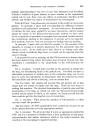
396 JOURNAL OF THE SOCIETY OF COSMETIC CHEMISTS can be resorbed fairly quickly for instance, virulent pneumococci introducec[ onto the nasa/mucosa of the mouse may be isolated ten minutes later from the cardiac blood. Passage into the capillaries occurs very easily, and is governed by the steep gradient of diffusion, which depends mainly on the velocity of the blood flow. Breathing significantly influences the respiratory system, its function• and anatomy. Hence, the different parts of the lung can be described according to their morphology and function. Table 1 lists the most im- portant data concerning the respiratory tract. Table 1. Schematic data of the human respiratory tract (1) Int. Cross Time Lung area Number Diam. Length sectional Velocity of flow (cm) (cm) area (cm/s)* (sec) -- (A) Trachea .... 1 1.30 11.0 1.3 150 0-07 (B) Central Bronchus 2 0.75 6.5 1.1 180 0.04 Bronchi: (C) First order .. 12 0-40 3-0 1.5 130 0.02 (D) Second order .. 100 0.20 1.5 3.1 65 0-02 (E) Third order .. 770 0.15 0.5 14.0 14 0.04 (F) Terminal bronchi 5.4 = 104 0.06 0.3 150.0 1.3 0.22: (G) Bronchioli respiratorii .. 1.1 =10 • 0.5 0.15 220.0 0.9 0.17 (H) Ductuli alveolarii. 2-6 = 10 ? 0.02 0.028 200.0 0.025 0.82 (J) Sacculi alveolarii .. 5.2-- 10 ? 0.03 0.03 147.00'* 0.0 1.2 *At a ventilation rate of 200 cm¾sec. **Total surface area of spherical Sacculi alveolarii. Inhalation is influenced by a number of factors, e.g. the type of sample material, solubility, distribution in the respiratory tract, toxicity, time of exposure, and disposition of the test animal, especially its particular in- dividual pattern as determined also by species, age, and numerous other factors. If the sample is rapidly absorbed, and distributed in the organism, it will affect the lung for a short period only. If the material is not readily soluble, or even insoluble, excretion, if any, will be very slow. The problems of changes due to sedimentation in the lung, and later consequences thereof, have not yet been elucidated sufficiently. There are certain self-cleaning mechanisms which defend the organism against absorption of particularly unphysiologica! contaminants of the inhaled air. This mechanism against factors usually present in the atmos- phere is most effective, because specific defence mechanisms have gradually been developed during phy!ogenesis.
Purchased for the exclusive use of nofirst nolast (unknown)
From: SCC Media Library & Resource Center (library.scconline.org)